Department of Psychology and Neuroscience, Duke University, Durham, NC, USA.
Department of Psychiatry and Behavioral Sciences, Duke University, Durham, NC, USA.
Nat Aging. 2021 Mar;1(3):295-308. doi: 10.1038/s43587-021-00044-4. Epub 2021 Mar 15.
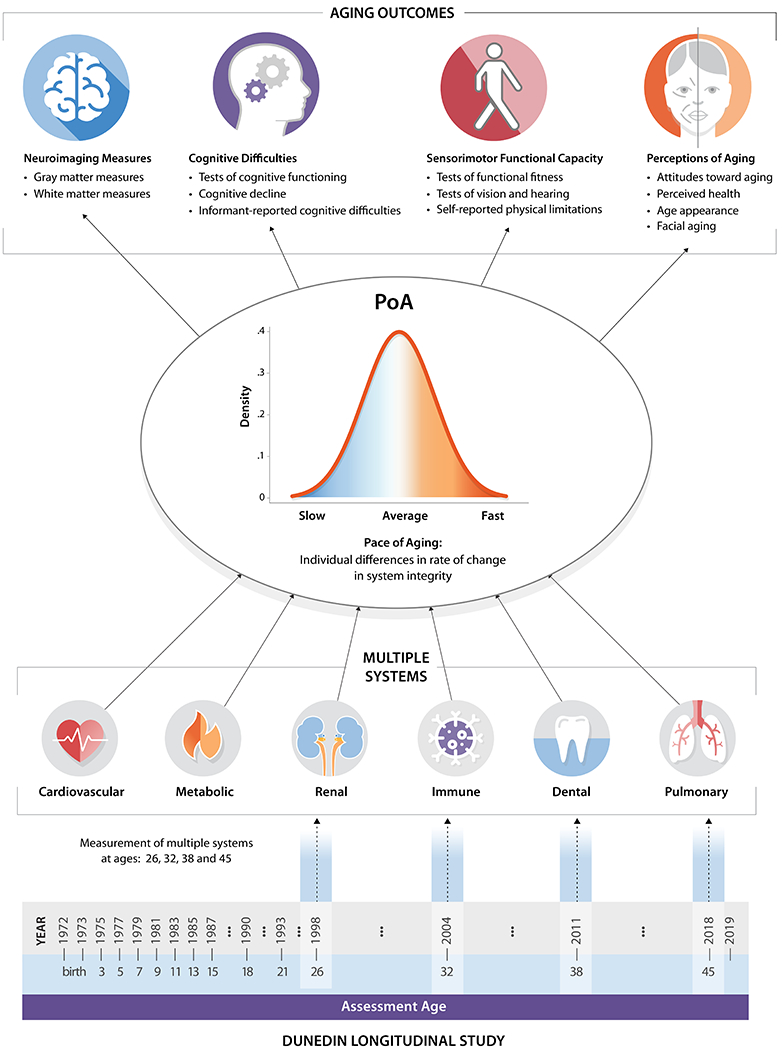
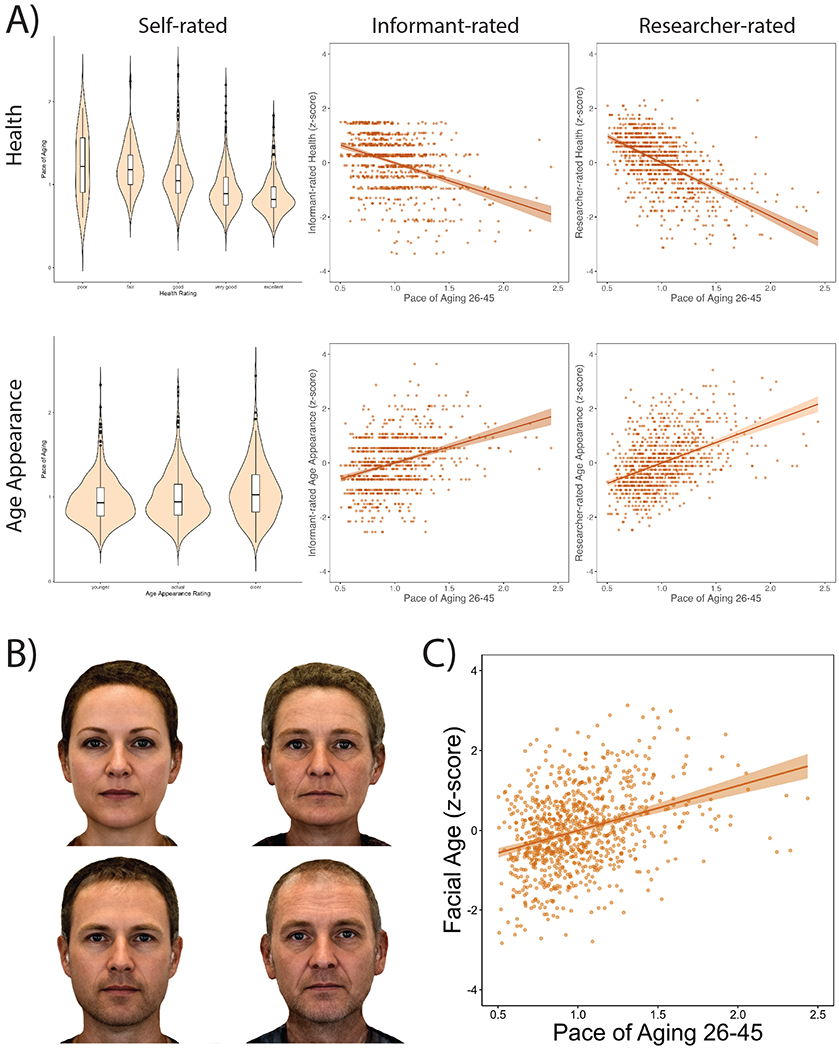
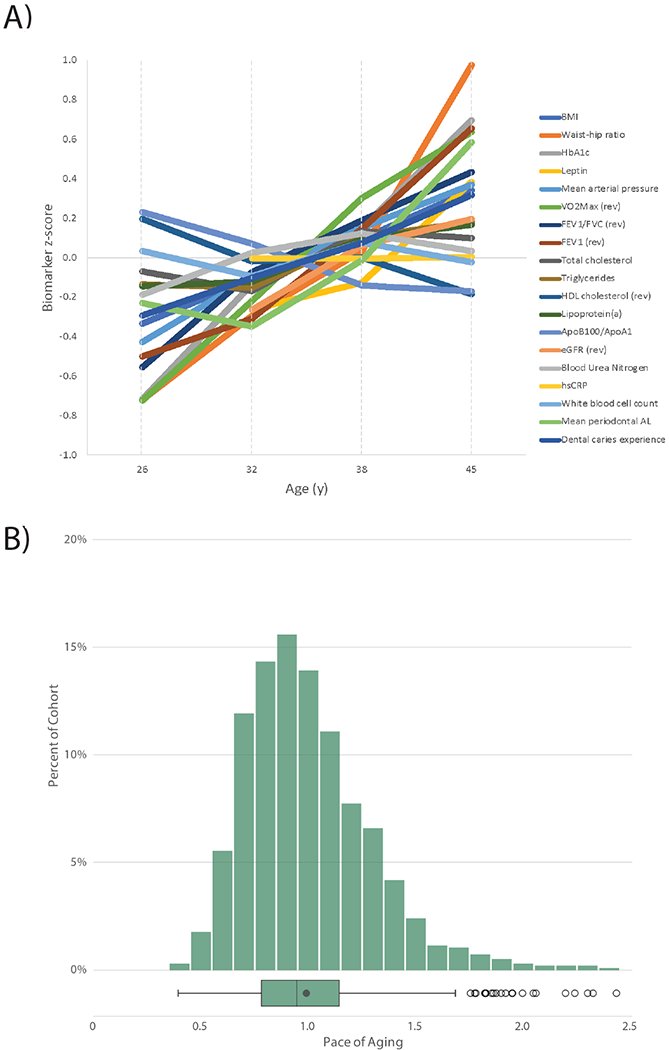
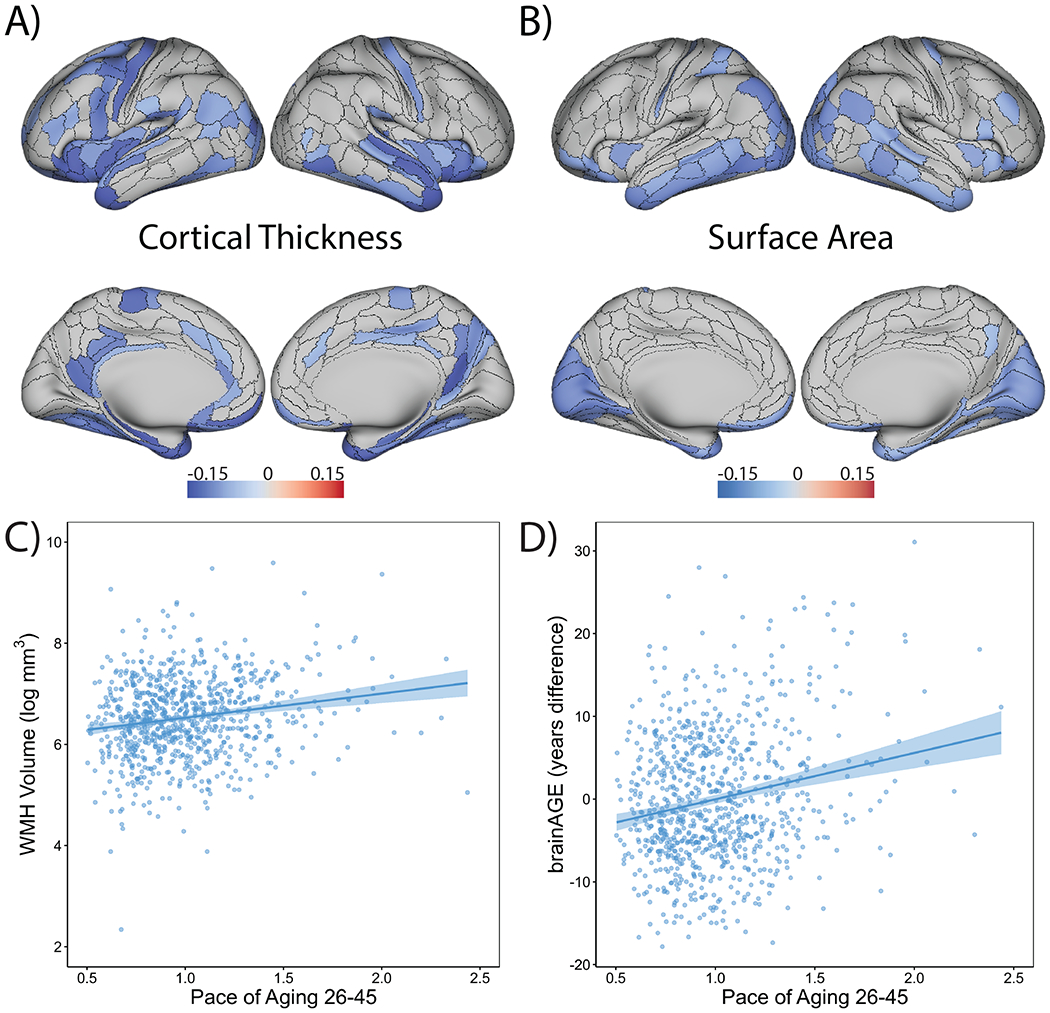
Some humans age faster than others. Variation in biological aging can be measured in midlife, but the implications of this variation are poorly understood. We tested associations between midlife biological aging and indicators of future frailty-risk in the Dunedin cohort of 1037 infants born the same year and followed to age 45. Participants' Pace of Aging was quantified by tracking declining function in 19 biomarkers indexing the cardiovascular, metabolic, renal, immune, dental, and pulmonary systems across ages 26, 32, 38, and 45 years. At age 45 in 2019, participants with faster Pace of Aging had more cognitive difficulties, signs of advanced brain aging, diminished sensory-motor functions, older appearance, and more pessimistic perceptions of aging. People who are aging more rapidly than same-age peers in midlife may prematurely need supports to sustain independence that are usually reserved for older adults. Chronological age does not adequately identify need for such supports.
有些人衰老的速度比其他人快。生物衰老的变化可以在中年时期测量,但这种变化的影响还不太清楚。我们在达尼丁队列中测试了中年生物衰老与未来脆弱风险指标之间的关联,该队列由同年出生并跟踪至 45 岁的 1037 名婴儿组成。参与者的衰老速度通过跟踪 19 种生物标志物的功能下降来量化,这些标志物可评估心血管、代谢、肾脏、免疫、牙齿和肺部系统在 26、32、38 和 45 岁时的功能。在 2019 年 45 岁时,衰老速度较快的参与者认知能力更差,大脑老化迹象更明显,感觉运动功能下降,外貌更显老,对衰老的看法更悲观。在中年时期比同龄人的衰老速度更快的人可能会过早地需要支持来维持独立性,而这些支持通常是为老年人保留的。年龄并不能充分识别出对这些支持的需求。