Department of Research, Molecular Immunology Unit, Fondazione IRCCS Istituto Nazionale Dei Tumori, via Amadeo 42, 20133, Milano, Italy.
Department of Medical Oncology, Fondazione IRCCS Istituto Nazionale dei Tumori, Milano, Italy.
Cancer Immunol Immunother. 2021 Sep;70(9):2429-2438. doi: 10.1007/s00262-021-02916-5. Epub 2021 Apr 2.
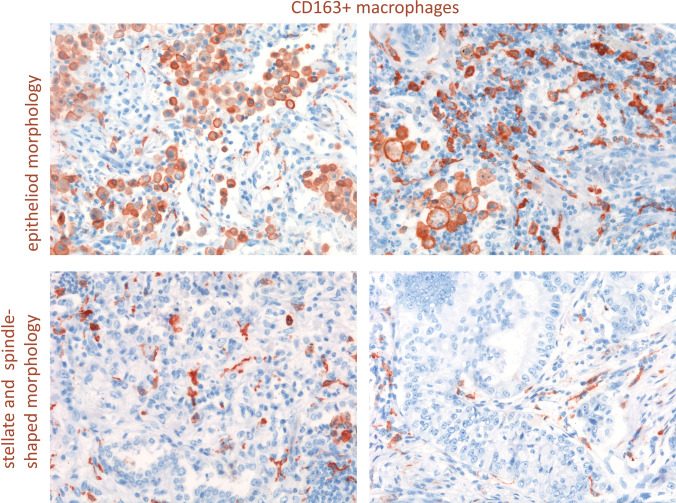
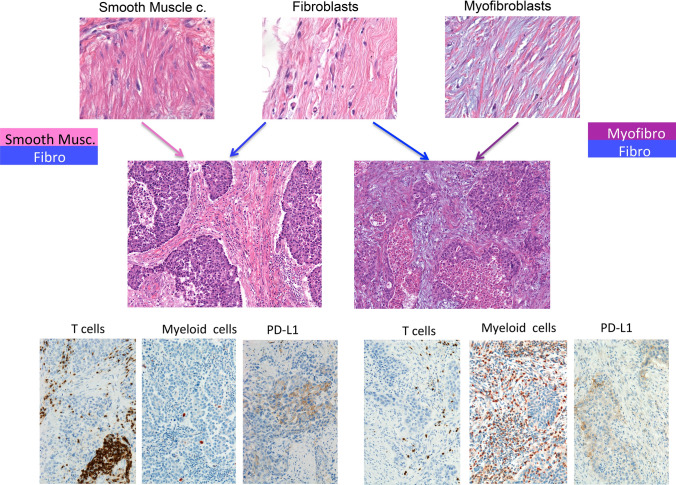
Lung is a specialized tissue where metastases from primary lung tumors takeoff and those originating from extra-pulmonary sites land. One commonality characterizing these processes is the supportive role exerted by myeloid cells, particularly neutrophils, whose recruitment is facilitated in this tissue microenvironment. Indeed, neutrophils have important part in the pathophysiology of this organ and the key mechanisms regulating neutrophil expansion and recruitment during infection can be co-opted by tumor cells to promote growth and metastasis. Although neutrophils dominate the myeloid landscape of lung cancer other populations including macrophages, dendritic cells, mast cells, basophils and eosinophils contribute to the complexity of lung cancer TME. In this review, we discuss the origin and significance of myeloid cells heterogeneity in lung cancer, which translates not only in a different frequency of immune populations but it encompasses state of activation, morphology, localization and mutual interactions. The relevance of such heterogeneity is considered in the context of tumor growth and response to immunotherapy.
肺是一种专门的组织,原发性肺肿瘤的转移在此起飞,而来自肺外部位的转移在此着陆。这些过程的一个共同特征是髓系细胞(尤其是中性粒细胞)发挥的支持作用,其在该组织微环境中的募集得到促进。事实上,中性粒细胞在该器官的病理生理学中具有重要作用,调节感染期间中性粒细胞扩增和募集的关键机制可被肿瘤细胞篡夺,以促进生长和转移。尽管中性粒细胞主导着肺癌的髓系景观,但其他群体,包括巨噬细胞、树突状细胞、肥大细胞、嗜碱性粒细胞和嗜酸性粒细胞,都为肺癌 TME 的复杂性做出了贡献。在这篇综述中,我们讨论了髓系细胞异质性在肺癌中的起源和意义,这不仅表现在免疫群体的不同频率上,还包括激活状态、形态、定位和相互作用。在肿瘤生长和对免疫治疗的反应的背景下,考虑了这种异质性的相关性。