Institute for Bioengineering of Catalonia (IBEC), The Barcelona Institute of Science and Technology (BIST), Barcelona, Spain.
Barcelona Institute for Global Health (ISGlobal, Hospital Clínic-Universitat de Barcelona), Barcelona, Spain.
PLoS Pathog. 2021 Apr 2;17(4):e1009455. doi: 10.1371/journal.ppat.1009455. eCollection 2021 Apr.
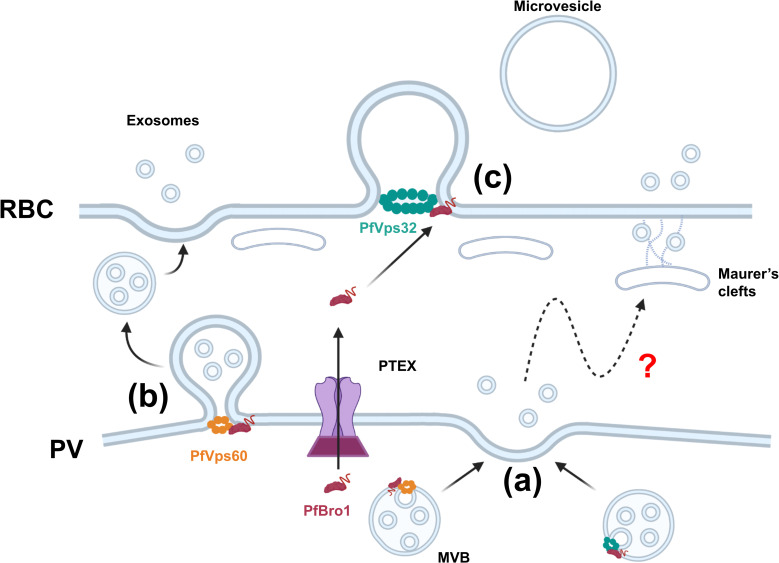
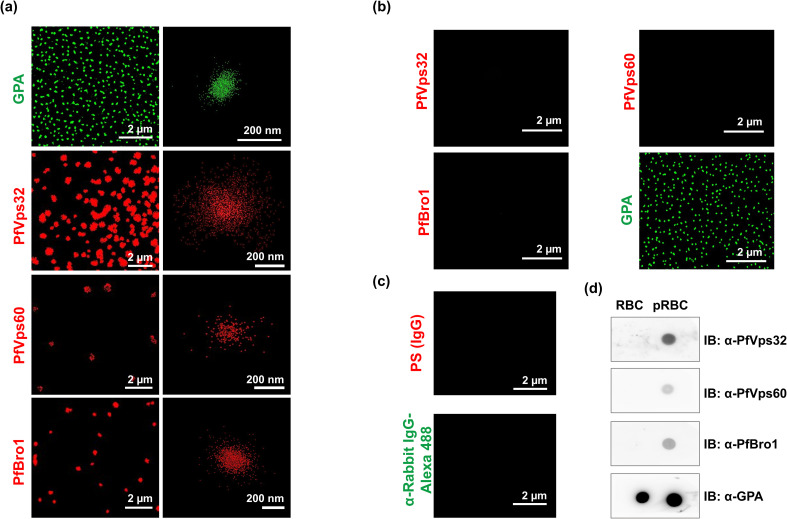
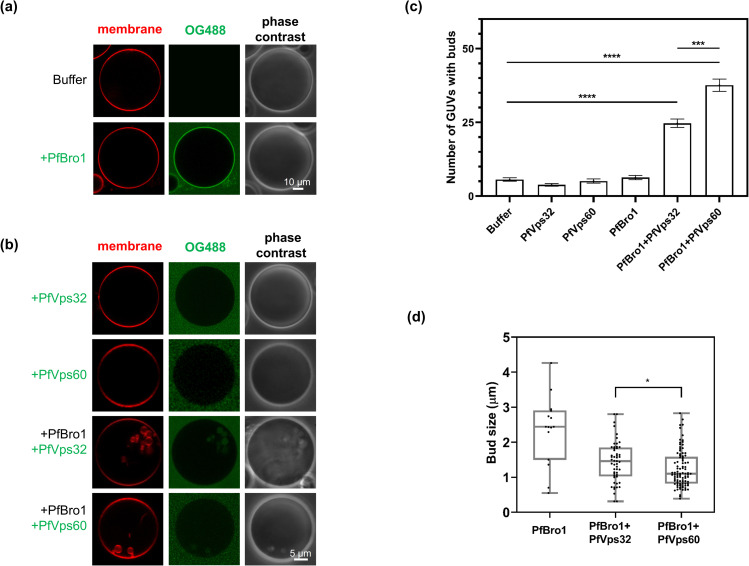
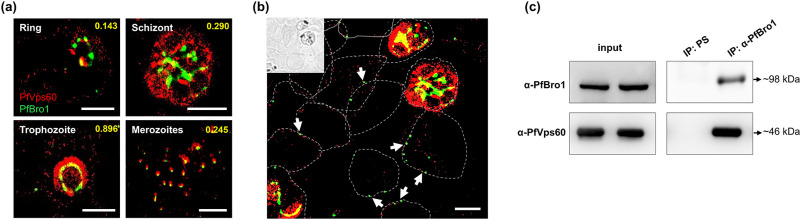
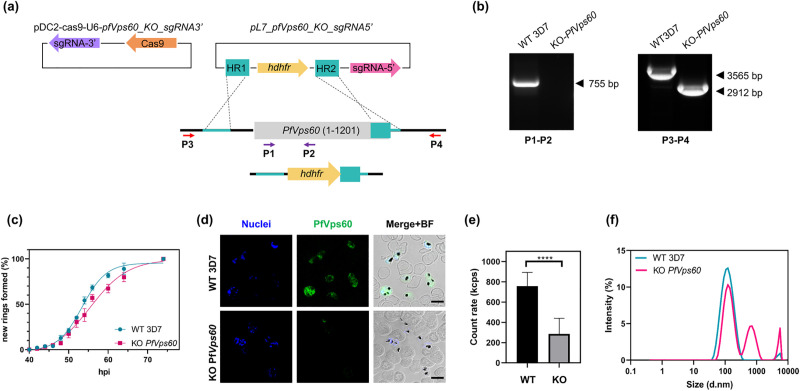
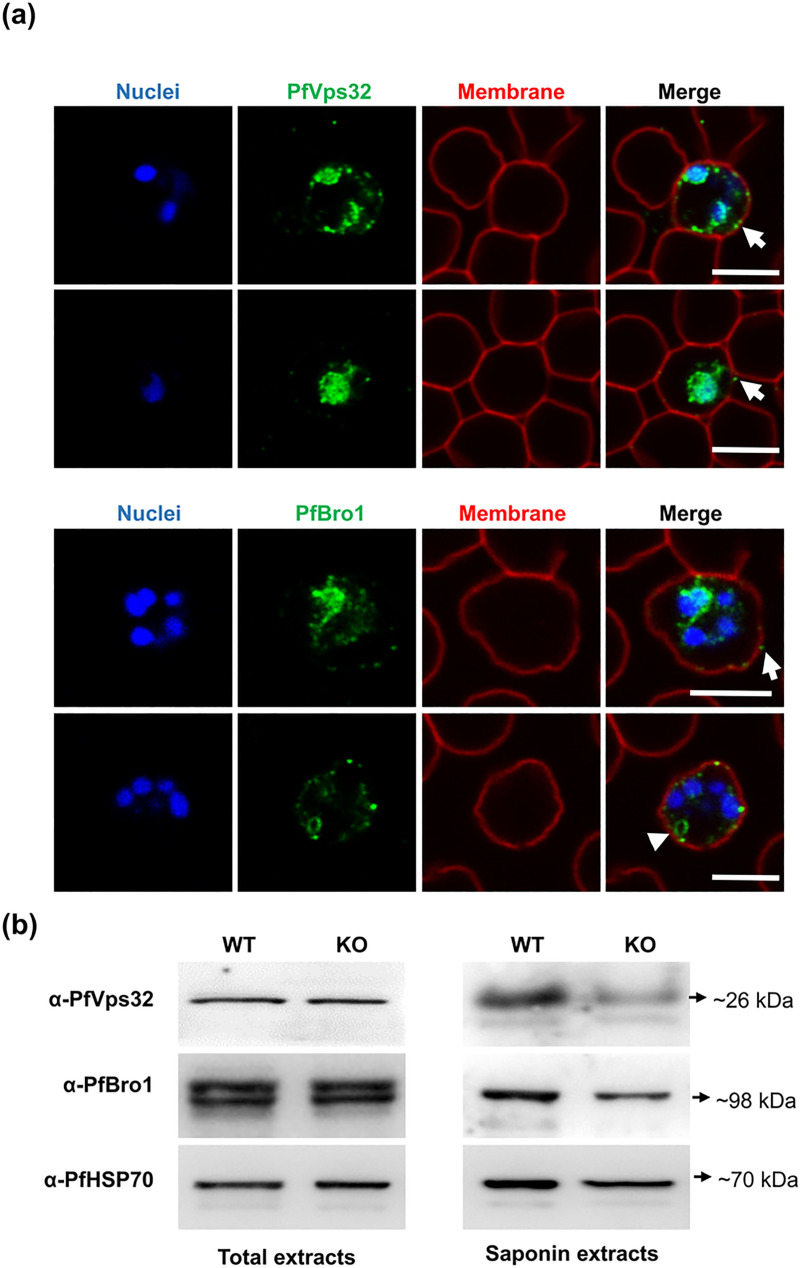
Infection with Plasmodium falciparum enhances extracellular vesicle (EV) production in parasitized red blood cells (pRBCs), an important mechanism for parasite-to-parasite communication during the asexual intraerythrocytic life cycle. The endosomal sorting complex required for transport (ESCRT), and in particular the ESCRT-III sub-complex, participates in the formation of EVs in higher eukaryotes. However, RBCs have lost the majority of their organelles through the maturation process, including an important reduction in their vesicular network. Therefore, the mechanism of EV production in P. falciparum-infected RBCs remains to be elucidated. Here we demonstrate that P. falciparum possesses a functional ESCRT-III machinery activated by an alternative recruitment pathway involving the action of PfBro1 and PfVps32/PfVps60 proteins. Additionally, multivesicular body formation and membrane shedding, both reported mechanisms of EV production, were reconstituted in the membrane model of giant unilamellar vesicles using the purified recombinant proteins. Moreover, the presence of PfVps32, PfVps60 and PfBro1 in EVs purified from a pRBC culture was confirmed by super-resolution microscopy and dot blot assays. Finally, disruption of the PfVps60 gene led to a reduction in the number of the produced EVs in the KO strain and affected the distribution of other ESCRT-III components. Overall, our results increase the knowledge on the underlying molecular mechanisms during malaria pathogenesis and demonstrate that ESCRT-III P. falciparum proteins participate in EV production.
疟原虫感染增强了寄生红细胞(pRBC)中外泌体(EV)的产生,这是疟原虫在无性红细胞内生命周期中进行寄生虫间通讯的重要机制。参与形成真核生物 EV 的内体分选复合物必需蛋白(ESCRT),特别是 ESCRT-III 亚复合物,在 RBC 成熟过程中丢失了大部分细胞器,包括其囊泡网络的重要减少。因此,疟原虫感染 RBC 中 EV 产生的机制仍有待阐明。在这里,我们证明疟原虫具有功能齐全的 ESCRT-III 机制,该机制通过涉及 PfBro1 和 PfVps32/PfVps60 蛋白作用的替代募集途径激活。此外,使用纯化的重组蛋白在巨大单层囊泡的膜模型中重建了多泡体形成和膜脱落,这两种都是 EV 产生的报道机制。此外,通过超分辨率显微镜和斑点印迹分析证实了 PfVps32、PfVps60 和 PfBro1 存在于从 pRBC 培养物中纯化的 EV 中。最后,PfVps60 基因的破坏导致 KO 菌株中产生的 EV 数量减少,并影响其他 ESCRT-III 成分的分布。总的来说,我们的研究结果增加了对疟疾发病机制中潜在分子机制的了解,并证明了疟原虫 ESCRT-III 蛋白参与了 EV 的产生。