Department of Plant Physiology and Biochemistry, Faculty of Biochemistry, Biophysics and Biotechnology, Jagiellonian University, Gronostajowa 7, 30-387 Krakow, Poland.
Faculty of Physics and Applied Computer Science, AGH University of Science and Technology, Reymonta 19, 30-059 Krakow, Poland.
Int J Mol Sci. 2021 Mar 14;22(6):2950. doi: 10.3390/ijms22062950.
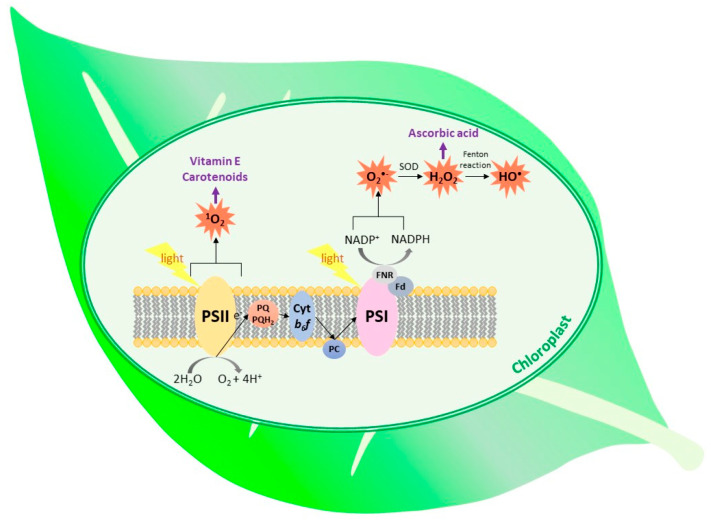
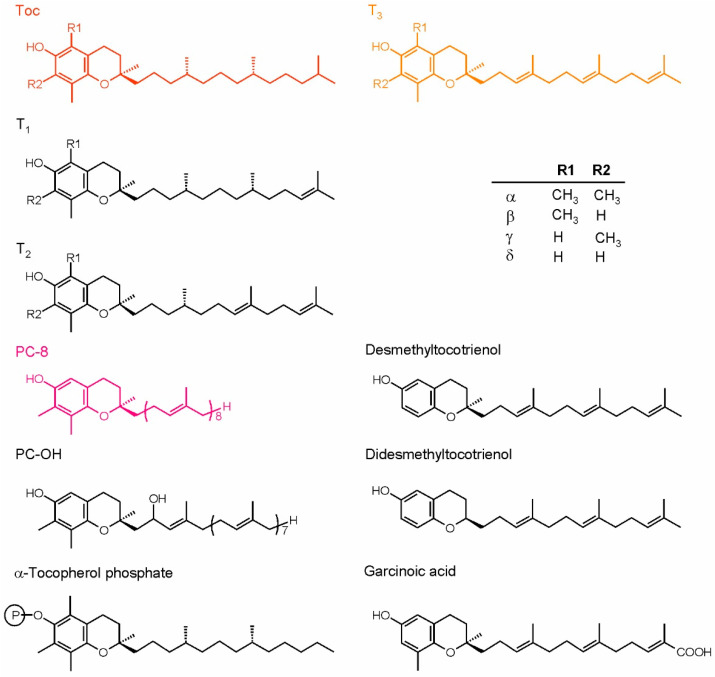
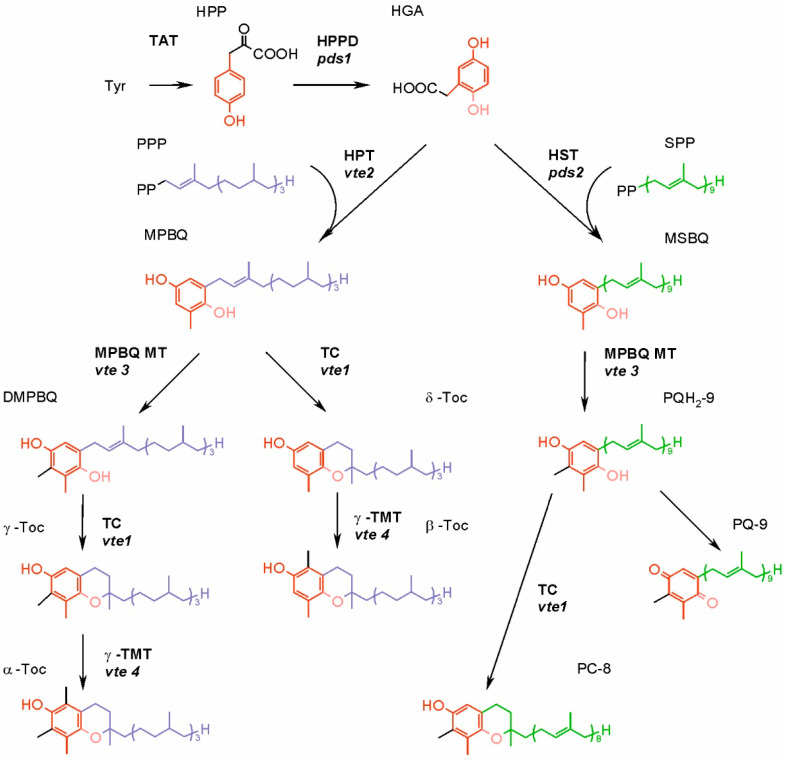
Plant prenyllipids, especially isoprenoid chromanols and quinols, are very efficient low-molecular-weight lipophilic antioxidants, protecting membranes and storage lipids from reactive oxygen species (ROS). ROS are byproducts of aerobic metabolism that can damage cell components, they are also known to play a role in signaling. Plants are particularly prone to oxidative damage because oxygenic photosynthesis results in O formation in their green tissues. In addition, the photosynthetic electron transfer chain is an important source of ROS. Therefore, chloroplasts are the main site of ROS generation in plant cells during the light reactions of photosynthesis, and plastidic antioxidants are crucial to prevent oxidative stress, which occurs when plants are exposed to various types of stress factors, both biotic and abiotic. The increase in antioxidant content during stress acclimation is a common phenomenon. In the present review, we describe the mechanisms of ROS (singlet oxygen, superoxide, hydrogen peroxide and hydroxyl radical) production in chloroplasts in general and during exposure to abiotic stress factors, such as high light, low temperature, drought and salinity. We highlight the dual role of their presence: negative (i.e., lipid peroxidation, pigment and protein oxidation) and positive (i.e., contribution in redox-based physiological processes). Then we provide a summary of current knowledge concerning plastidic prenyllipid antioxidants belonging to isoprenoid chromanols and quinols, as well as their structure, occurrence, biosynthesis and function both in ROS detoxification and signaling.
植物类异戊烯脂质,特别是类异戊二烯色满醇和醌醇,是非常有效的低分子量亲脂性抗氧化剂,可保护膜和储存脂质免受活性氧(ROS)的侵害。ROS 是需氧代谢的副产物,可破坏细胞成分,也被认为在信号转导中发挥作用。植物特别容易受到氧化损伤,因为需氧光合作用会导致其绿色组织中形成 O。此外,光合作用电子传递链是 ROS 的重要来源。因此,在光合作用的光反应中,叶绿体是植物细胞中 ROS 生成的主要部位,质体抗氧化剂对于防止氧化应激至关重要,氧化应激发生在植物暴露于各种类型的生物和非生物胁迫因素时。在胁迫适应过程中抗氧化剂含量的增加是一种常见现象。在本综述中,我们描述了 ROS(单线态氧、超氧自由基、过氧化氢和羟基自由基)在叶绿体中的产生机制,以及在暴露于非生物胁迫因素(如高光、低温、干旱和盐度)时的产生机制。我们强调了它们存在的双重作用:负面的(即脂质过氧化、色素和蛋白质氧化)和正面的(即对基于氧化还原的生理过程的贡献)。然后,我们总结了关于属于类异戊二烯色满醇和醌醇的质体类异戊烯脂质抗氧化剂的最新知识,以及它们的结构、存在、生物合成和功能,包括在 ROS 解毒和信号转导中的作用。