Frąk Małgorzata, Krawczyk Paweł, Kalinka Ewa, Milanowski Janusz
Chair and Department of Pneumology, Oncology and Allergology, Medical University of Lublin, 20-954 Lublin, Poland.
Department of Oncology, Polish Mother's Memorial Hospital Research Institute in Lodz, 93-338 Lodz, Poland.
Cancers (Basel). 2021 Mar 11;13(6):1222. doi: 10.3390/cancers13061222.
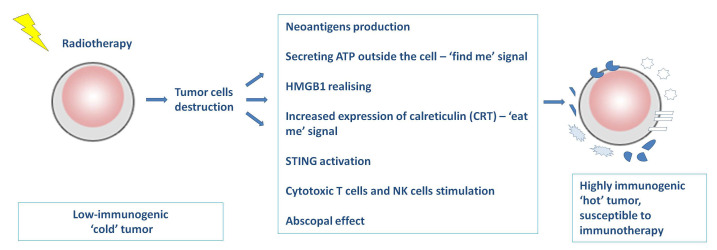
Non-small cell lung cancer (NSCLC) is one of the most common malignancies around the world. Due to the advanced stage of the disease at the time of diagnosis, most patients require systemic treatment. Immunotherapy with immune checkpoints inhibitors is becoming the main treatment method for many cancers, including NSCLC. Numerous studies have shown greater efficacy of immunotherapy used monoclonal antibodies anti-PD-1 (pembrolizumab and nivolumab) or anti-PD-L1 (atezolizumab and durvalumab) compared to chemotherapy. Unfortunately, cancer cells can develop a number of mechanisms to escape from immune surveillance, including avoidance of cancer cells by the immune system (immune desert), production of immunosuppressive compounds (prostaglandins, IDO, TGF-beta), or direct immune checkpoints interactions. Therapy based on the use of radiochemotherapy with subsequent immunotherapy is becoming the main focus of research in the field of new NSCLC therapies. Radiation therapy stimulates the immune response multidirectionally, affects production of neoantigens and proinflammatory compounds, which transform non-immunogenic ("cold") tumors into highly immunogenic ("hot") tumors. As a result, the mechanisms of escape of cancer cells from immune surveillance break down and the effectiveness of immunotherapy increases significantly. The results of clinical trials in this area bring new hope and indicate greater effectiveness of such treatment in terms of prolongation of progression-free survival and overall survival.
非小细胞肺癌(NSCLC)是全球最常见的恶性肿瘤之一。由于在诊断时疾病已处于晚期,大多数患者需要进行全身治疗。使用免疫检查点抑制剂的免疫疗法正成为包括NSCLC在内的许多癌症的主要治疗方法。大量研究表明,与化疗相比,使用抗PD-1单克隆抗体(帕博利珠单抗和纳武利尤单抗)或抗PD-L1单克隆抗体(阿特珠单抗和度伐利尤单抗)的免疫疗法具有更高的疗效。不幸的是,癌细胞可以产生多种机制来逃避免疫监视,包括免疫系统对癌细胞的回避(免疫沙漠)、免疫抑制化合物的产生(前列腺素、吲哚胺2,3-双加氧酶、转化生长因子-β)或直接的免疫检查点相互作用。基于放化疗随后进行免疫治疗的疗法正成为NSCLC新疗法领域的主要研究重点。放射治疗可多方向刺激免疫反应,影响新抗原和促炎化合物的产生,从而将非免疫原性(“冷”)肿瘤转化为高免疫原性(“热”)肿瘤。结果,癌细胞逃避免疫监视的机制被打破,免疫治疗的有效性显著提高。该领域的临床试验结果带来了新的希望,并表明这种治疗在延长无进展生存期和总生存期方面具有更高的有效性。