School of Life Sciences, University of Nottingham, Nottingham NG7 2UH, UK.
Department of Chemistry, Faculty of Science, University of Zagreb, 10000 Zagreb, Croatia.
Int J Mol Sci. 2021 Mar 11;22(6):2848. doi: 10.3390/ijms22062848.
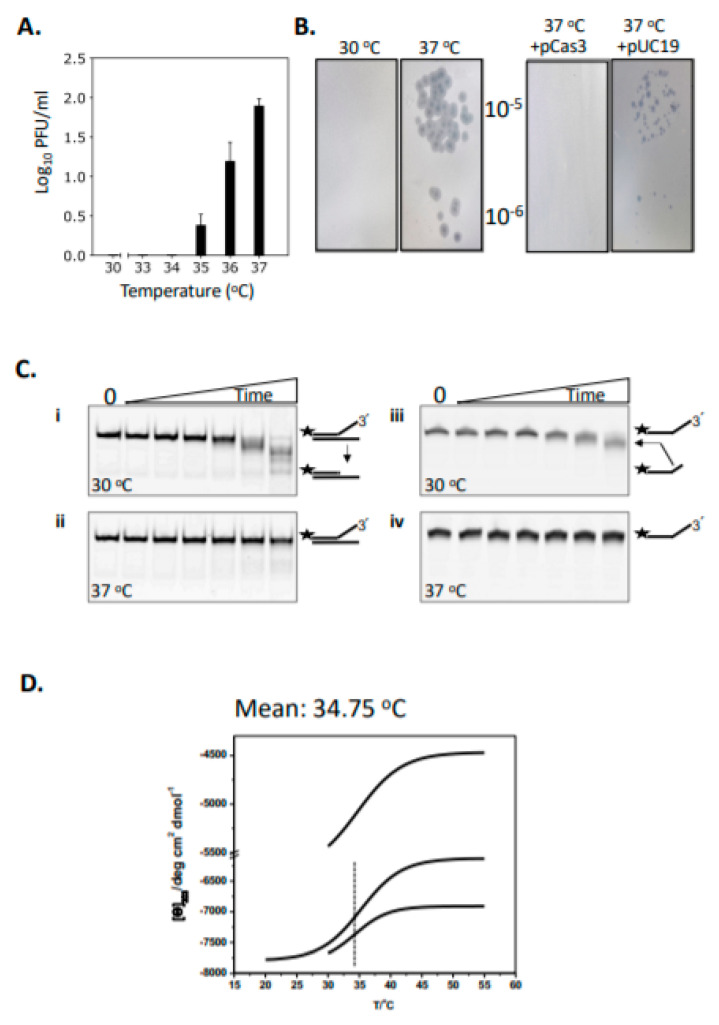
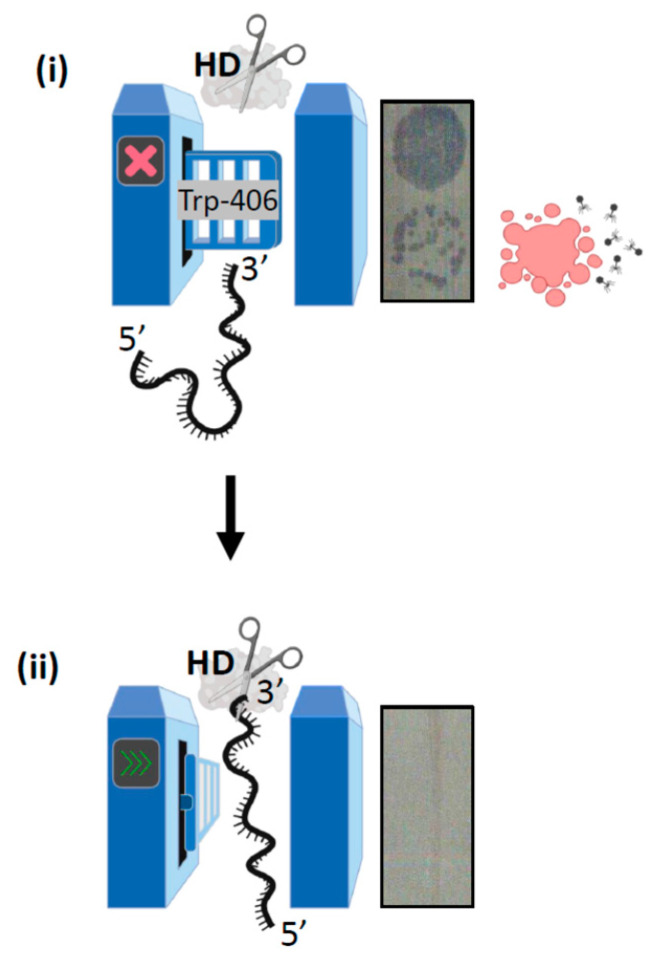
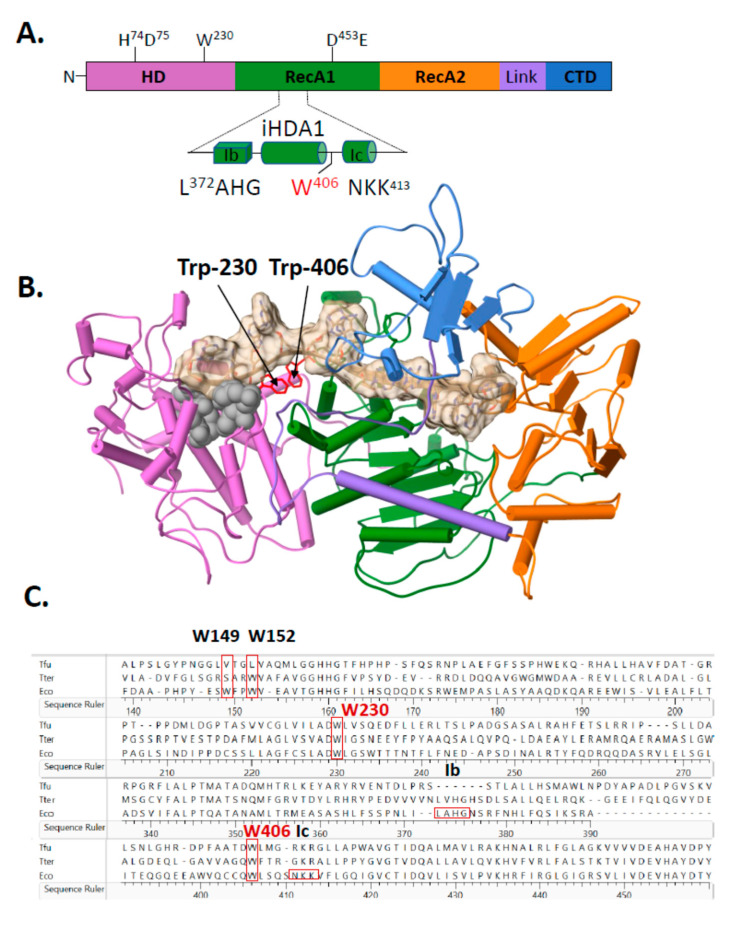
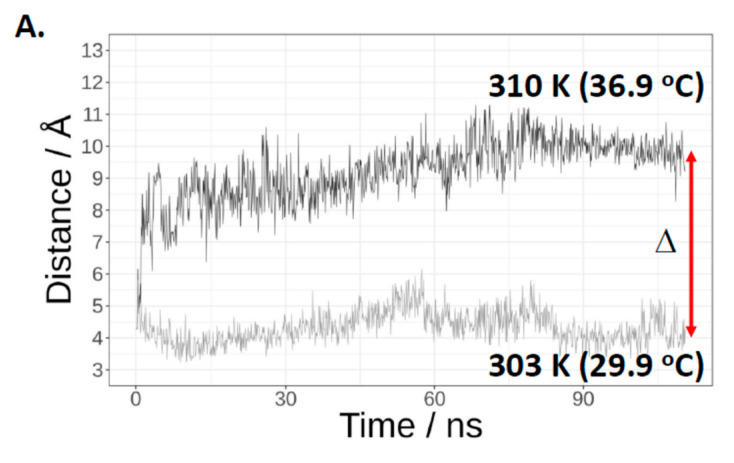
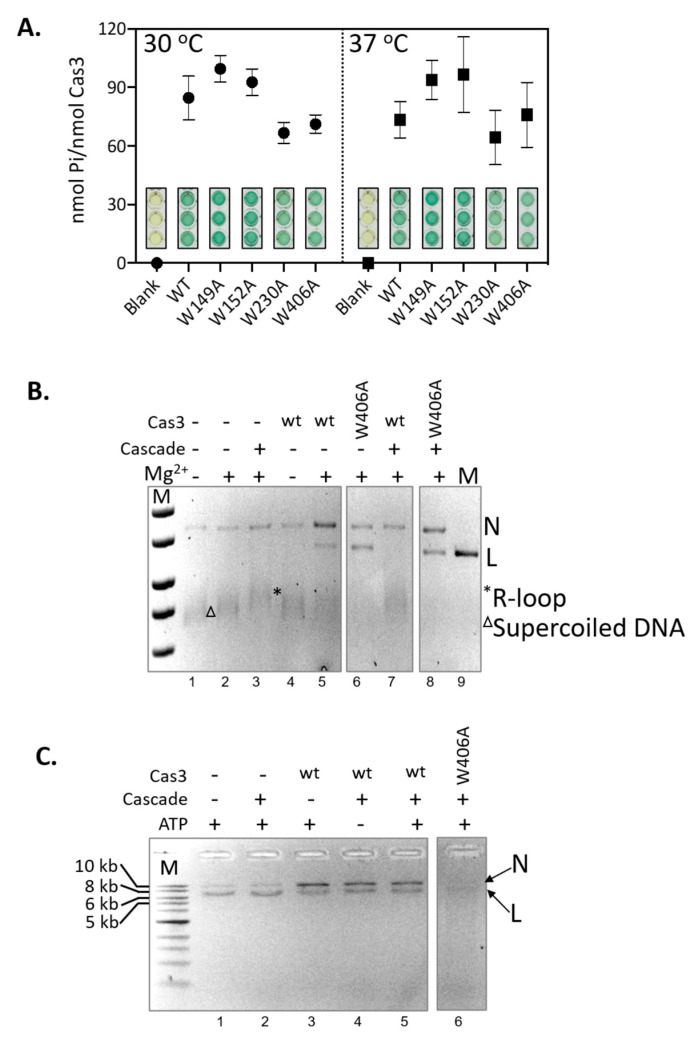
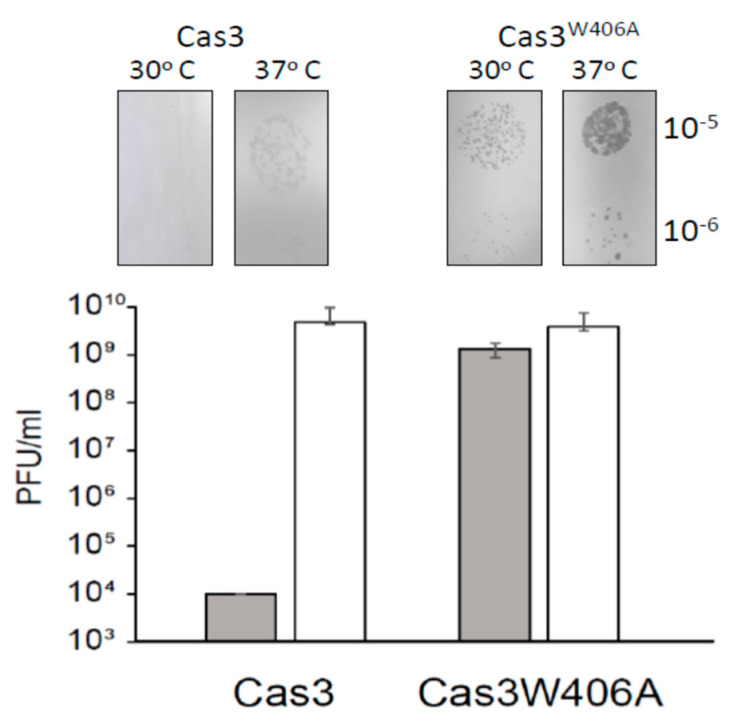
Cas3 is a ssDNA-targeting nuclease-helicase essential for class 1 prokaryotic CRISPR immunity systems, which has been utilized for genome editing in human cells. Cas3-DNA crystal structures show that ssDNA follows a pathway from helicase domains into a HD-nuclease active site, requiring protein conformational flexibility during DNA translocation. In genetic studies, we had noted that the efficacy of Cas3 in CRISPR immunity was drastically reduced when temperature was increased from 30 °C to 37 °C, caused by an unknown mechanism. Here, using Cas3 proteins, we show that reduced nuclease activity at higher temperature corresponds with measurable changes in protein structure. This effect of temperature on Cas3 was alleviated by changing a single highly conserved tryptophan residue (Trp-406) into an alanine. This Cas3 protein is a hyperactive nuclease that functions independently from temperature and from the interference effector module Cascade. Trp-406 is situated at the interface of Cas3 HD and RecA1 domains that is important for maneuvering DNA into the nuclease active site. Molecular dynamics simulations based on the experimental data showed temperature-induced changes in positioning of Trp-406 that either blocked or cleared the ssDNA pathway. We propose that Trp-406 forms a 'gate' for controlling Cas3 nuclease activity via access of ssDNA to the nuclease active site. The effect of temperature in these experiments may indicate allosteric control of Cas3 nuclease activity caused by changes in protein conformations. The hyperactive Cas3 protein may offer improved Cas3-based genetic editing in human cells.
Cas3 是一种 ssDNA 靶向核酸酶-解旋酶,对 1 类原核 CRISPR 免疫系统至关重要,已被用于人类细胞的基因组编辑。Cas3-DNA 晶体结构表明,ssDNA 遵循从解旋酶结构域到 HD 核酸酶活性位点的途径,在 DNA 易位过程中需要蛋白质构象灵活性。在遗传研究中,我们注意到 Cas3 在 CRISPR 免疫中的效力在温度从 30°C 升高到 37°C 时会大大降低,其原因是未知的机制。在这里,我们使用 Cas3 蛋白表明,在较高温度下,核酸酶活性的降低与可测量的蛋白质结构变化相对应。这种温度对 Cas3 的影响可以通过将单个高度保守的色氨酸残基(Trp-406)突变为丙氨酸来缓解。这种 Cas3 蛋白是一种超活性核酸酶,它独立于温度和干扰效应模块 Cascade 起作用。Trp-406 位于 Cas3 HD 和 RecA1 结构域的界面处,对于将 DNA 操纵到核酸酶活性位点很重要。基于实验数据的分子动力学模拟表明,温度诱导的 Trp-406 位置变化会阻止或清除 ssDNA 途径。我们提出 Trp-406 通过 ssDNA 进入核酸酶活性位点形成“门”,从而控制 Cas3 核酸酶活性。这些实验中的温度效应可能表明 Cas3 核酸酶活性的变构控制是由蛋白质构象变化引起的。这种超活性 Cas3 蛋白可能会在人类细胞中提供改进的 Cas3 基遗传编辑。