• 文献检索
  • 文档翻译
  • 深度研究
  • 学术资讯
  • Suppr Zotero 插件Zotero 插件
  • 邀请有礼
  • 套餐&价格
  • 历史记录
应用&插件
Suppr Zotero 插件Zotero 插件浏览器插件Mac 客户端Windows 客户端微信小程序
定价
高级版会员购买积分包购买API积分包
服务
文献检索文档翻译深度研究API 文档MCP 服务
关于我们
关于 Suppr公司介绍联系我们用户协议隐私条款
关注我们

Suppr 超能文献

核心技术专利:CN118964589B侵权必究
粤ICP备2023148730 号-1Suppr @ 2026

文献检索

告别复杂PubMed语法,用中文像聊天一样搜索,搜遍4000万医学文献。AI智能推荐,让科研检索更轻松。

立即免费搜索

文件翻译

保留排版,准确专业,支持PDF/Word/PPT等文件格式,支持 12+语言互译。

免费翻译文档

深度研究

AI帮你快速写综述,25分钟生成高质量综述,智能提取关键信息,辅助科研写作。

立即免费体验

柚()籽素和亚精胺对桑德霍夫病小鼠模型肠道微生物群和下丘脑组织的影响。

Effect of Yuzu () Seed Limonoids and Spermine on Intestinal Microbiota and Hypothalamic Tissue in the Sandhoff Disease Mouse Model.

机构信息

Faculty of Advanced Engineering, Chiba Institute of Technology, 2-1-1 Shibazono Narashino, Chiba 275-0023, Japan.

Graduate School of Engineering, Chiba Institute of Technology, 2-17-1 Tsudanuma Narashino, Chiba 275-0016, Japan.

出版信息

Med Sci (Basel). 2021 Mar 11;9(1):17. doi: 10.3390/medsci9010017.

DOI:10.3390/medsci9010017
PMID:33799734
原文链接:https://pmc.ncbi.nlm.nih.gov/articles/PMC8005996/
Abstract

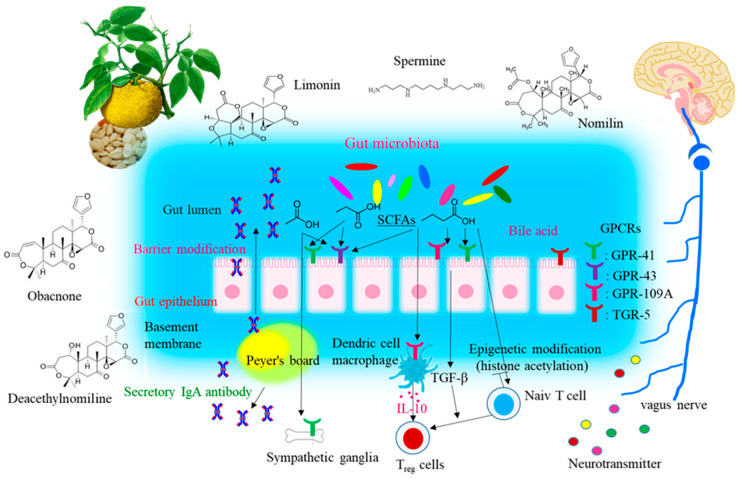
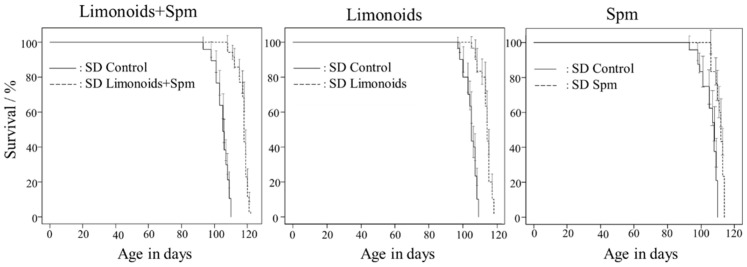
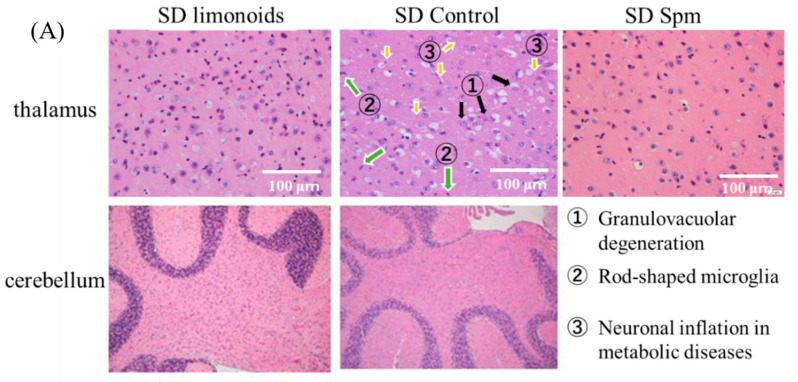
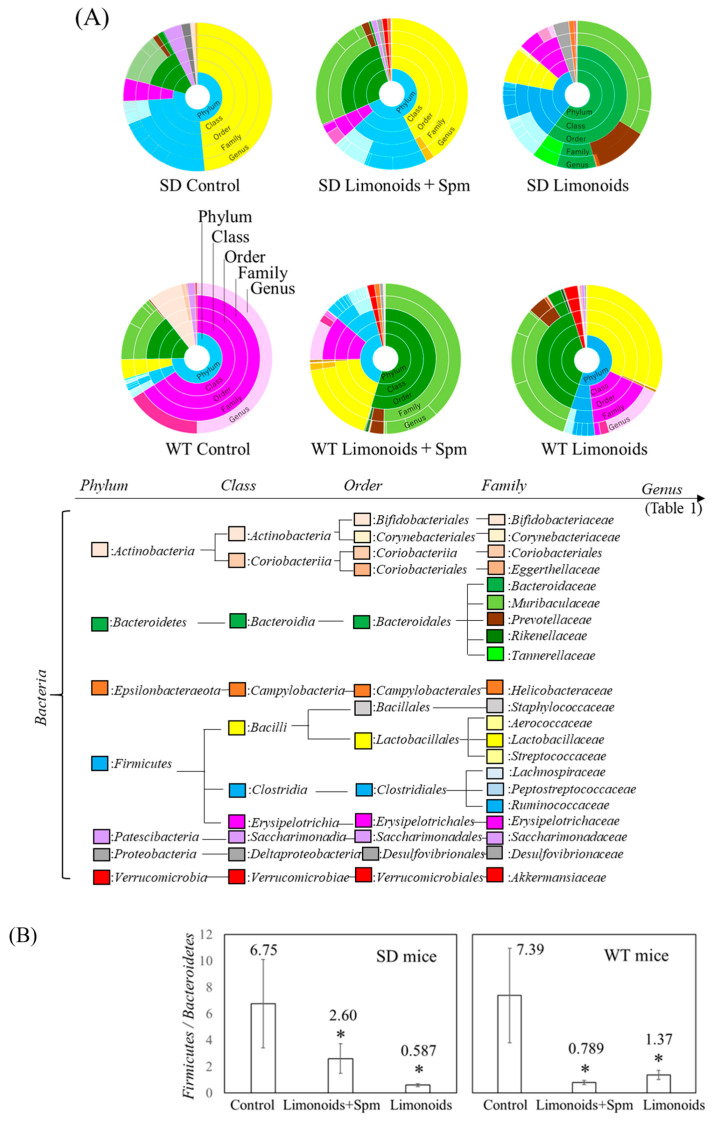
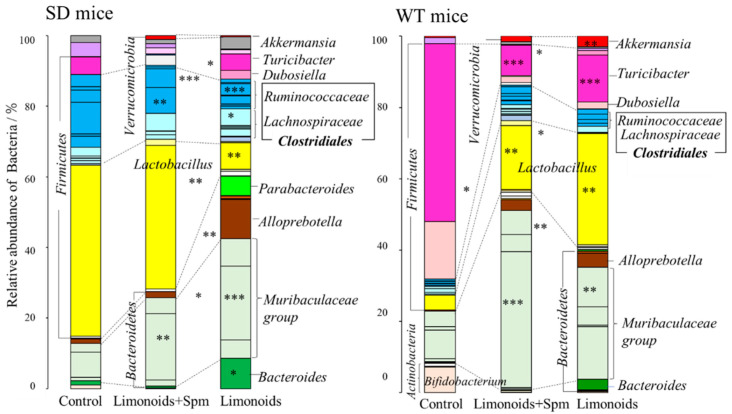
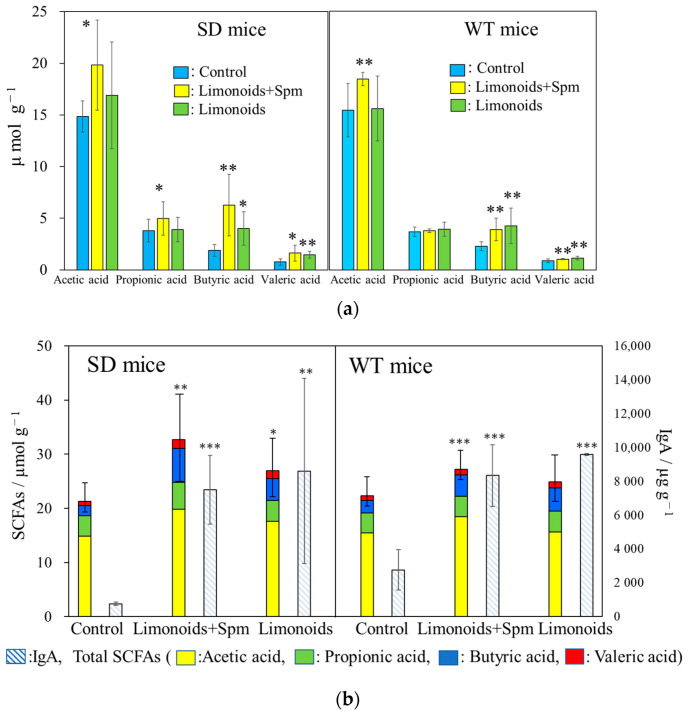
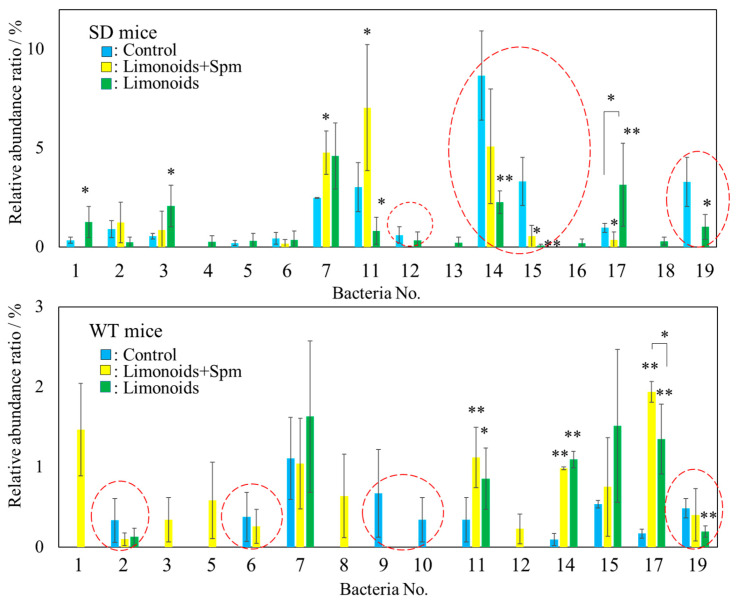
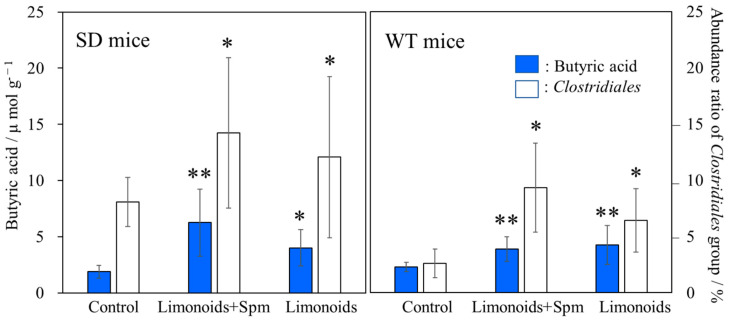
The effect of limonoids and spermine (Spm) extracted from yuzu () seeds on the gut and the brain in a mouse model with Sandhoff disease (SD) was investigated. Wild-type and SD mice were fed a normal diet, or a diet supplemented with limonoid, Spm, or limonoid + Spm for 14-18 weeks, and then 16S rRNA gene amplicon sequencing with extracted DNA from their feces was executed. For SD control mice, intestinal microbiota was mostly composed of and linked to dysbiosis. For SD and wild-type mice fed with limonoids + Spm or limonoids alone, intestinal microbiota was rich in mucin-degrading bacteria, including , , and , and displayed a higher production of short-chain fatty acids and immunoglobulin A. Additionally, SD mice fed with limonoids + Spm or limonoids alone had less inflammation in hypothalamic tissues and displayed a greater number of neurons. Administration of limonoids and/or Spm improved the proportions of beneficial intestinal microbiota to host health and reduced neuronal degeneration in SD mice. Yuzu seed limonoids and Spermine may help to maintain the homeostasis of intestinal microbiota and hypothalamic tissue in the SD mouse model.

摘要

从日本蜜柚()种子中提取的柠烯素和亚精胺(Spm)对沙氏病(SD)模型小鼠的肠道和大脑的影响进行了研究。野生型和 SD 小鼠分别喂食正常饮食、含柠烯素饮食、含 Spm 饮食或含柠烯素+Spm 饮食 14-18 周,然后从粪便中提取 DNA 进行 16S rRNA 基因扩增子测序。SD 对照组小鼠的肠道微生物群主要由 组成,并与肠道菌群失调有关。对于喂食柠烯素+Spm 或单独喂食柠烯素的 SD 和野生型小鼠,肠道微生物群富含黏蛋白降解菌,包括 、 、 和 ,并表现出更高的短链脂肪酸和免疫球蛋白 A 产量。此外,喂食柠烯素+Spm 或单独喂食柠烯素的 SD 小鼠下丘脑组织炎症减少,神经元数量增加。柠烯素和/或 Spm 的给药改善了有益肠道微生物群对宿主健康的比例,并减少了 SD 小鼠的神经元变性。日本蜜柚种子中的柠烯素和亚精胺可能有助于维持 SD 小鼠模型中肠道微生物群和下丘脑组织的内稳态。
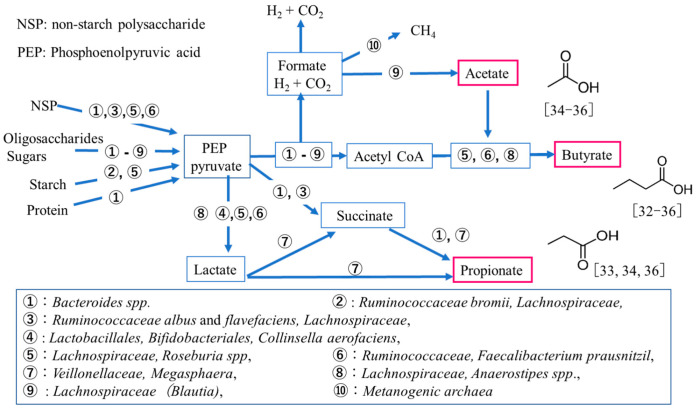
https://cdn.ncbi.nlm.nih.gov/pmc/blobs/fa18/8005996/f86829fc0d7a/medsci-09-00017-g009.jpg
https://cdn.ncbi.nlm.nih.gov/pmc/blobs/fa18/8005996/950099de774b/medsci-09-00017-g001.jpg
https://cdn.ncbi.nlm.nih.gov/pmc/blobs/fa18/8005996/bda7a525e033/medsci-09-00017-g002.jpg
https://cdn.ncbi.nlm.nih.gov/pmc/blobs/fa18/8005996/40e763bd9e82/medsci-09-00017-g003a.jpg
https://cdn.ncbi.nlm.nih.gov/pmc/blobs/fa18/8005996/3dc5e36b3084/medsci-09-00017-g004.jpg
https://cdn.ncbi.nlm.nih.gov/pmc/blobs/fa18/8005996/ff789e52004b/medsci-09-00017-g005.jpg
https://cdn.ncbi.nlm.nih.gov/pmc/blobs/fa18/8005996/a24bcf8b3cd3/medsci-09-00017-g006.jpg
https://cdn.ncbi.nlm.nih.gov/pmc/blobs/fa18/8005996/fb3924fc633c/medsci-09-00017-g007.jpg
https://cdn.ncbi.nlm.nih.gov/pmc/blobs/fa18/8005996/61842c146b06/medsci-09-00017-g008.jpg
https://cdn.ncbi.nlm.nih.gov/pmc/blobs/fa18/8005996/f86829fc0d7a/medsci-09-00017-g009.jpg
https://cdn.ncbi.nlm.nih.gov/pmc/blobs/fa18/8005996/950099de774b/medsci-09-00017-g001.jpg
https://cdn.ncbi.nlm.nih.gov/pmc/blobs/fa18/8005996/bda7a525e033/medsci-09-00017-g002.jpg
https://cdn.ncbi.nlm.nih.gov/pmc/blobs/fa18/8005996/40e763bd9e82/medsci-09-00017-g003a.jpg
https://cdn.ncbi.nlm.nih.gov/pmc/blobs/fa18/8005996/3dc5e36b3084/medsci-09-00017-g004.jpg
https://cdn.ncbi.nlm.nih.gov/pmc/blobs/fa18/8005996/ff789e52004b/medsci-09-00017-g005.jpg
https://cdn.ncbi.nlm.nih.gov/pmc/blobs/fa18/8005996/a24bcf8b3cd3/medsci-09-00017-g006.jpg
https://cdn.ncbi.nlm.nih.gov/pmc/blobs/fa18/8005996/fb3924fc633c/medsci-09-00017-g007.jpg
https://cdn.ncbi.nlm.nih.gov/pmc/blobs/fa18/8005996/61842c146b06/medsci-09-00017-g008.jpg
https://cdn.ncbi.nlm.nih.gov/pmc/blobs/fa18/8005996/f86829fc0d7a/medsci-09-00017-g009.jpg

相似文献

1
Effect of Yuzu () Seed Limonoids and Spermine on Intestinal Microbiota and Hypothalamic Tissue in the Sandhoff Disease Mouse Model.柚()籽素和亚精胺对桑德霍夫病小鼠模型肠道微生物群和下丘脑组织的影响。
Med Sci (Basel). 2021 Mar 11;9(1):17. doi: 10.3390/medsci9010017.
2
The functional evaluation of waste yuzu (Citrus junos) seeds.废弃柚子(Citrus junos)籽的功能评估。
Food Funct. 2014 Feb;5(2):330-6. doi: 10.1039/c3fo60440c.
3
Sudachinoid- and Ichangensin-Type Limonoids from Downregulate Pro-Inflammatory Cytokines.具有沙蟾毒精和吴茱萸新碱型结构的柠檬苦素通过下调促炎细胞因子。
Int J Mol Sci. 2020 Sep 22;21(18):6963. doi: 10.3390/ijms21186963.
4
In vivo induction of phase II detoxifying enzymes, glutathione transferase and quinone reductase by citrus triterpenoids.体内诱导柑橘三萜类化合物对 II 相解毒酶、谷胱甘肽转移酶和醌还原酶。
BMC Complement Altern Med. 2010 Sep 17;10:51. doi: 10.1186/1472-6882-10-51.
5
Yuzu (Citrus junos Tanaka) Peel Attenuates Dextran Sulfate Sodium-induced Murine Experimental Colitis.柚子(Citrus junos Tanaka)皮减轻葡聚糖硫酸钠诱导的小鼠实验性结肠炎。
J Oleo Sci. 2018 Mar 1;67(3):335-344. doi: 10.5650/jos.ess17184. Epub 2018 Feb 19.
6
Amelioration of Alzheimer's Disease by Gut-Pancreas-Liver-Brain Interaction in an App Knock-In Mouse Model.APP基因敲入小鼠模型中肠-胰腺-肝脏-脑轴相互作用对阿尔茨海默病的改善作用
Life (Basel). 2021 Dec 27;12(1):34. doi: 10.3390/life12010034.
7
Enteric Delivery of Regenerating Family Member 3 alpha Alters the Intestinal Microbiota and Controls Inflammation in Mice With Colitis.肠内递送再生家庭成员 3α可改变结肠炎小鼠的肠道微生物群并控制炎症。
Gastroenterology. 2018 Mar;154(4):1009-1023.e14. doi: 10.1053/j.gastro.2017.11.003. Epub 2017 Nov 11.
8
Differential inhibition of human cancer cell proliferation by citrus limonoids.柑橘类柠檬苦素对人类癌细胞增殖的差异性抑制作用
Nutr Cancer. 2001;40(2):180-4. doi: 10.1207/S15327914NC402_15.
9
Isolated from Different Hosts Modifies the Intestinal Microbiota and Displays Differential Metabolic and Immunomodulatory Properties in Mice Fed a High-Fat Diet.从不同宿主中分离出来会改变肠道微生物群,并在高脂肪饮食喂养的小鼠中显示出不同的代谢和免疫调节特性。
Nutrients. 2021 Mar 21;13(3):1017. doi: 10.3390/nu13031017.
10
Navy bean supplemented high-fat diet improves intestinal health, epithelial barrier integrity and critical aspects of the obese inflammatory phenotype.海军豆高脂肪饮食补充可改善肠道健康、上皮屏障完整性和肥胖炎症表型的关键方面。
J Nutr Biochem. 2019 Aug;70:91-104. doi: 10.1016/j.jnutbio.2019.04.009. Epub 2019 May 10.

引用本文的文献

1
Oral Ingestion of Yuzu Seed Oil Suppresses the Development of Atopic Dermatitis-like Skin Lesions in NC/Nga Mice.口服柚籽精油可抑制 NC/Nga 小鼠特应性皮炎样皮肤损伤的发展。
Int J Mol Sci. 2024 Feb 26;25(5):2689. doi: 10.3390/ijms25052689.
2
Targeting GM2 Ganglioside Accumulation in Dementia: Current Therapeutic Approaches and Future Directions.针对痴呆症中GM2神经节苷脂蓄积:当前治疗方法与未来方向
Curr Mol Med. 2024;24(11):1329-1345. doi: 10.2174/0115665240264547231017110613.
3
Amelioration of Alzheimer's Disease by Gut-Pancreas-Liver-Brain Interaction in an App Knock-In Mouse Model.

本文引用的文献

1
Gut-Brain Axis: Role of Gut Microbiota on Neurological Disorders and How Probiotics/Prebiotics Beneficially Modulate Microbial and Immune Pathways to Improve Brain Functions.肠脑轴:肠道微生物群对神经紊乱的作用,以及益生菌/益生元如何通过有益地调节微生物和免疫途径来改善大脑功能。
Int J Mol Sci. 2020 Oct 13;21(20):7551. doi: 10.3390/ijms21207551.
2
Rethinking mucosal antibody responses: IgM, IgG and IgD join IgA.重新思考黏膜抗体应答:IgM、IgG 和 IgD 加入 IgA。
Nat Rev Immunol. 2020 Jul;20(7):427-441. doi: 10.1038/s41577-019-0261-1. Epub 2020 Feb 3.
3
Demystifying the manipulation of host immunity, metabolism, and extraintestinal tumors by the gut microbiome.
APP基因敲入小鼠模型中肠-胰腺-肝脏-脑轴相互作用对阿尔茨海默病的改善作用
Life (Basel). 2021 Dec 27;12(1):34. doi: 10.3390/life12010034.
揭开肠道微生物组对宿主免疫、代谢和肠外肿瘤的操纵之谜。
Signal Transduct Target Ther. 2019 Oct 12;4:41. doi: 10.1038/s41392-019-0074-5. eCollection 2019.
4
Fecal Metaproteomic Analysis Reveals Unique Changes of the Gut Microbiome Functions After Consumption of Sourdough Bread.粪便宏蛋白质组学分析揭示了食用酸面团面包后肠道微生物群功能的独特变化。
Front Microbiol. 2019 Jul 30;10:1733. doi: 10.3389/fmicb.2019.01733. eCollection 2019.
5
The path toward using microbial metabolites as therapies.利用微生物代谢产物作为疗法的途径。
EBioMedicine. 2019 Jun;44:747-754. doi: 10.1016/j.ebiom.2019.05.063. Epub 2019 Jun 11.
6
The role of short-chain fatty acids in microbiota-gut-brain communication.短链脂肪酸在肠道菌群-肠-脑通讯中的作用。
Nat Rev Gastroenterol Hepatol. 2019 Aug;16(8):461-478. doi: 10.1038/s41575-019-0157-3.
7
Recirculating Intestinal IgA-Producing Cells Regulate Neuroinflammation via IL-10.循环肠道 IgA 产生细胞通过 IL-10 调节神经炎症。
Cell. 2019 Jan 24;176(3):610-624.e18. doi: 10.1016/j.cell.2018.11.035. Epub 2019 Jan 3.
8
Plasma Trimethylamine N-Oxide as a Novel Biomarker for Plaque Rupture in Patients With ST-Segment-Elevation Myocardial Infarction.血浆三甲胺 N-氧化物作为 ST 段抬高型心肌梗死患者斑块破裂的新型生物标志物。
Circ Cardiovasc Interv. 2019 Jan;12(1):e007281. doi: 10.1161/CIRCINTERVENTIONS.118.007281.
9
Microbiota-derived short-chain fatty acids promote Th1 cell IL-10 production to maintain intestinal homeostasis.微生物群衍生的短链脂肪酸促进 Th1 细胞产生 IL-10 以维持肠道内稳态。
Nat Commun. 2018 Sep 3;9(1):3555. doi: 10.1038/s41467-018-05901-2.
10
IgA regulates the composition and metabolic function of gut microbiota by promoting symbiosis between bacteria.IgA 通过促进细菌共生来调节肠道微生物群落的组成和代谢功能。
J Exp Med. 2018 Aug 6;215(8):2019-2034. doi: 10.1084/jem.20180427. Epub 2018 Jul 24.