School of Chinese Medicine, Hong Kong Baptist University, Hong Kong, China.
Centre for Regenerative Medicine and Health, Hong Kong Institute of Science and Innovation-CAS Limited, Hong Kong, China.
Molecules. 2021 Mar 11;26(6):1544. doi: 10.3390/molecules26061544.
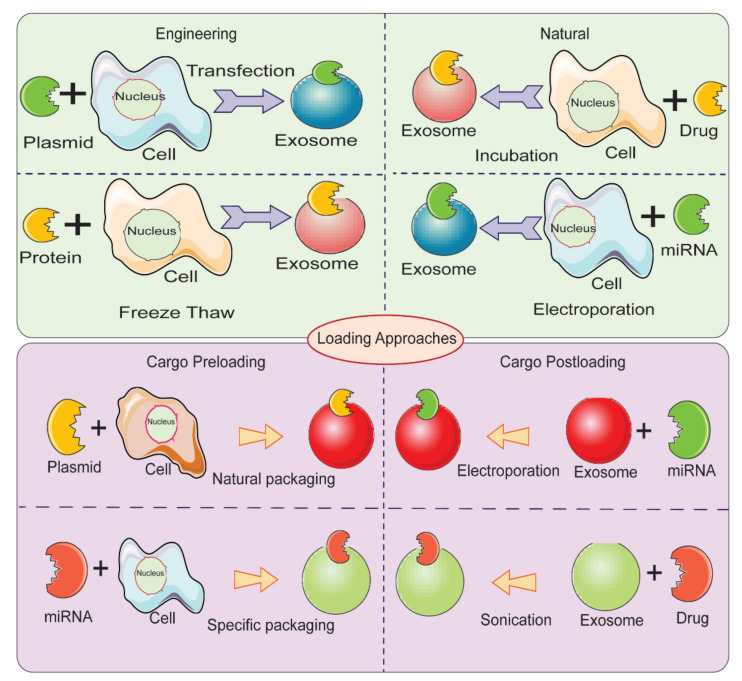
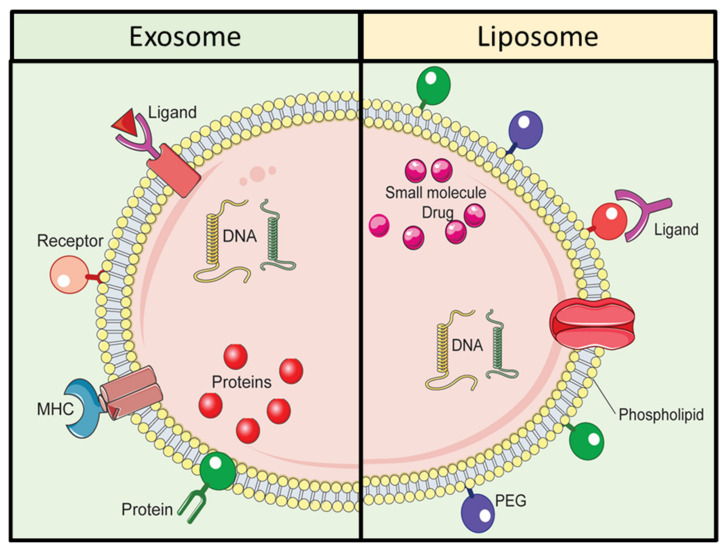
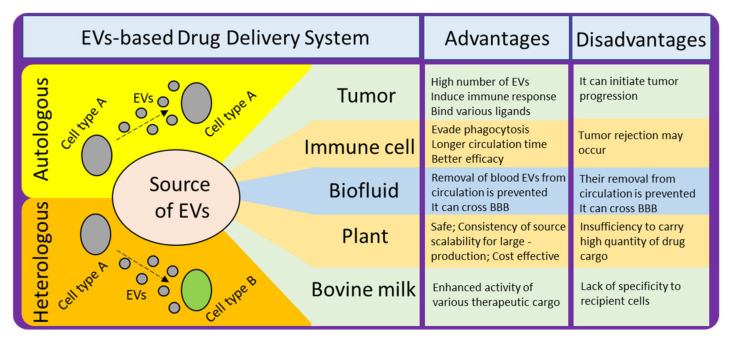
Extracellular vesicles (EVs) play major roles in intracellular communication and participate in several biological functions in both normal and pathological conditions. Surface modification of EVs via various ligands, such as proteins, peptides, or aptamers, offers great potential as a means to achieve targeted delivery of therapeutic cargo, i.e., in drug delivery systems (DDS). This review summarizes recent studies pertaining to the development of EV-based DDS and its advantages compared to conventional nano drug delivery systems (NDDS). First, we compare liposomes and exosomes in terms of their distinct benefits in DDS. Second, we analyze what to consider for achieving better isolation, yield, and characterization of EVs for DDS. Third, we summarize different methods for the modification of surface of EVs, followed by discussion about different origins of EVs and their role in developing DDS. Next, several major methods for encapsulating therapeutic cargos in EVs have been summarized. Finally, we discuss key challenges and pose important open questions which warrant further investigation to develop more effective EV-based DDS.
细胞外囊泡(EVs)在细胞内通讯中发挥重要作用,并参与正常和病理条件下的多种生物学功能。通过各种配体(如蛋白质、肽或适体)对 EVs 进行表面修饰,为实现治疗性 cargo 的靶向递送提供了巨大潜力,即药物递送系统(DDS)。本综述总结了关于基于 EV 的 DDS 的最新研究及其与传统纳米药物递送系统(NDDS)相比的优势。首先,我们比较了脂质体和外泌体在 DDS 方面的不同优势。其次,我们分析了为了实现更好的 DDS 中 EV 的分离、产量和表征,需要考虑的因素。第三,我们总结了修饰 EV 表面的不同方法,随后讨论了 EV 的不同来源及其在开发 DDS 中的作用。接下来,总结了几种将治疗性 cargo 封装在 EV 中的主要方法。最后,我们讨论了关键挑战,并提出了一些重要的开放性问题,需要进一步研究以开发更有效的基于 EV 的 DDS。