Paradzik Tina, Bandini Cecilia, Mereu Elisabetta, Labrador Maria, Taiana Elisa, Amodio Nicola, Neri Antonino, Piva Roberto
Department of Molecular Biotechnology and Health Sciences, University of Torino, 10126 Torino, Italy.
Department of Oncology and Hemato-oncology, University of Milano, 20122 Milano, Italy.
Cancers (Basel). 2021 Mar 11;13(6):1235. doi: 10.3390/cancers13061235.
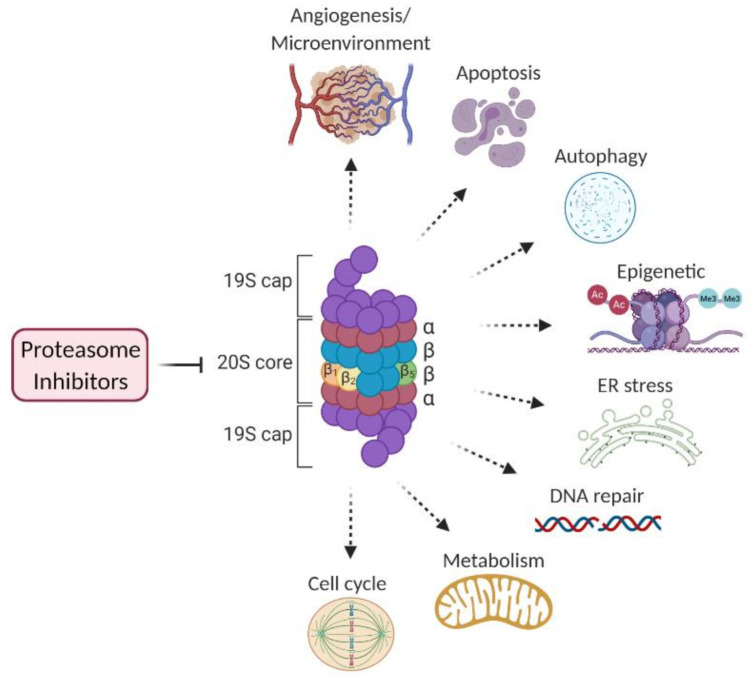
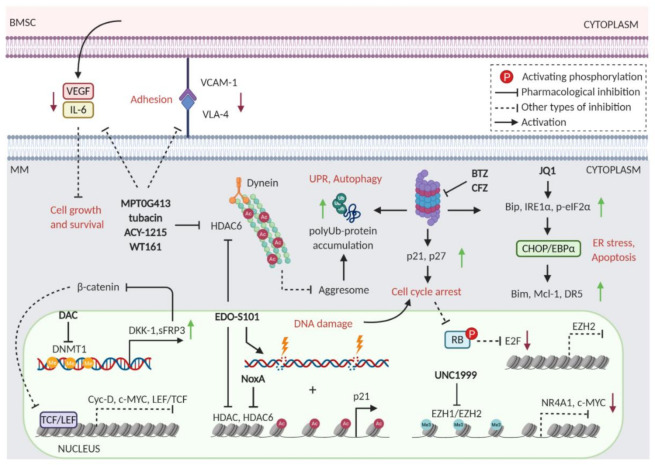
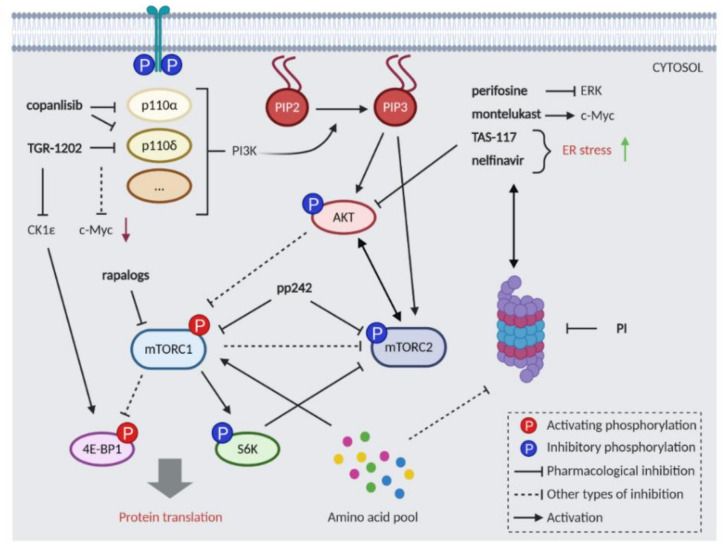
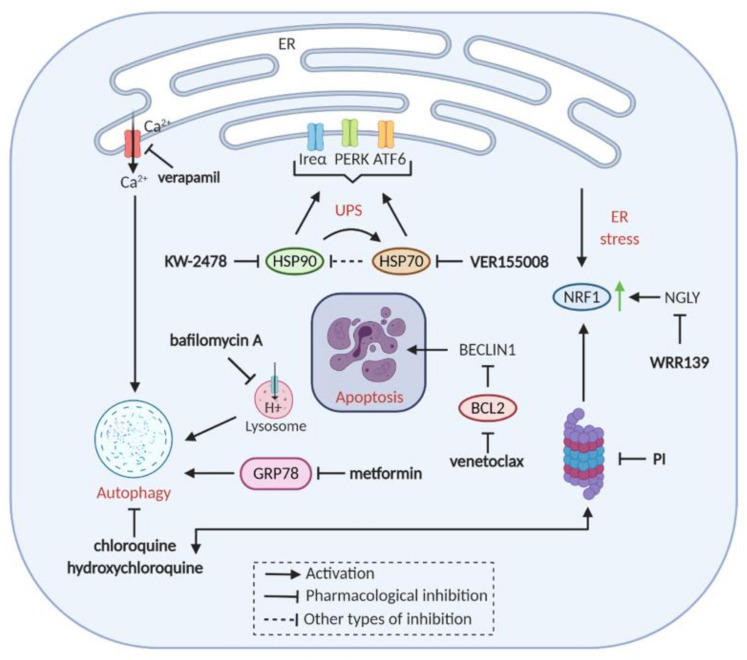
Multiple myeloma is a malignancy of terminally differentiated plasma cells, characterized by an extreme genetic heterogeneity that poses great challenges for its successful treatment. Due to antibody overproduction, MM cells depend on the precise regulation of the protein degradation systems. Despite the success of PIs in MM treatment, resistance and adverse toxic effects such as peripheral neuropathy and cardiotoxicity could arise. To this end, the use of rational combinatorial treatments might allow lowering the dose of inhibitors and therefore, minimize their side-effects. Even though the suppression of different cellular pathways in combination with proteasome inhibitors have shown remarkable anti-myeloma activities in preclinical models, many of these promising combinations often failed in clinical trials. Substantial progress has been made by the simultaneous targeting of proteasome and different aspects of MM-associated immune dysfunctions. Moreover, targeting deranged metabolic hubs could represent a new avenue to identify effective therapeutic combinations with PIs. Finally, epigenetic drugs targeting either DNA methylation, histone modifiers/readers, or chromatin remodelers are showing pleiotropic anti-myeloma effects alone and in combination with PIs. We envisage that the positive outcome of patients will probably depend on the availability of more effective drug combinations and treatment of early MM stages. Therefore, the identification of sensitive targets and aberrant signaling pathways is instrumental for the development of new personalized therapies for MM patients.
多发性骨髓瘤是终末分化浆细胞的恶性肿瘤,其特征是具有极端的基因异质性,这给其成功治疗带来了巨大挑战。由于抗体过度产生,骨髓瘤细胞依赖于蛋白质降解系统的精确调控。尽管蛋白酶体抑制剂(PIs)在骨髓瘤治疗中取得了成功,但仍可能出现耐药性以及外周神经病变和心脏毒性等不良毒性作用。为此,使用合理的联合治疗可能会降低抑制剂的剂量,从而将其副作用降至最低。尽管在临床前模型中,联合蛋白酶体抑制剂抑制不同细胞途径已显示出显著的抗骨髓瘤活性,但许多这些有前景的联合治疗在临床试验中往往失败。通过同时靶向蛋白酶体和骨髓瘤相关免疫功能障碍的不同方面已取得了实质性进展。此外,靶向紊乱的代谢枢纽可能代表了一种识别与蛋白酶体抑制剂有效治疗组合的新途径。最后,靶向DNA甲基化、组蛋白修饰剂/读取器或染色质重塑剂的表观遗传药物单独使用以及与蛋白酶体抑制剂联合使用时均显示出多效性抗骨髓瘤作用。我们设想,患者的积极治疗结果可能取决于更有效的药物组合的可用性以及早期骨髓瘤阶段的治疗。因此,识别敏感靶点和异常信号通路对于开发针对骨髓瘤患者的新的个性化疗法至关重要。