Moore Kelly, Os Rebecca Wilson-van, Dusane Devendra H, Brooks Jacob R, Delury Craig, Aiken Sean S, Laycock Phillip A, Sullivan Anne C, Granger Jeffrey F, Dipane Matthew V, McPherson Edward J, Stoodley Paul
Wexner Medical Center, Department of Microbial Infection and Immunity, The Ohio State University, Columbus, OH 43210, USA.
Biocomposites Ltd., Keele Science Park, Keele, Staffordshire ST5 5NL, UK.
Antibiotics (Basel). 2021 Mar 8;10(3):270. doi: 10.3390/antibiotics10030270.
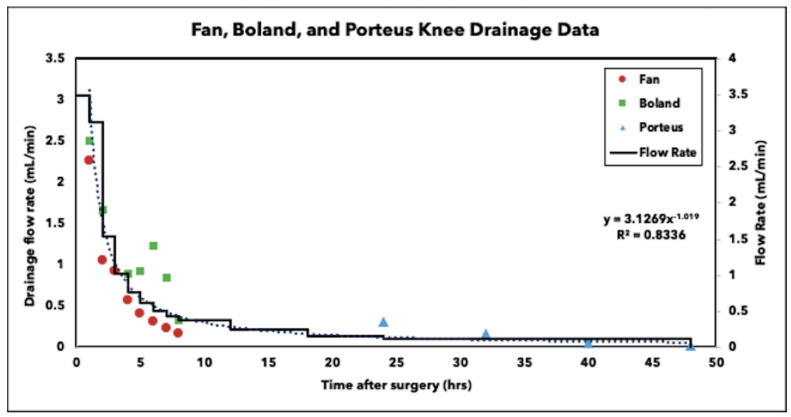
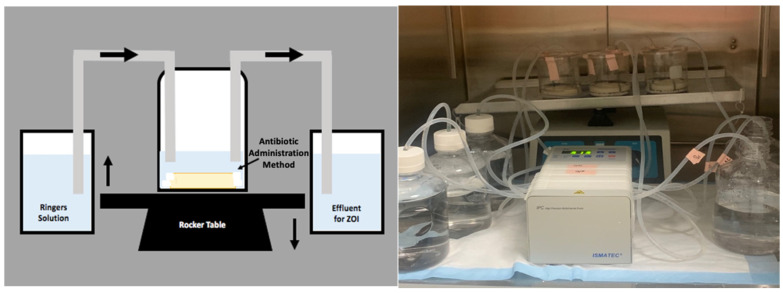
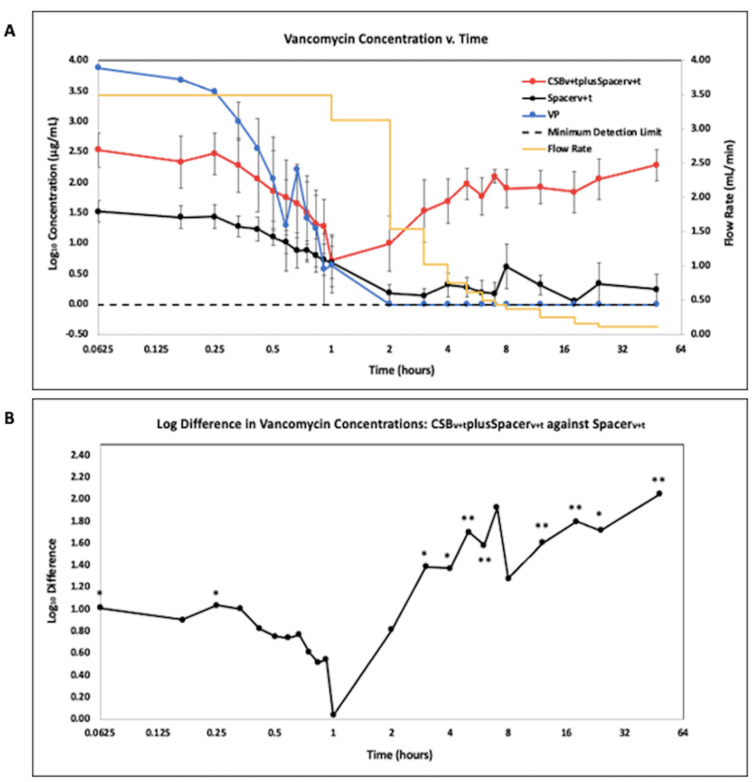
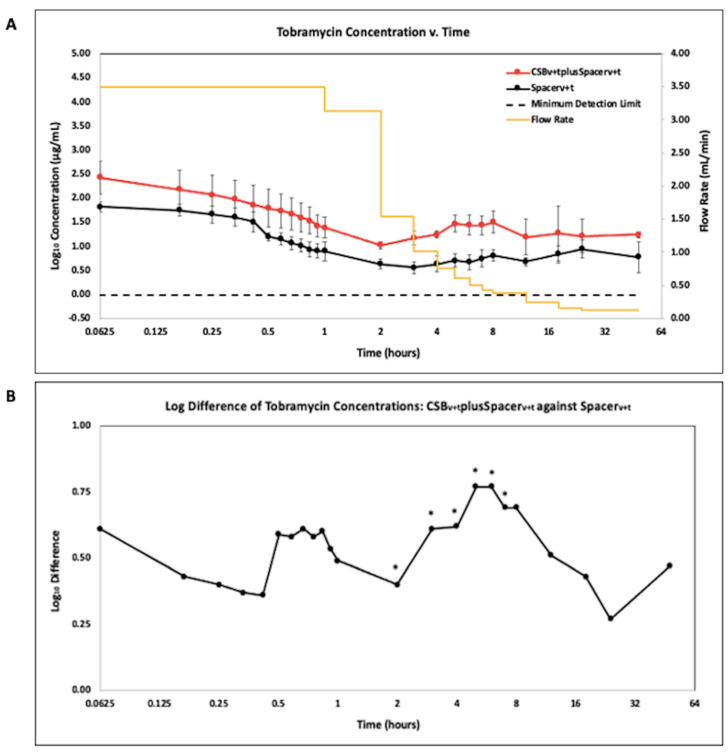
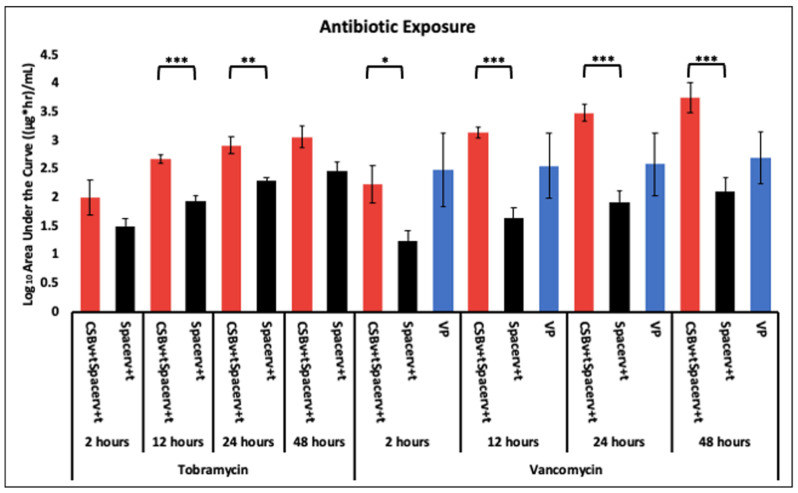
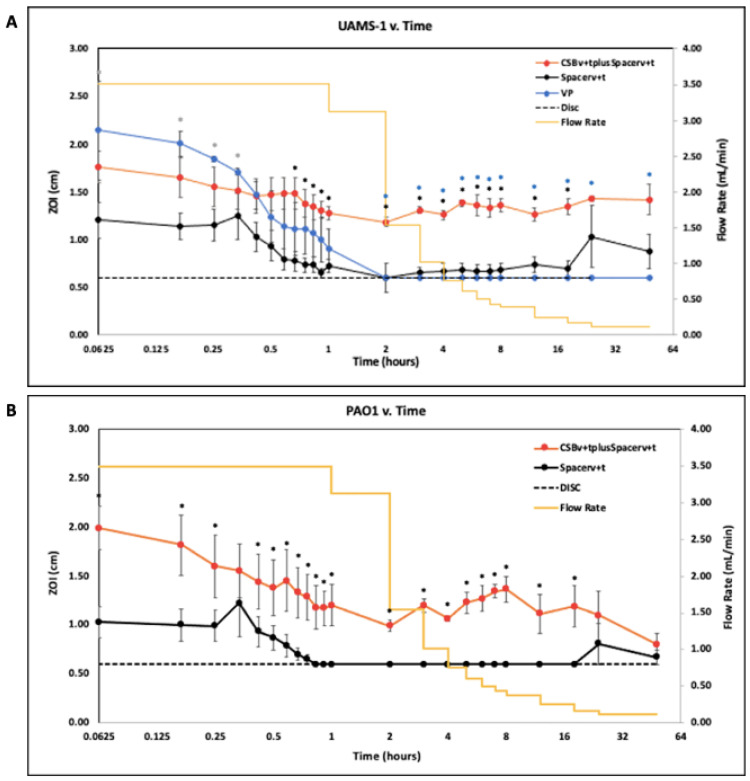
Antibiotic-tolerant bacterial biofilms are notorious in causing PJI. Antibiotic loaded calcium sulfate bead (CSB) bone void fillers and PMMA cement and powdered vancomycin (VP) have been used to achieve high local antibiotic concentrations; however, the effect of drainage on concentration is poorly understood. We designed an in vitro flow reactor which provides post-surgical drainage rates after knee revision surgery to determine antibiotic concentration profiles. Tobramycin and vancomycin concentrations were determined using LCMS, zones of inhibition confirmed potency and the area under the concentration-time curve (AUC) at various time points was used to compare applications. Concentrations of antibiotcs from the PMMA and CSB initially increased then decreased before increasing after 2 to 3 h, correlating with decreased drainage, demonstrating that concentration was controlled by both release and flow rates. VP achieved the greatest AUC after 2 h, but rapidly dropped below inhibitory levels. CSB combined with PMMA achieved the greatest AUC after 2 h. The combination of PMMA and CSB may present an effective combination for killing biofilm bacteria; however, cytotoxicity and appropriate antibiotic stewardship should be considered. The model may be useful in comparing antibiotic concentration profiles when varying fluid exchange is important. However, further studies are required to assess its utility for predicting clinical efficacy.
耐抗生素的细菌生物膜在导致人工关节感染(PJI)方面声名狼藉。负载抗生素的硫酸钙珠(CSB)骨缺损填充剂、聚甲基丙烯酸甲酯(PMMA)骨水泥和万古霉素粉末(VP)已被用于实现高局部抗生素浓度;然而,引流对浓度的影响却知之甚少。我们设计了一种体外流动反应器,该反应器可提供膝关节翻修手术后的术后引流速率,以确定抗生素浓度分布。使用液相色谱 - 质谱联用仪(LCMS)测定妥布霉素和万古霉素浓度,通过抑菌圈确认效力,并使用不同时间点的浓度 - 时间曲线下面积(AUC)来比较不同应用。来自PMMA和CSB的抗生素浓度最初升高,然后下降,在2至3小时后又升高,这与引流减少相关,表明浓度受释放速率和流速两者控制。VP在2小时后达到最大AUC,但迅速降至抑制水平以下。CSB与PMMA组合在2小时后达到最大AUC。PMMA和CSB的组合可能是杀死生物膜细菌的有效组合;然而,应考虑细胞毒性和适当的抗生素管理。当不同的液体交换很重要时,该模型可能有助于比较抗生素浓度分布。然而,需要进一步研究以评估其预测临床疗效的效用。