Chmielińska Magdalena, Olesińska Marzena, Romanowska-Próchnicka Katarzyna, Szukiewicz Dariusz
Department of Biophysics and Human Physiology, Medical University of Warsaw, Chałubińskiego 5, 02-004 Warsaw, Poland.
Department of Connective Tissue Diseases, National Institute of Geriatrics, Rheumatology and Rehabilitation, Spartańska 1, 02-637 Warsaw, Poland.
J Clin Med. 2021 Mar 8;10(5):1131. doi: 10.3390/jcm10051131.
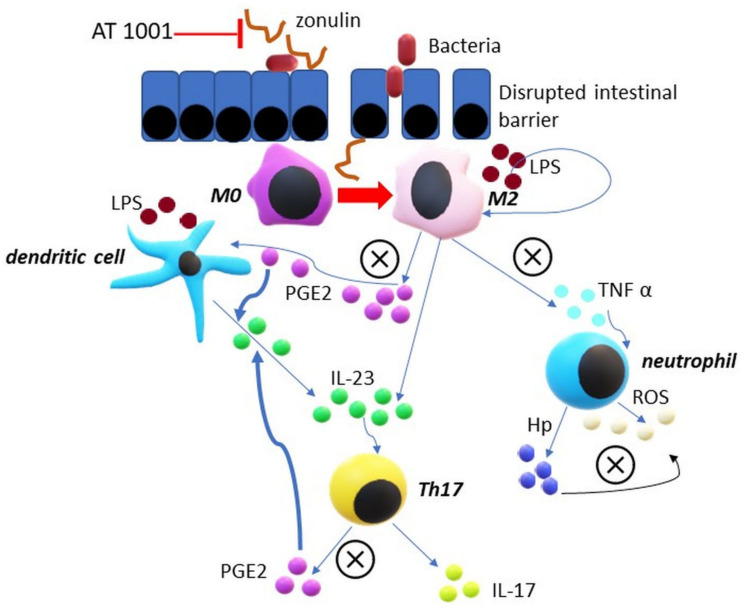
Haptoglobin (Hp) is an acute phase protein which supports the immune response and protects tissues from free radicals. Its concentration correlates with disease activity in spondyloarthropathies (SpAs). The Hp polymorphism determines the functional differences between Hp1 and Hp2 protein products. The role of the Hp polymorphism has been demonstrated in many diseases. In particular, the Hp 2-2 phenotype has been associated with the unfavorable course of some inflammatory and autoimmune disorders. Its potential role in modulating the immune system in SpA is still unknown. This article contains pathophysiological considerations on the potential relationship between Hp, its polymorphism and SpA.
触珠蛋白(Hp)是一种急性期蛋白,可支持免疫反应并保护组织免受自由基的侵害。其浓度与脊柱关节病(SpA)的疾病活动相关。Hp多态性决定了Hp1和Hp2蛋白产物之间的功能差异。Hp多态性在许多疾病中都发挥了作用。特别是,Hp 2-2表型与某些炎症性和自身免疫性疾病的不良病程有关。其在SpA中调节免疫系统的潜在作用仍不清楚。本文包含了关于Hp及其多态性与SpA之间潜在关系的病理生理学思考。