Department of Molecular Biology of Cancer, Medical University of Lodz, 92-215 Lodz, Poland.
Int J Mol Sci. 2021 Mar 28;22(7):3485. doi: 10.3390/ijms22073485.
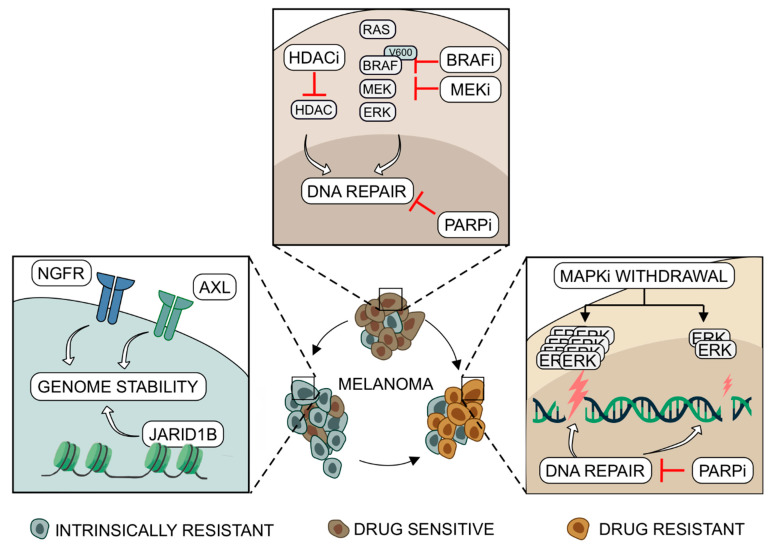
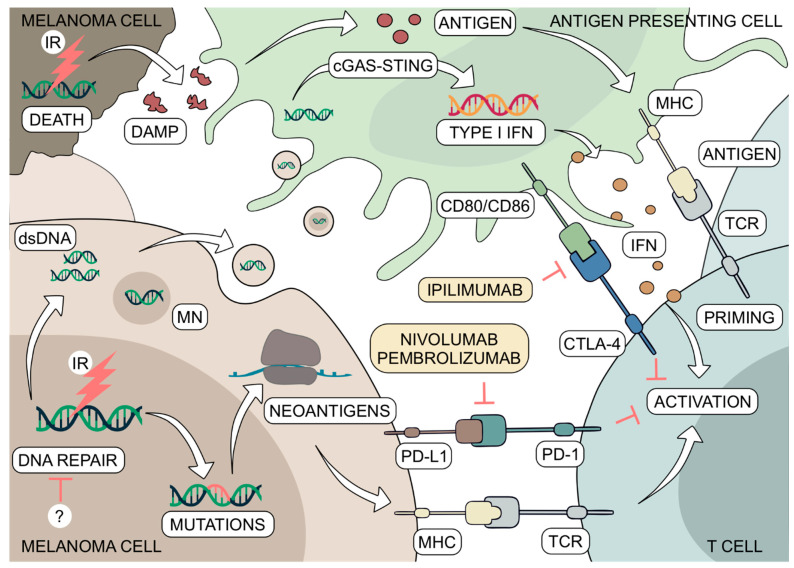
Despite recent groundbreaking advances in the treatment of cutaneous melanoma, it remains one of the most treatment-resistant malignancies. Due to resistance to conventional chemotherapy, the therapeutic focus has shifted away from aiming at melanoma genome stability in favor of molecularly targeted therapies. Inhibitors of the RAS/RAF/MEK/ERK (MAPK) pathway significantly slow disease progression. However, long-term clinical benefit is rare due to rapid development of drug resistance. In contrast, immune checkpoint inhibitors provide exceptionally durable responses, but only in a limited number of patients. It has been increasingly recognized that melanoma cells rely on efficient DNA repair for survival upon drug treatment, and that genome instability increases the efficacy of both MAPK inhibitors and immunotherapy. In this review, we discuss recent developments in the field of melanoma research which indicate that targeting genome stability of melanoma cells may serve as a powerful strategy to maximize the efficacy of currently available therapeutics.
尽管近年来在治疗皮肤黑色素瘤方面取得了突破性进展,但它仍是治疗最具抗性的恶性肿瘤之一。由于对常规化疗的耐药性,治疗重点已从旨在维持黑色素瘤基因组稳定性转向针对分子靶向治疗。RAS/RAF/MEK/ERK(MAPK)通路抑制剂可显著减缓疾病进展。然而,由于耐药性迅速发展,长期临床获益罕见。相比之下,免疫检查点抑制剂提供了异常持久的反应,但仅在少数患者中。人们越来越认识到,黑色素瘤细胞在药物治疗后依赖于有效的 DNA 修复来存活,并且基因组不稳定性增加了 MAPK 抑制剂和免疫疗法的疗效。在这篇综述中,我们讨论了黑色素瘤研究领域的最新进展,这些进展表明靶向黑色素瘤细胞的基因组稳定性可能是一种强大的策略,可以最大限度地提高现有治疗方法的疗效。