Gameiro Andreia, Almeida Filipe, Nascimento Catarina, Correia Jorge, Ferreira Fernando
CIISA-Centro de Investigação Interdisciplinar em Sanidade Animal, Faculdade de Medicina Veterinária, Universidade de Lisboa, Avenida da Universidade Técnica, 1300-477 Lisboa, Portugal.
Antiviral Resistance Laboratory, Infectious Diseases Department, National Institute of Health Dr. Ricardo Jorge, Av. Padre Cruz, 1649-016 Lisbon, Portugal.
Pharmaceutics. 2021 Mar 6;13(3):346. doi: 10.3390/pharmaceutics13030346.
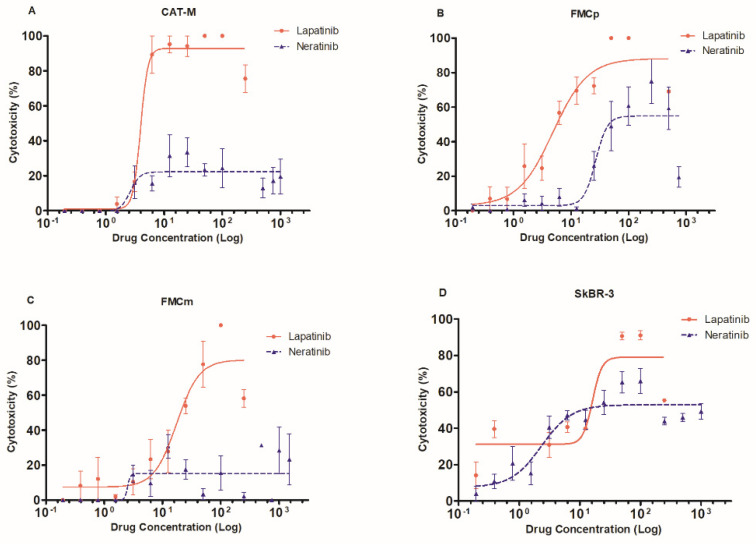
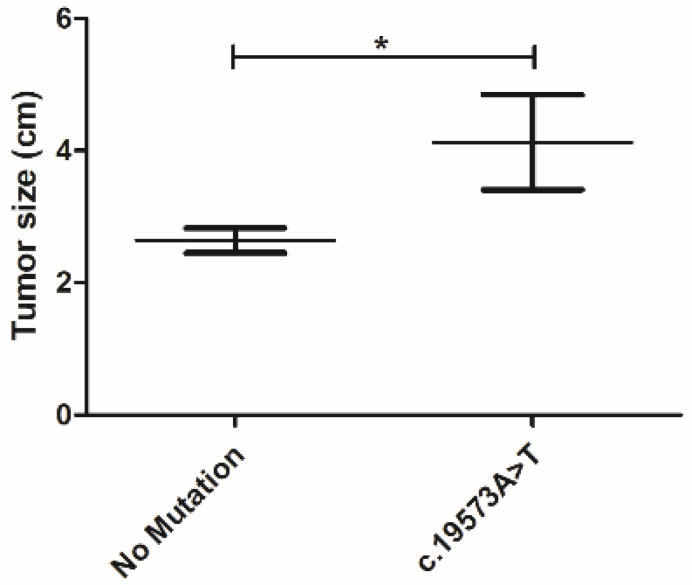
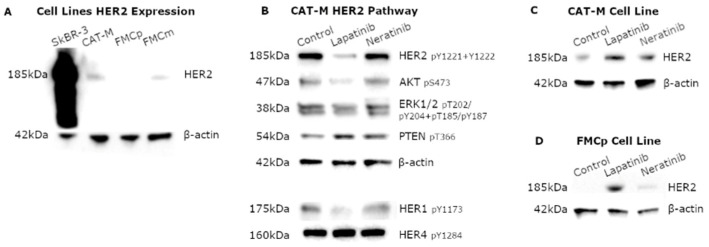
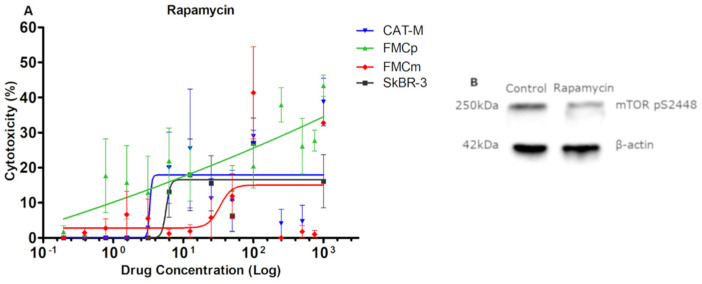
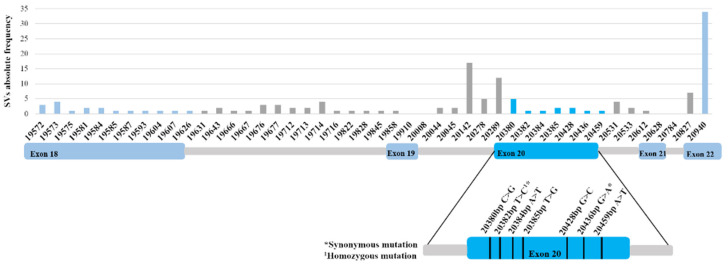
Feline mammary carcinoma (FMC) is a common neoplasia in cat, being HER2-positive the most prevalent subtype. In woman's breast cancer, tyrosine kinase inhibitors (TKi) are used as a therapeutic option, by blocking the phosphorylation of the HER2 tyrosine kinase domain. Moreover, clinical trials demonstrated that TKi produce synergistic antiproliferative effects in combination with mTOR inhibitors, overcoming resistance to therapy. Thus, to uncover new chemotherapeutic strategies for cats, the antiproliferative effects of two TKi (lapatinib and neratinib), and their combination with a mTOR inhibitor (rapamycin), were evaluated in FMC cell lines (CAT-M, FMCp and FMCm) and compared with a human breast cancer cell line (SkBR-3). Results revealed that both TKi induced antiproliferative effects in all feline cell lines, by blocking the phosphorylation of EGFR members and its downstream effectors. Furthermore, combined treatments with rapamycin presented synergetic antiproliferative effects. Additionally, the DNA sequence of the TK domain (exons 18 to 20) was determined in 40 FMC tissue samples, and despite several mutations were found none of them were described as inducing resistance to therapy. Altogether, our results demonstrated that TKi and combined protocols may be useful in the treatment of cats with mammary carcinomas, and that TKi-resistant FMC are rare.
猫乳腺肿瘤(FMC)是猫常见的肿瘤,HER2阳性是最常见的亚型。在女性乳腺癌中,酪氨酸激酶抑制剂(TKi)通过阻断HER2酪氨酸激酶结构域的磷酸化被用作一种治疗选择。此外,临床试验表明,TKi与mTOR抑制剂联合使用可产生协同抗增殖作用,克服治疗耐药性。因此,为了探索猫的新化疗策略,评估了两种TKi(拉帕替尼和来那替尼)及其与mTOR抑制剂(雷帕霉素)联合使用对FMC细胞系(CAT-M、FMCp和FMCm)的抗增殖作用,并与人类乳腺癌细胞系(SkBR-3)进行比较。结果显示,两种TKi均通过阻断表皮生长因子受体(EGFR)成员及其下游效应器的磷酸化,在所有猫细胞系中诱导抗增殖作用。此外,雷帕霉素联合治疗呈现出协同抗增殖作用。另外,测定了40个FMC组织样本中TK结构域(外显子18至20)的DNA序列,尽管发现了几个突变,但均未被描述为诱导治疗耐药性。总之,我们的结果表明,TKi及联合方案可能对治疗猫乳腺癌有用,且对TKi耐药的FMC很罕见。