Han Xiaofeng, Fu Hua, Li Gege, Tian Li, Pan Chonggen, Chen Chunlei, Wang Penggang
School of Civil Engineering, Qingdao University of Technology, No.11 of Fushun Road, Qingdao 266033, China.
School of Civil Engineering & Architecture, Ningbo Technology University, No. 1 of Qianhu South Road, Ningbo 315100, China.
Materials (Basel). 2021 Mar 27;14(7):1647. doi: 10.3390/ma14071647.
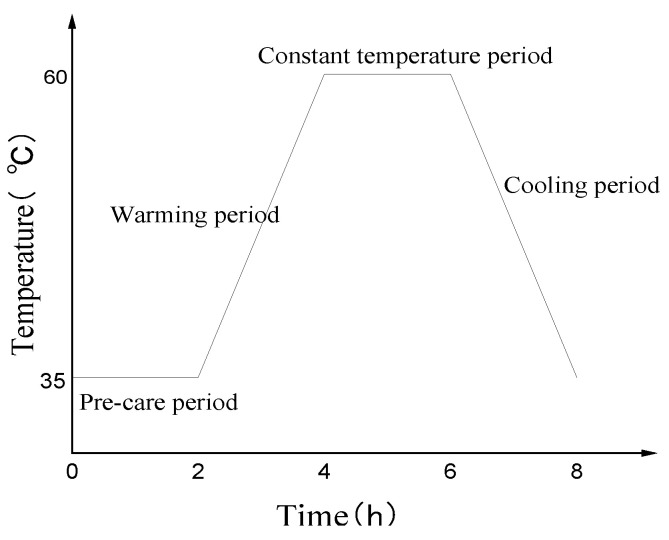
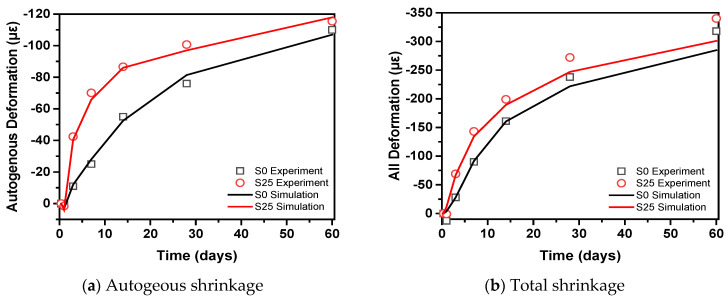
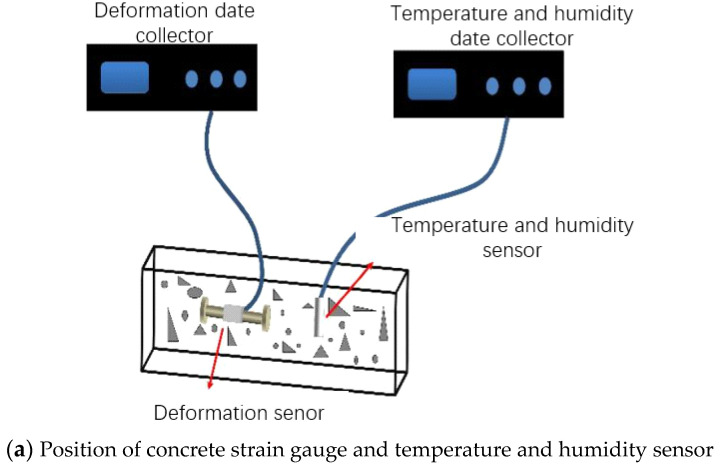
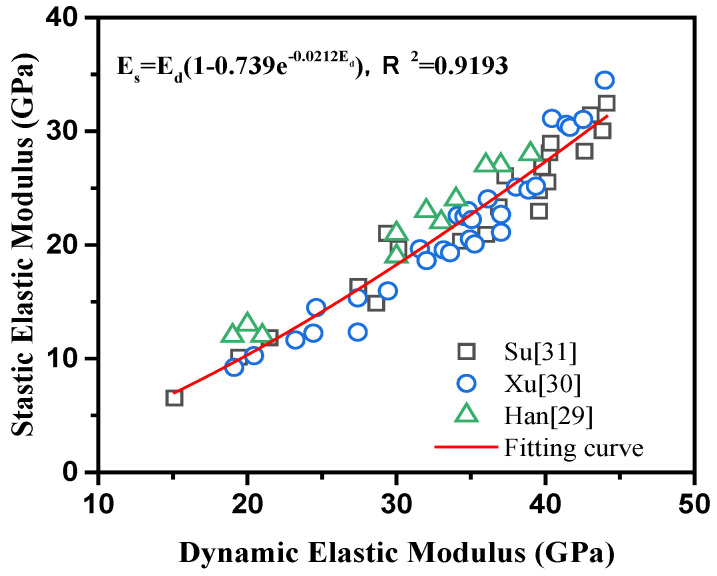
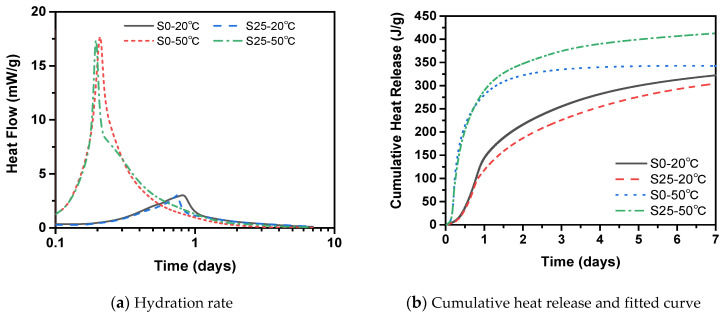
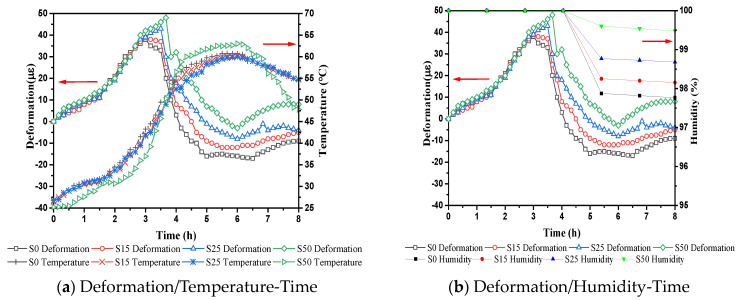
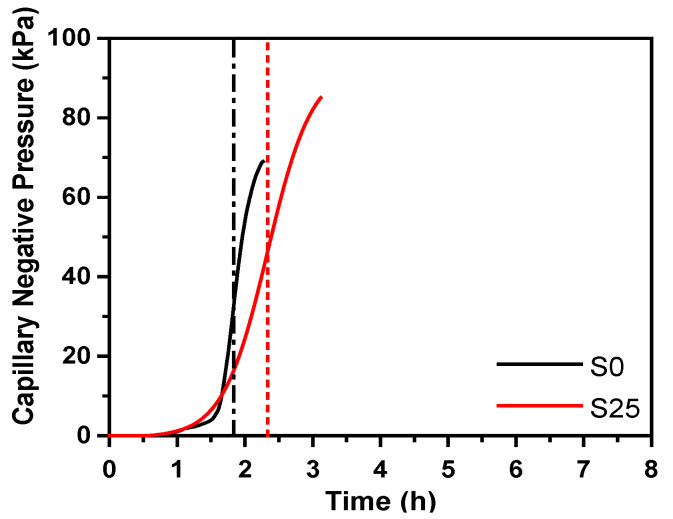
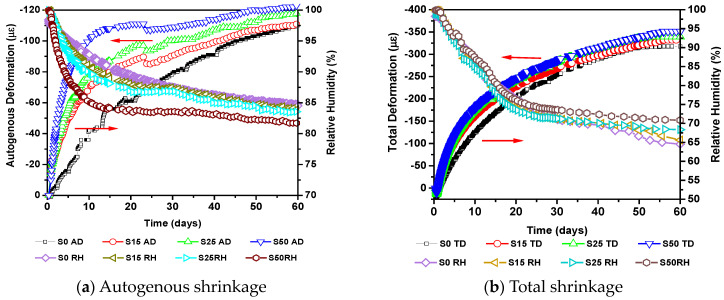
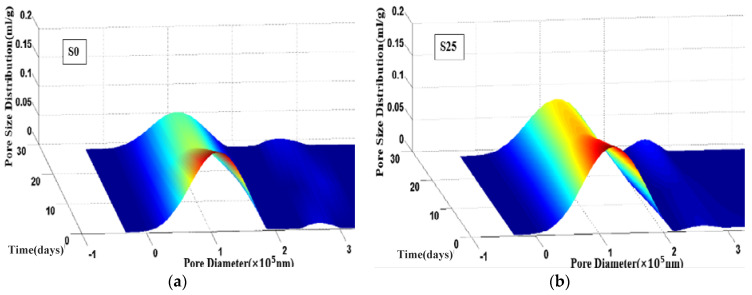
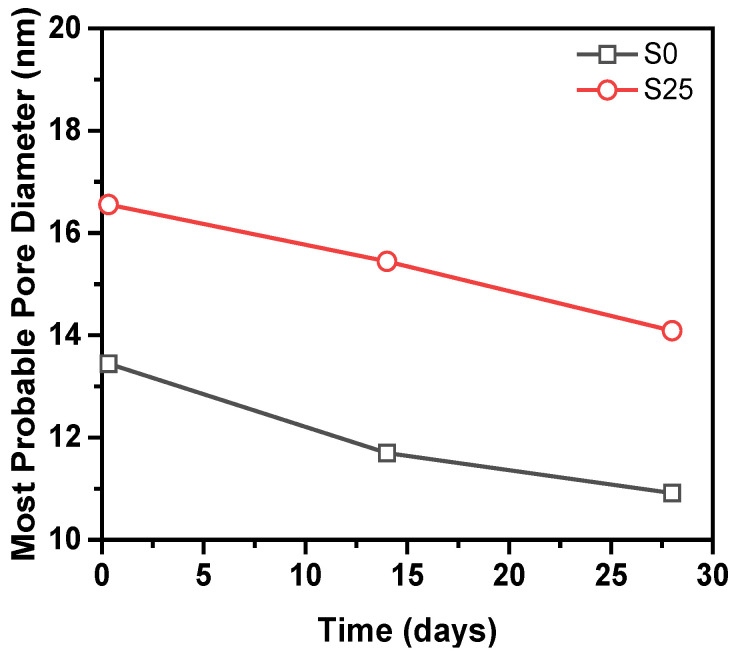
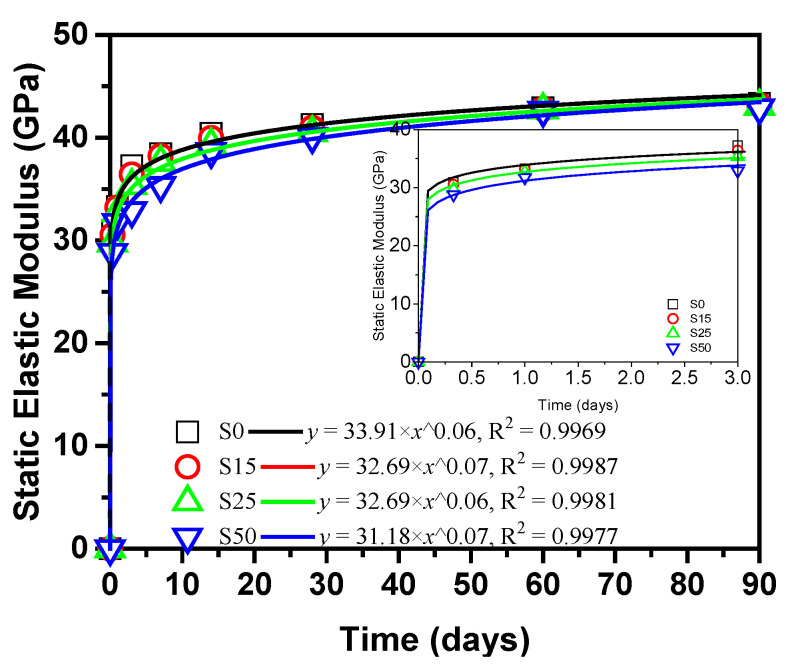
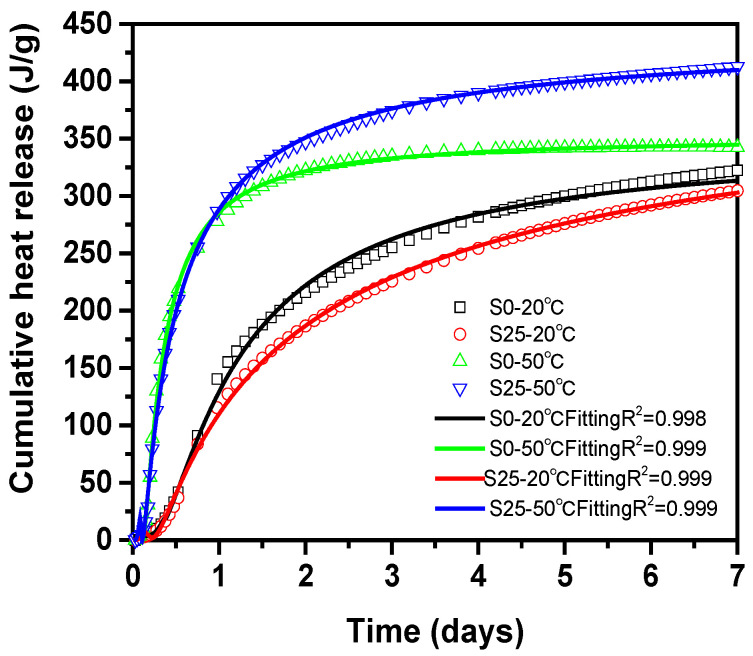
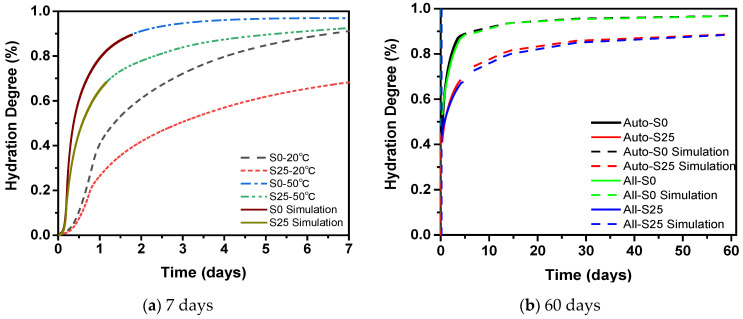
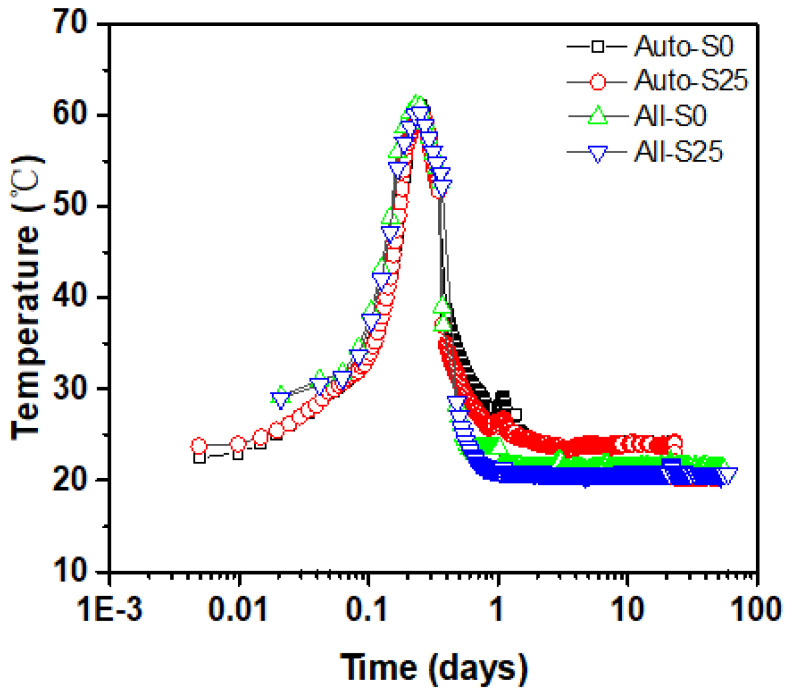
In order to better predict the development of shrinkage deformation of steam-cured concrete mixed with slag, a deformation-temperature-humidity integrated model test, a hydration heat test, and an elastic modulus test were performed. The effects of the steam-curing process and the content of slag on shrinkage deformation, hydration degree and elastic modulus of concrete were studied. The results indicate that during the steam-curing process, the concrete has an "expansion-shrinkage" pattern. After the steam curing, the deformation of concrete is dominated by drying shrinkage. After the addition of slag, the shrinkage deformation of steam-cured concrete is increased. The autogenous shrinkage increases by 0.5-12%, and the total shrinkage increases by 1.5-8% at 60 days. At the same time, slag reduces the hydration degree of steam-cured concrete and modulus of elasticity. A prediction model for the hydration degree of steam-cured concrete is established, which can be used to calculate the degree of hydration at any curing age. Based on the capillary tension generated by the capillary pores in concrete, an integrated model of autogenous shrinkage and total shrinkage is established with the relative humidity directly related to the water loss in the concrete as the driving parameter. Whether the shrinkage deformation is caused by hydration reaction or the external environment, this model can better predict the shrinkage deformation of steam-cured concrete.
为了更好地预测掺矿渣蒸汽养护混凝土收缩变形的发展,进行了变形-温度-湿度一体化模型试验、水化热试验和弹性模量试验。研究了蒸汽养护工艺和矿渣掺量对混凝土收缩变形、水化程度和弹性模量的影响。结果表明,在蒸汽养护过程中,混凝土呈现“膨胀-收缩”模式。蒸汽养护后,混凝土的变形以干燥收缩为主。掺入矿渣后,蒸汽养护混凝土的收缩变形增大。自生收缩增加0.5%-12%,60天时总收缩增加1.5%-8%。同时,矿渣降低了蒸汽养护混凝土的水化程度和弹性模量。建立了蒸汽养护混凝土水化程度的预测模型,可用于计算任意养护龄期的水化程度。基于混凝土中毛细孔产生的毛细张力,建立了以与混凝土失水直接相关的相对湿度为驱动参数的自生收缩和总收缩一体化模型。无论收缩变形是由水化反应还是外部环境引起,该模型都能较好地预测蒸汽养护混凝土的收缩变形。