Pwavodi Pwadubashiyi C, Ozyurt Vasfiye H, Asir Suleyman, Ozsoz Mehmet
Department of Biomedical Engineering, Near East University, Near East Boulevard, 99138 Nicosia, Cyprus.
Department of Food Engineering, Near East University, Near East Boulevard, 99138 Nicosia, Cyprus.
Micromachines (Basel). 2021 Mar 17;12(3):312. doi: 10.3390/mi12030312.
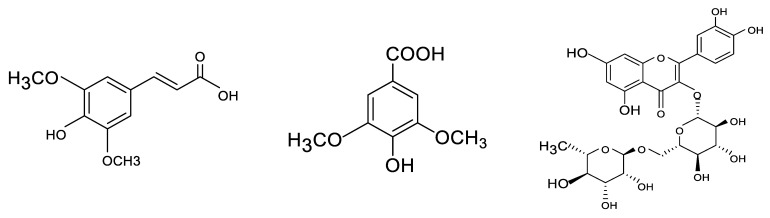
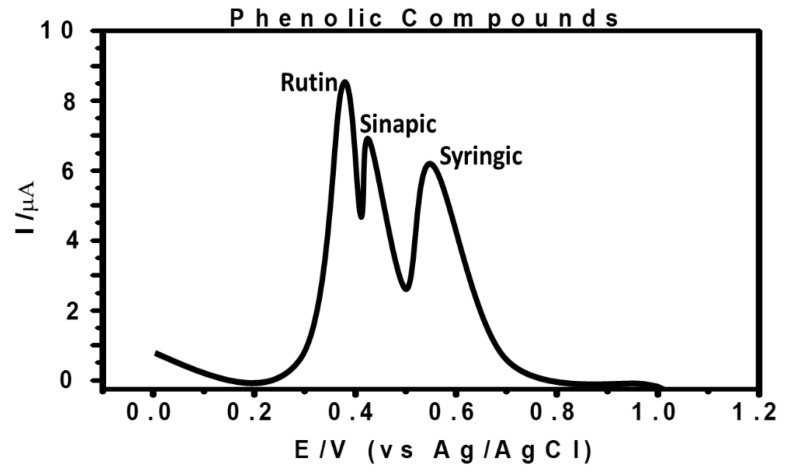
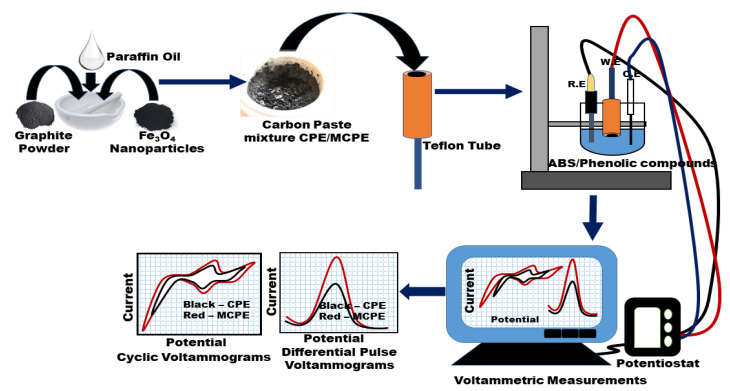
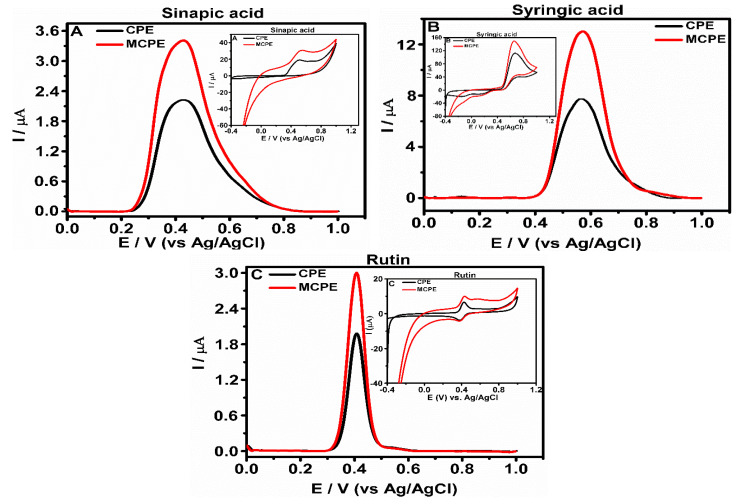
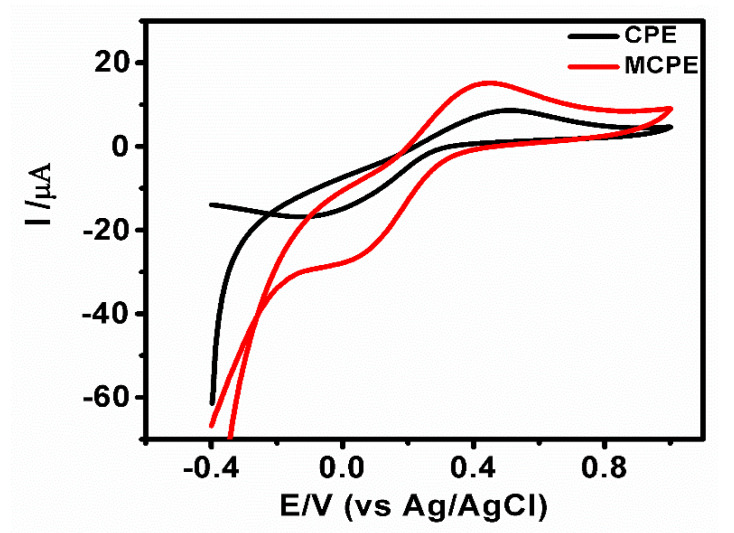
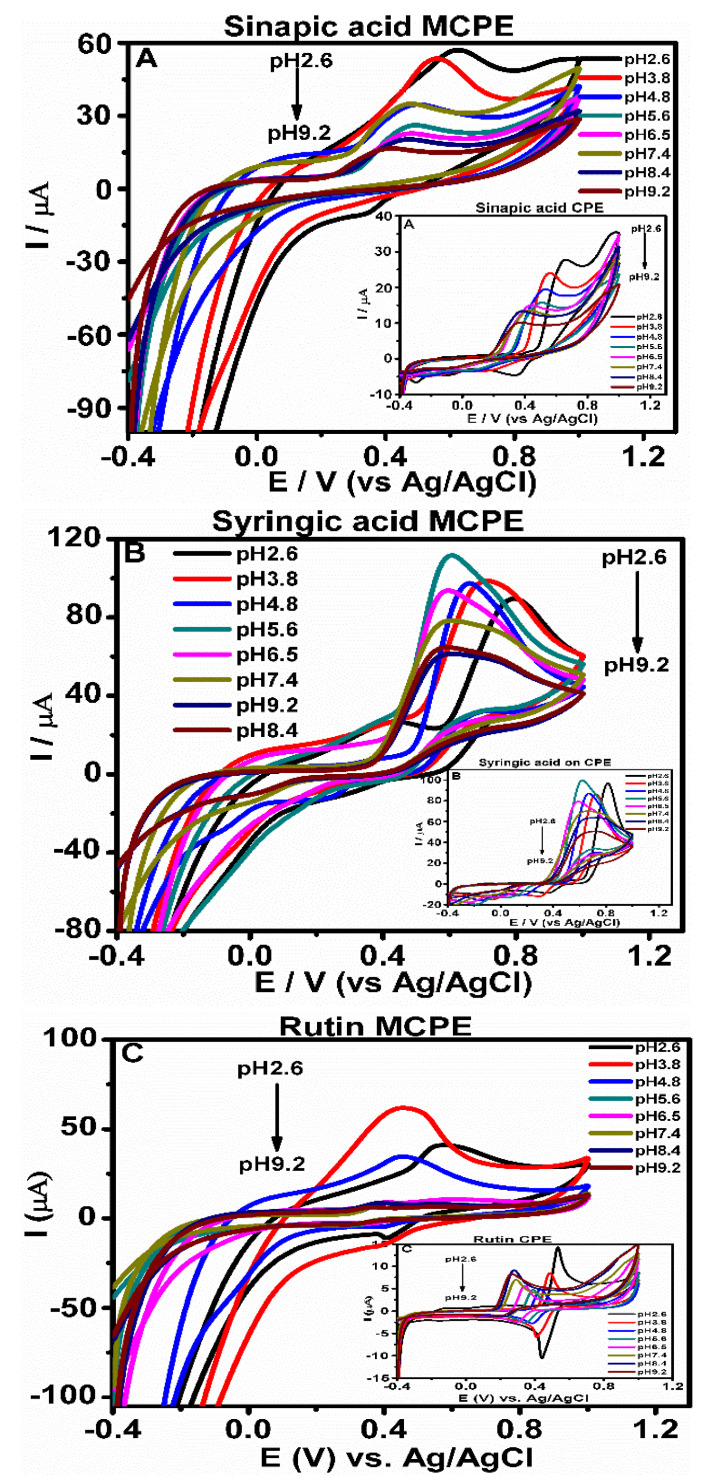
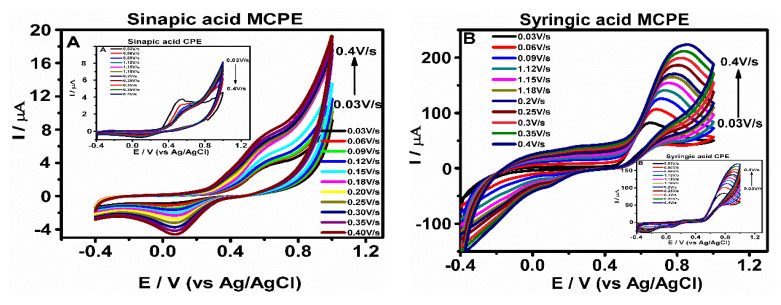
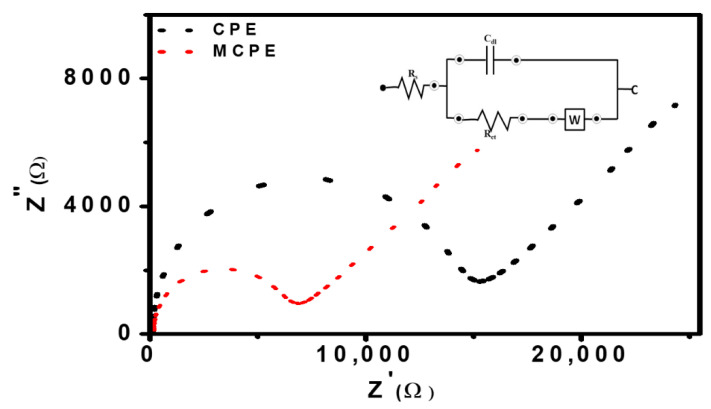
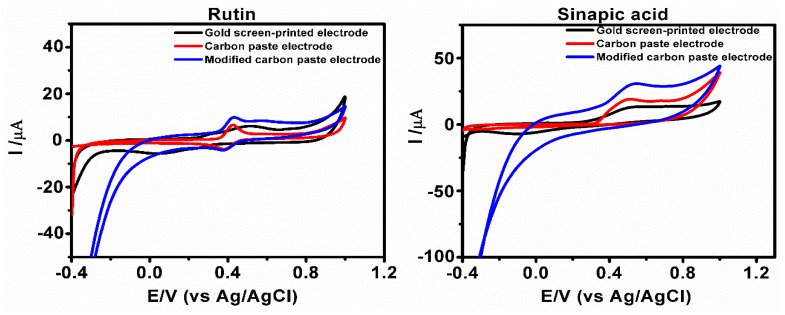
Phenolic compounds contain classes of flavonoids and non-flavonoids, which occur naturally as secondary metabolites in plants. These compounds, when consumed in food substances, improve human health because of their antioxidant properties against oxidative damage diseases. In this study, an electrochemical sensor was developed using a carbon paste electrode (CPE) modified with FeO nanoparticles (MCPE) for the electrosensitive determination of sinapic acid, syringic acid, and rutin. The characterization techniques adapted for CPE, MCPE electrodes, and the solution interface were cyclic voltammetry (CV), differential pulse voltammetry (DPV), and electrochemical impedance spectroscopy (EIS). Scan rate and pH were the parameters subjected to optimization studies for the determination of phenolic compounds. The incorporation of FeO nanoparticles to the CPE as a sensor showed excellent sensitivity, selectivity, repeatability, reproducibility, stability, and low preparation cost. The limits of detection (LOD) obtained were 2.2 × 10 M for sinapic acid, 2.6 × 10 M for syringic acid, and 0.8 × 10 M for rutin, respectively. The fabricated electrochemical sensor was applied to determine phenolic compounds in real samples of red and white wine.
酚类化合物包含黄酮类和非黄酮类,它们作为植物中的次生代谢产物天然存在。这些化合物在食物中被食用时,因其对氧化损伤疾病的抗氧化特性而改善人体健康。在本研究中,开发了一种使用用FeO纳米颗粒修饰的碳糊电极(MCPE)的电化学传感器,用于电灵敏测定芥子酸、丁香酸和芦丁。适用于CPE、MCPE电极和溶液界面的表征技术是循环伏安法(CV)、差分脉冲伏安法(DPV)和电化学阻抗谱(EIS)。扫描速率和pH是用于酚类化合物测定的优化研究参数。将FeO纳米颗粒作为传感器掺入CPE表现出优异的灵敏度、选择性、重复性、再现性、稳定性和低制备成本。获得的检测限分别为芥子酸2.2×10⁻⁶ M、丁香酸2.6×10⁻⁶ M和芦丁0.8×10⁻⁶ M。所制备的电化学传感器应用于测定红葡萄酒和白葡萄酒实际样品中的酚类化合物。