Runbeck Erin, Crescioli Silvia, Karagiannis Sophia N, Papa Sophie
ImmunoEngineering Group, School of Cancer and Pharmaceutical Studies, King's College London, London SE19RT, UK.
St. John's Institute of Dermatology, School of Basic and Medical Biosciences, King's College London, London SE1 9RT, UK.
Antibodies (Basel). 2021 Mar 9;10(1):10. doi: 10.3390/antib10010010.
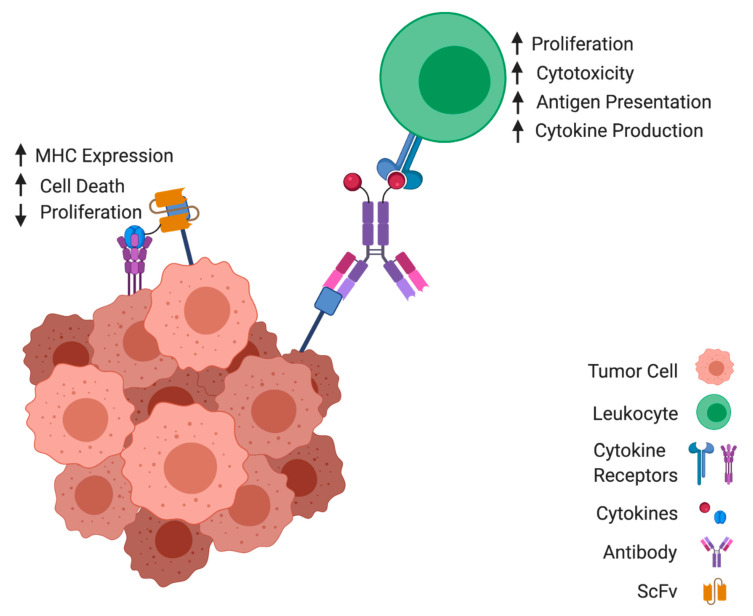
Cytokine therapy for cancer has indicated efficacy in certain diseases but is generally accompanied by severe toxicity. The field of antibody-cytokine fusion proteins (immunocytokines) arose to target these effector molecules to the tumor environment in order to expand the therapeutic window of cytokine therapy. Pre-clinical evidence has shown the increased efficacy and decreased toxicity of various immunocytokines when compared to their cognate unconjugated cytokine. These anti-tumor properties are markedly enhanced when combined with other treatments such as chemotherapy, radiotherapy, and checkpoint inhibitor antibodies. Clinical trials that have continued to explore the potential of these biologics for cancer therapy have been conducted. This review covers the in vitro, in vivo, and clinical evidence for the application of immunocytokines in immuno-oncology.
细胞因子疗法治疗癌症在某些疾病中已显示出疗效,但通常伴有严重毒性。抗体 - 细胞因子融合蛋白(免疫细胞因子)领域应运而生,旨在将这些效应分子靶向肿瘤环境,以扩大细胞因子疗法的治疗窗口。临床前证据表明,与同源未偶联细胞因子相比,各种免疫细胞因子的疗效增强且毒性降低。当与化疗、放疗和检查点抑制剂抗体等其他治疗方法联合使用时,这些抗肿瘤特性会显著增强。目前已经开展了持续探索这些生物制剂用于癌症治疗潜力的临床试验。本综述涵盖了免疫细胞因子在免疫肿瘤学中应用的体外、体内和临床证据。