Ching-López Ana, Martinez-Gonzalez Luis Javier, Arrabal Luisa, Sáiz Jorge, Gavilán Ángela, Barbas Coral, Lorente Jose Antonio, Roldán Susana, Sánchez Maria José, Gutierrez-Ríos Purificacion
CIBER Epidemiology and Public Health (CIBERESP), 28029 Madrid, Spain.
Andalusian School of Public Health (EASP), 18080 Granada, Spain.
Int J Mol Sci. 2021 Mar 15;22(6):2990. doi: 10.3390/ijms22062990.
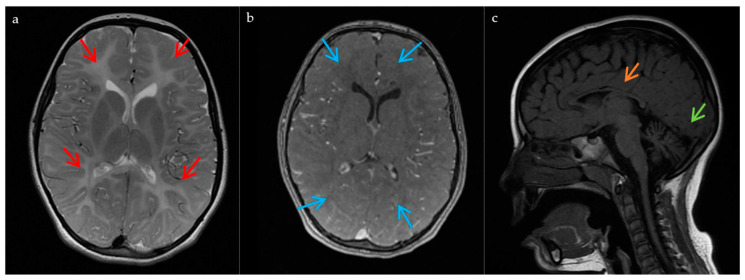
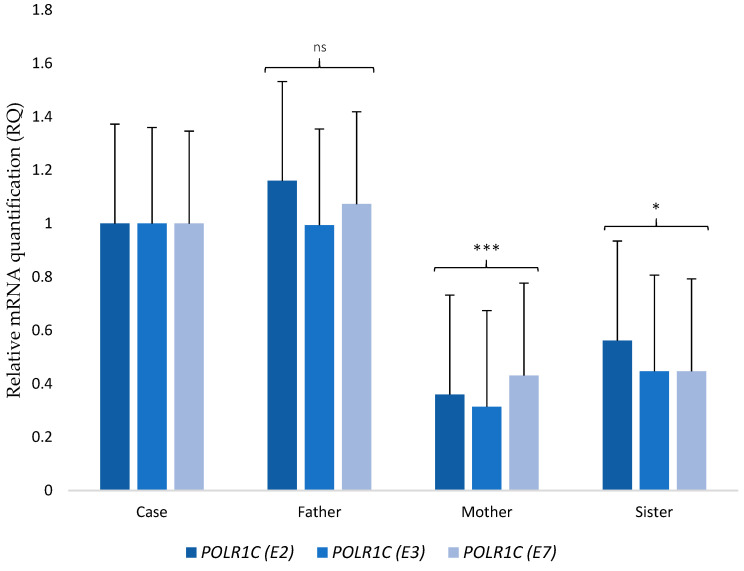
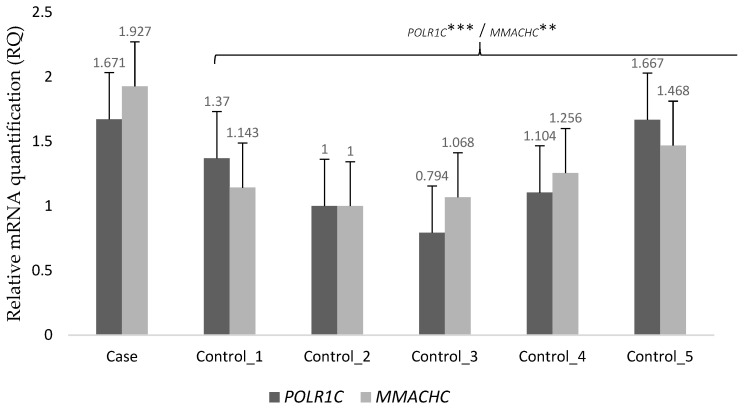
Ataxia in children is a common clinical sign of numerous neurological disorders consisting of impaired coordination of voluntary muscle movement. Its most common form, cerebellar ataxia, describes a heterogeneous array of neurologic conditions with uncountable causes broadly divided as acquired or genetic. Numerous genetic disorders are associated with chronic progressive ataxia, which complicates clinical management, particularly on the diagnostic stage. Advances in omics technologies enable improvements in clinical practice and research, so we proposed a multi-omics approach to aid in the genetic diagnosis and molecular elucidation of an undiagnosed infantile condition of chronic progressive cerebellar ataxia. Using whole-exome sequencing, RNA-seq, and untargeted metabolomics, we identified three clinically relevant mutations (rs141471029, rs191582628 and rs398124292) and an altered metabolic profile in our patient. Two diagnostic variants already classified as pathogenic were found, and a diagnosis of hypomyelinating leukodystrophy was achieved. A mutation on the gene, known to be associated with methylmalonic aciduria and homocystinuria cblC type, was also found. Additionally, preliminary metabolome analysis revealed alterations in our patient's amino acid, fatty acid and carbohydrate metabolism. Our findings provided a definitive genetic diagnosis reinforcing the association between mutations and hypomyelinating leukodystrophy and highlighted the relevance of multi-omics approaches to the disease.
儿童共济失调是许多神经系统疾病的常见临床体征,表现为随意肌运动协调受损。其最常见的形式——小脑共济失调,描述了一系列病因众多的神经系统疾病,大致分为后天性或遗传性。许多遗传疾病与慢性进行性共济失调相关,这使得临床管理变得复杂,尤其是在诊断阶段。组学技术的进步有助于改善临床实践和研究,因此我们提出了一种多组学方法,以辅助对一种未确诊的婴儿慢性进行性小脑共济失调疾病进行基因诊断和分子阐释。通过全外显子组测序、RNA测序和非靶向代谢组学,我们在患者中鉴定出三个与临床相关的突变(rs141471029、rs191582628和rs398124292)以及代谢谱改变。发现了两个已被分类为致病性的诊断变异,最终确诊为低髓鞘性脑白质营养不良。还发现了一个与甲基丙二酸尿症和同型胱氨酸尿症cblC型相关的基因突变。此外,初步代谢组分析揭示了患者氨基酸、脂肪酸和碳水化合物代谢的改变。我们的研究结果提供了明确的基因诊断,加强了基因突变与低髓鞘性脑白质营养不良之间的关联,并突出了多组学方法对该疾病的相关性。