Department of Pathology, Microbiology and Forensic Medicine, School of Medicine, The University of Jordan, Amman 11942, Jordan.
Department of Clinical Laboratories and Forensic Medicine, Jordan University Hospital, Amman 11942, Jordan.
Int J Environ Res Public Health. 2021 Mar 1;18(5):2407. doi: 10.3390/ijerph18052407.
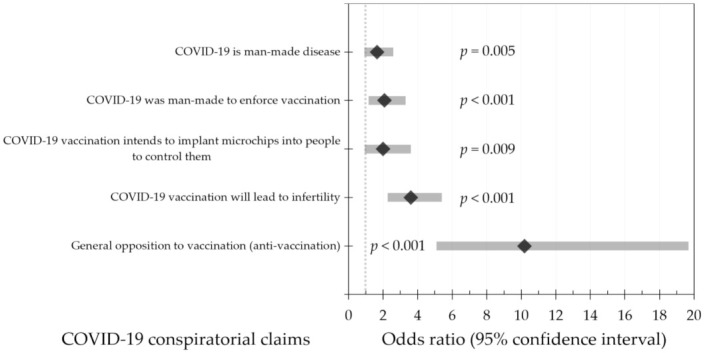
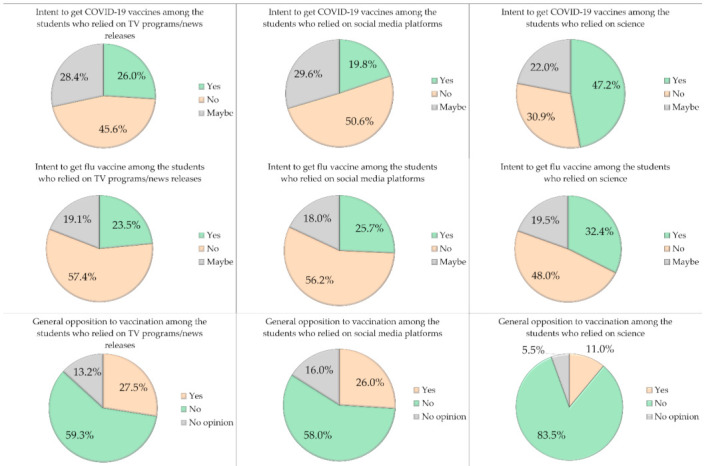
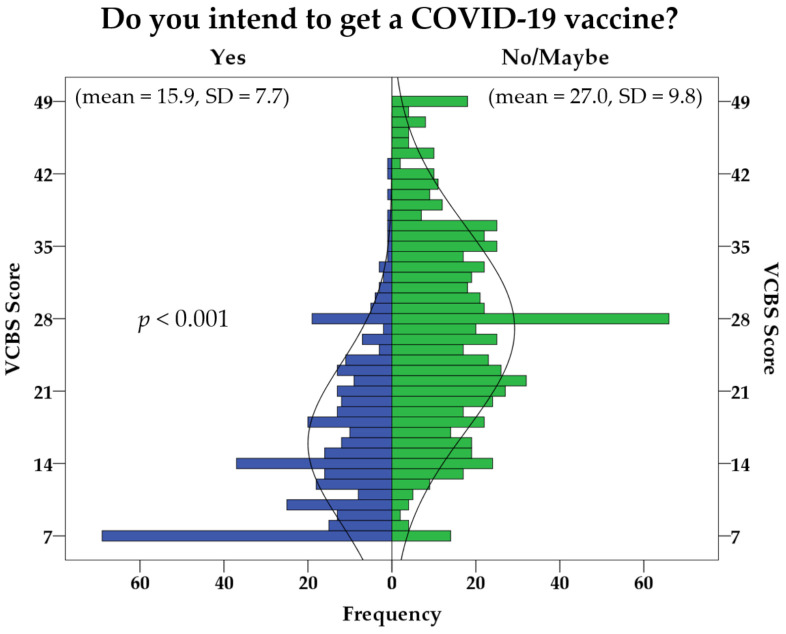
Vaccination to prevent coronavirus disease 2019 (COVID-19) emerged as a promising measure to overcome the negative consequences of the pandemic. Since university students could be considered a knowledgeable group, this study aimed to evaluate COVID-19 vaccine acceptance among this group in Jordan. Additionally, we aimed to examine the association between vaccine conspiracy beliefs and vaccine hesitancy. We used an online survey conducted in January 2021 with a chain-referral sampling approach. Conspiracy beliefs were evaluated using the validated Vaccine Conspiracy Belief Scale (VCBS), with higher scores implying embrace of conspiracies. A total of 1106 respondents completed the survey with female predominance ( = 802, 72.5%). The intention to get COVID-19 vaccines was low: 34.9% (yes) compared to 39.6% (no) and 25.5% (maybe). Higher rates of COVID-19 vaccine acceptance were seen among males (42.1%) and students at Health Schools (43.5%). A Low rate of influenza vaccine acceptance was seen as well (28.8%), in addition to 18.6% of respondents being anti-vaccination altogether. A significantly higher VCBS score was correlated with reluctance to get the vaccine ( < 0.001). Dependence on social media platforms was significantly associated with lower intention to get COVID-19 vaccines (19.8%) compared to dependence on medical doctors, scientists, and scientific journals (47.2%, < 0.001). The results of this study showed the high prevalence of COVID-19 vaccine hesitancy and its association with conspiracy beliefs among university students in Jordan. The implementation of targeted actions to increase the awareness of such a group is highly recommended. This includes educational programs to dismantle vaccine conspiracy beliefs and awareness campaigns to build recognition of the safety and efficacy of COVID-19 vaccines.
接种疫苗以预防 2019 年冠状病毒病(COVID-19)成为克服大流行负面影响的一项有希望的措施。由于大学生可以被认为是一个有知识的群体,因此本研究旨在评估约旦大学生对 COVID-19 疫苗的接受程度。此外,我们还旨在研究疫苗阴谋信念与疫苗犹豫之间的关系。我们使用了 2021 年 1 月进行的一项在线调查,采用连锁referral 抽样方法。使用经过验证的疫苗阴谋信念量表(VCBS)评估阴谋信念,得分越高表示接受阴谋论。共有 1106 名受访者完成了这项调查,其中女性居多(=802,72.5%)。接种 COVID-19 疫苗的意愿较低:34.9%(是),而 39.6%(否)和 25.5%(也许)。男性(42.1%)和卫生学校的学生(43.5%)接种 COVID-19 疫苗的比例较高。流感疫苗的接种率也较低(28.8%),此外,共有 18.6%的受访者完全反对接种疫苗。VCBS 评分与不愿意接种疫苗显著相关( < 0.001)。与依赖医生、科学家和科学期刊(47.2%, < 0.001)相比,依赖社交媒体平台与较低的接种 COVID-19 疫苗的意愿显著相关(19.8%)。这项研究的结果表明,约旦大学生 COVID-19 疫苗犹豫的发生率很高,并且与阴谋信念有关。强烈建议针对这类群体实施有针对性的行动来提高他们的认识。这包括教育计划,以消除疫苗阴谋信念,以及提高认识运动,以建立对 COVID-19 疫苗安全性和有效性的认识。