• 文献检索
  • 文档翻译
  • 深度研究
  • 学术资讯
  • Suppr Zotero 插件Zotero 插件
  • 邀请有礼
  • 套餐&价格
  • 历史记录
应用&插件
Suppr Zotero 插件Zotero 插件浏览器插件Mac 客户端Windows 客户端微信小程序
定价
高级版会员购买积分包购买API积分包
服务
文献检索文档翻译深度研究API 文档MCP 服务
关于我们
关于 Suppr公司介绍联系我们用户协议隐私条款
关注我们

Suppr 超能文献

核心技术专利:CN118964589B侵权必究
粤ICP备2023148730 号-1Suppr @ 2026

文献检索

告别复杂PubMed语法,用中文像聊天一样搜索,搜遍4000万医学文献。AI智能推荐,让科研检索更轻松。

立即免费搜索

文件翻译

保留排版,准确专业,支持PDF/Word/PPT等文件格式,支持 12+语言互译。

免费翻译文档

深度研究

AI帮你快速写综述,25分钟生成高质量综述,智能提取关键信息,辅助科研写作。

立即免费体验

影响语音智能家庭系统感知信任的因素:一项实证研究。

What Influences the Perceived Trust of a Voice-Enabled Smart Home System: An Empirical Study.

机构信息

School of Design, Kyushu University, Fukuoka 8158540, Japan.

School of Mechanical Science and Engineering, Huazhong University of Science and Technology, Wuhan 430074, China.

出版信息

Sensors (Basel). 2021 Mar 13;21(6):2037. doi: 10.3390/s21062037.

DOI:10.3390/s21062037
PMID:33805702
原文链接:https://pmc.ncbi.nlm.nih.gov/articles/PMC7998654/
Abstract

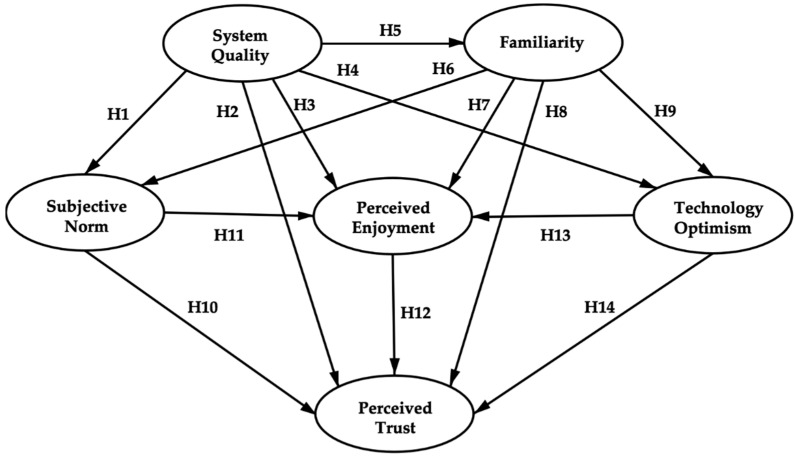
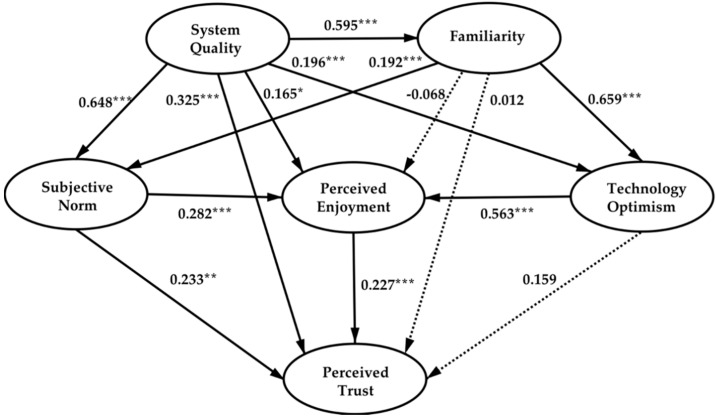
Contemporarily, almost all the global IT giants have aimed at the smart home industry and made an active strategic business layout. As the early-stage and entry-level product of the voice-enabled smart home industry, the smart speakers have been going through rapid development and rising fierce market competition globally in recent years. China, one of the most populous and largest markets in the world, has tremendous business potential in the smart home industry. The market sales of smart speakers in China have gone through rapid growth in the past three years. However, the market penetration rate of related smart home devices and equipment still stays extremely low and far from mass adoption. Moreover, the market sales of smart speakers have also entered a significant slowdown and adjustment period since 2020. Chinese consumers have moved from early impulsive consumption to a rational consumption phase about this early-stage smart home product. Trust in the marketing field is considered an indispensable component of all business transactions, which plays a crucial role in adopting new technologies. This study explores the influencing factors of Chinese users' perceived trust in the voice-enabled smart home systems, uses structural equation modeling (SEM) to analyze the interaction mechanism between different variables, and establishes a perceived trust model through 475 valid samples. The model includes six variables: system quality, familiarity, subjective norm, technology optimism, perceived enjoyment, and perceived trust. The result shows that system quality is the essential influence factor that impacts all other variables and could significantly affect the perceived trust. Perceived enjoyment is the most direct influence variable affected by system quality, subjective norm, and technology optimism, and it positively affects the perceived trust in the end. The subjective norm is one of the most distinguishing variables for Chinese users, since China has a collectivist consumption culture. People always expect their behavior to meet social expectations and standards to avoid criticism and acquire social integration. Therefore, policy guidance, authoritative opinions, and people with important reference roles will significantly affect consumers' perceived trust and purchase intention. Familiarity and technology optimism are important influential factors that will have an indirect impact on the perceived trust. The related results of this study can help designers, practitioners, and researchers of the smart home industry produce products and services with higher perceived trust to improve consumers' adoption and acceptance so that the market penetration rate of related products and enterprises could be increased, and the maturity and development of the voice-enabled smart home industry could be promoted.
https://cdn.ncbi.nlm.nih.gov/pmc/blobs/466a/7998654/142419a3e5c2/sensors-21-02037-g002.jpg
https://cdn.ncbi.nlm.nih.gov/pmc/blobs/466a/7998654/8123925a38b2/sensors-21-02037-g001.jpg
https://cdn.ncbi.nlm.nih.gov/pmc/blobs/466a/7998654/142419a3e5c2/sensors-21-02037-g002.jpg
https://cdn.ncbi.nlm.nih.gov/pmc/blobs/466a/7998654/8123925a38b2/sensors-21-02037-g001.jpg
https://cdn.ncbi.nlm.nih.gov/pmc/blobs/466a/7998654/142419a3e5c2/sensors-21-02037-g002.jpg
摘要

当代,几乎所有的全球 IT 巨头都瞄准了智能家居行业,并积极进行战略业务布局。作为语音智能家居行业的早期和入门级产品,智能音箱近年来在全球范围内经历了快速发展和激烈的市场竞争。中国是全球人口最多、市场最大的国家之一,在智能家居行业具有巨大的商业潜力。过去三年,中国智能音箱的市场销量经历了快速增长。然而,相关智能家居设备和产品的市场渗透率仍然极低,远未达到大规模普及的程度。此外,自 2020 年以来,智能音箱的市场销量也进入了显著的放缓和调整期。中国消费者已经从早期的冲动消费转变为对这种早期智能家居产品的理性消费阶段。信任是所有商业交易不可或缺的组成部分,在采用新技术方面起着至关重要的作用。本研究探讨了中国用户对语音智能家居系统感知信任的影响因素,使用结构方程模型(SEM)分析了不同变量之间的相互作用机制,并通过 475 个有效样本建立了感知信任模型。该模型包括六个变量:系统质量、熟悉度、主观规范、技术乐观主义、感知乐趣和感知信任。研究结果表明,系统质量是影响所有其他变量并能显著影响感知信任的基本影响因素。感知乐趣是受系统质量、主观规范和技术乐观主义影响最直接的变量,最终对感知信任产生积极影响。主观规范是中国用户的最显著区别变量之一,因为中国具有集体主义消费文化。人们总是期望自己的行为符合社会期望和标准,以避免批评和获得社会融合。因此,政策指导、权威意见和具有重要参考作用的人将显著影响消费者的感知信任和购买意愿。熟悉度和技术乐观主义是重要的影响因素,它们将对感知信任产生间接影响。本研究的相关结果可以帮助智能家居行业的设计师、从业者和研究人员生产具有更高感知信任的产品和服务,提高消费者的采用和接受程度,从而提高相关产品和企业的市场渗透率,促进语音智能家居行业的成熟和发展。

相似文献

1
What Influences the Perceived Trust of a Voice-Enabled Smart Home System: An Empirical Study.影响语音智能家庭系统感知信任的因素:一项实证研究。
Sensors (Basel). 2021 Mar 13;21(6):2037. doi: 10.3390/s21062037.
2
A study on smart home use intention of elderly consumers based on technology acceptance models.基于技术接受模型的老年消费者智能家居使用意愿研究
PLoS One. 2024 Mar 27;19(3):e0300574. doi: 10.1371/journal.pone.0300574. eCollection 2024.
3
The Investigation of Adoption of Voice-User Interface (VUI) in Smart Home Systems among Chinese Older Adults.中文老年人对智能家居系统中语音用户界面 (VUI) 的采用情况调查。
Sensors (Basel). 2022 Feb 18;22(4):1614. doi: 10.3390/s22041614.
4
Hedonic and Utilitarian Motivations of Home Motion-Sensing Game Play Behavior in China: An Empirical Study.中国家居运动感应游戏行为的享乐和功利动机:实证研究。
Int J Environ Res Public Health. 2020 Nov 26;17(23):8794. doi: 10.3390/ijerph17238794.
5
An empirical analysis of the factors driving customers' purchase intention of green smart home products.驱动客户购买绿色智能家居产品意愿的因素的实证分析。
Front Psychol. 2023 Oct 26;14:1272889. doi: 10.3389/fpsyg.2023.1272889. eCollection 2023.
6
The Influencing Mechanism of Interaction Quality of UGC on Consumers' Purchase Intention - An Empirical Analysis.用户生成内容互动质量对消费者购买意愿的影响机制——实证分析
Front Psychol. 2021 Jul 19;12:697382. doi: 10.3389/fpsyg.2021.697382. eCollection 2021.
7
Understanding consumers' intentions to purchase smart clothing using PLS-SEM and fsQCA.使用 PLS-SEM 和 fsQCA 理解消费者购买智能服装的意图。
PLoS One. 2023 Sep 19;18(9):e0291870. doi: 10.1371/journal.pone.0291870. eCollection 2023.
8
Unboxing the dilemma associated with online shopping and purchase behavior for remanufactured products: A smart strategy for waste management.剖析与再制造产品在线购买行为相关的两难困境:一种明智的废物管理策略。
J Environ Manage. 2024 Feb;351:119790. doi: 10.1016/j.jenvman.2023.119790. Epub 2023 Dec 12.
9
The path to sustainability begins with going paperless: Antecedents of intention to use electronic wallet using serial mediation approach.可持续发展之路始于无纸化:采用串行中介方法研究使用电子钱包意图的前因。
Heliyon. 2024 Jan 12;10(2):e24127. doi: 10.1016/j.heliyon.2024.e24127. eCollection 2024 Jan 30.
10
Augmenting the technology acceptance model with trust model for the initial adoption of a blockchain-based system.用信任模型增强技术接受模型以实现基于区块链系统的首次采用。
PeerJ Comput Sci. 2021 May 21;7:e502. doi: 10.7717/peerj-cs.502. eCollection 2021.

引用本文的文献

1
Enhancing elderly care with smart homes: A comparative study of use and payment willingness.利用智能家居提升老年护理:使用情况与支付意愿的比较研究
Digit Health. 2025 Sep 8;11:20552076251374223. doi: 10.1177/20552076251374223. eCollection 2025 Jan-Dec.
2
Investigating Elderly Individuals' Acceptance of Artificial Intelligence (AI)-Powered Companion Robots: The Influence of Individual Characteristics.调查老年人对人工智能驱动的陪伴机器人的接受度:个体特征的影响。
Behav Sci (Basel). 2025 May 18;15(5):697. doi: 10.3390/bs15050697.
3
Factors Determining Acceptance of Internet of Things in Medical Education: Mixed Methods Study.

本文引用的文献

1
The Physiological Experimental Study on the Effect of Different Color of Safety Signs on a Virtual Subway Fire Escape-An Exploratory Case Study of Zijing Mountain Subway Station.安全标志不同颜色对虚拟地铁火灾逃生影响的生理实验研究——以紫荆山地铁站为例的探索性案例研究。
Int J Environ Res Public Health. 2020 Aug 14;17(16):5903. doi: 10.3390/ijerph17165903.
2
Trust in the smart home: Findings from a nationally representative survey in the UK.智能家居信任度:来自英国全国代表性调查的发现。
PLoS One. 2020 May 29;15(5):e0231615. doi: 10.1371/journal.pone.0231615. eCollection 2020.
3
Psychosocial factors influencing shared bicycle travel choices among Chinese: An application of theory planned behavior.
医学教育中决定物联网接受度的因素:混合方法研究
JMIR Hum Factors. 2025 Apr 10;12:e58377. doi: 10.2196/58377.
4
Examining the influence of technological self-efficacy, perceived trust, security, and electronic word of mouth on ICT usage in the education sector.考察技术自我效能感、感知信任、安全性和电子口碑对教育领域中信息通信技术使用的影响。
Sci Rep. 2024 Jul 13;14(1):16196. doi: 10.1038/s41598-024-66689-4.
5
Purchase intentions for cultural heritage products in E-commerce live streaming: An ABC attitude theory analysis.电子商务直播中文化遗产产品的购买意愿:ABC态度理论分析
Heliyon. 2024 Feb 19;10(5):e26470. doi: 10.1016/j.heliyon.2024.e26470. eCollection 2024 Mar 15.
6
Smart home adoption factors: A systematic literature review and research agenda.智能家居采用因素:系统文献综述与研究议程
PLoS One. 2023 Oct 20;18(10):e0292558. doi: 10.1371/journal.pone.0292558. eCollection 2023.
7
Analysis of the Mediating Role of Psychological Empowerment between Perceived Leader Trust and Employee Work Performance.分析心理授权在领导信任感知与员工工作绩效之间的中介作用。
Int J Environ Res Public Health. 2022 May 31;19(11):6712. doi: 10.3390/ijerph19116712.
8
Services on Platform Ecosystems in the Smart Home 2.0 Era: Elements Influencing Consumers' Value Perception for Smart Home Products.智能家居 2.0 时代的平台生态系统服务:影响消费者对智能家居产品价值感知的因素。
Sensors (Basel). 2021 Nov 6;21(21):7391. doi: 10.3390/s21217391.
影响中国人选择共享单车出行的社会心理因素:计划行为理论的应用。
PLoS One. 2019 Jan 25;14(1):e0210964. doi: 10.1371/journal.pone.0210964. eCollection 2019.
4
Exploring the critical quality attributes and models of smart homes.探索智能家居的关键质量属性和模型。
Maturitas. 2015 Dec;82(4):377-86. doi: 10.1016/j.maturitas.2015.07.025. Epub 2015 Aug 1.
5
Comparison of the middle-aged and older users' adoption of mobile health services in China.中国中老年用户对移动健康服务的采用情况比较。
Int J Med Inform. 2014 Mar;83(3):210-24. doi: 10.1016/j.ijmedinf.2013.12.002. Epub 2013 Dec 16.
6
An empirical study of adopting mobile healthcare service: the family's perspective on the healthcare needs of their elderly members.采用移动医疗保健服务的实证研究:家庭对其老年成员医疗保健需求的看法。
Telemed J E Health. 2010 Jan-Feb;16(1):41-8. doi: 10.1089/tmj.2009.0093.
7
Trust, trustworthiness, and trust propensity: a meta-analytic test of their unique relationships with risk taking and job performance.信任、可信赖性与信任倾向:对它们与冒险行为和工作绩效独特关系的元分析检验
J Appl Psychol. 2007 Jul;92(4):909-27. doi: 10.1037/0021-9010.92.4.909.