Institute of Hydrochemistry, Chair of Analytical Chemistry and Water Chemistry, Technical University of Munich, Elisabeth-Winterhalter-Weg 6, 81377 Munich, Germany.
Sensors (Basel). 2021 Mar 25;21(7):2290. doi: 10.3390/s21072290.
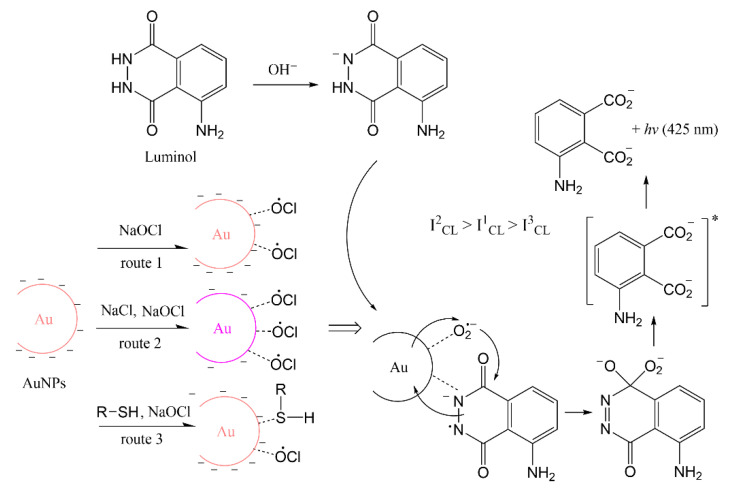
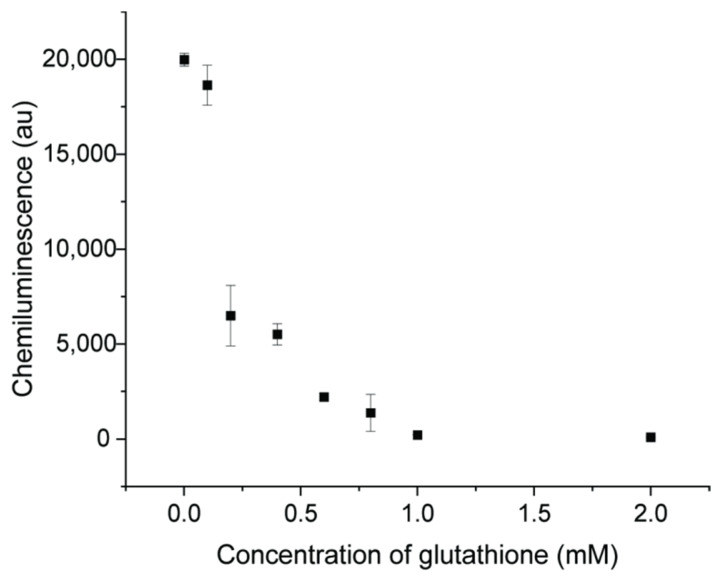
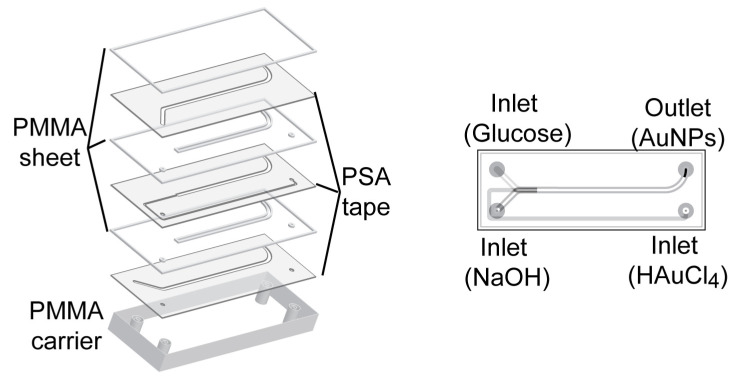
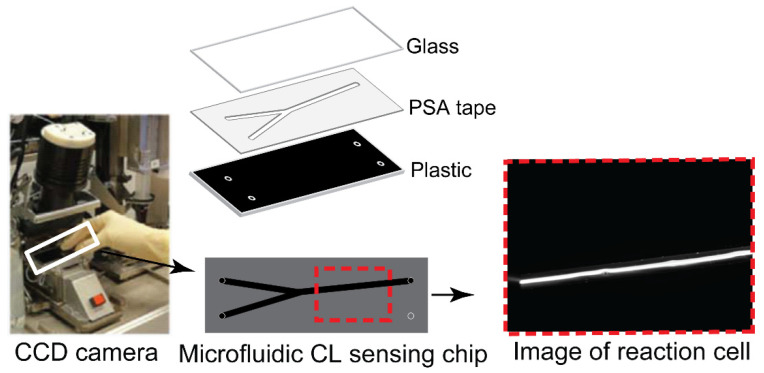
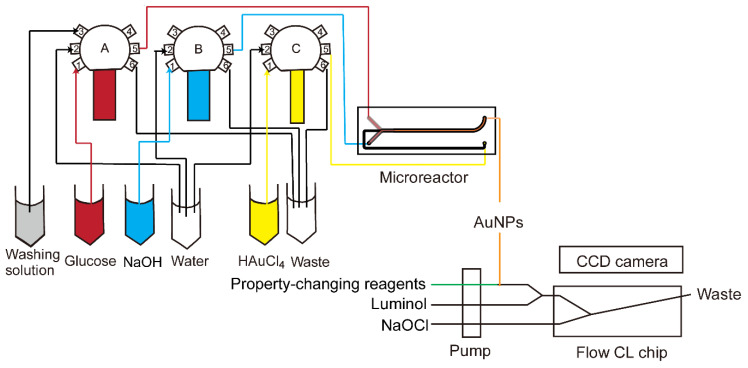
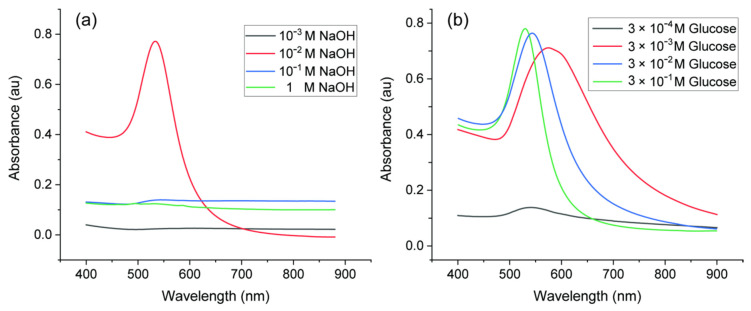
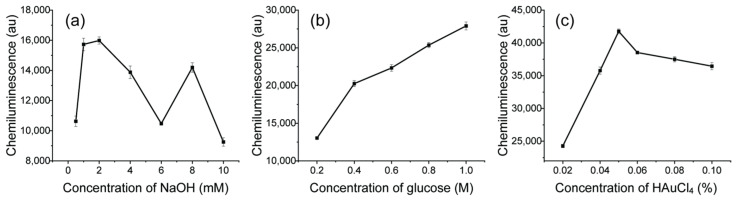
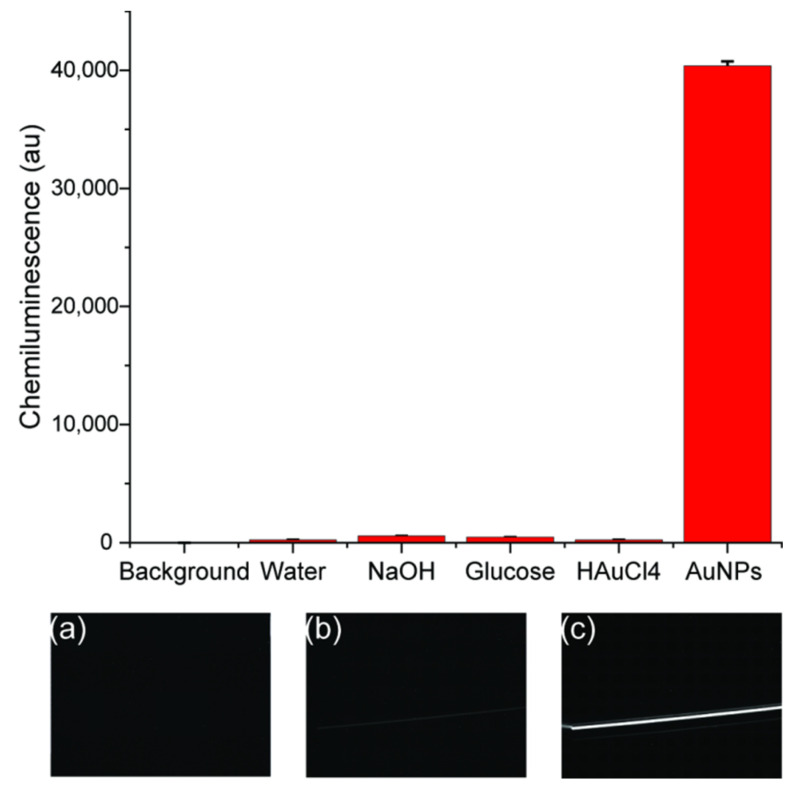
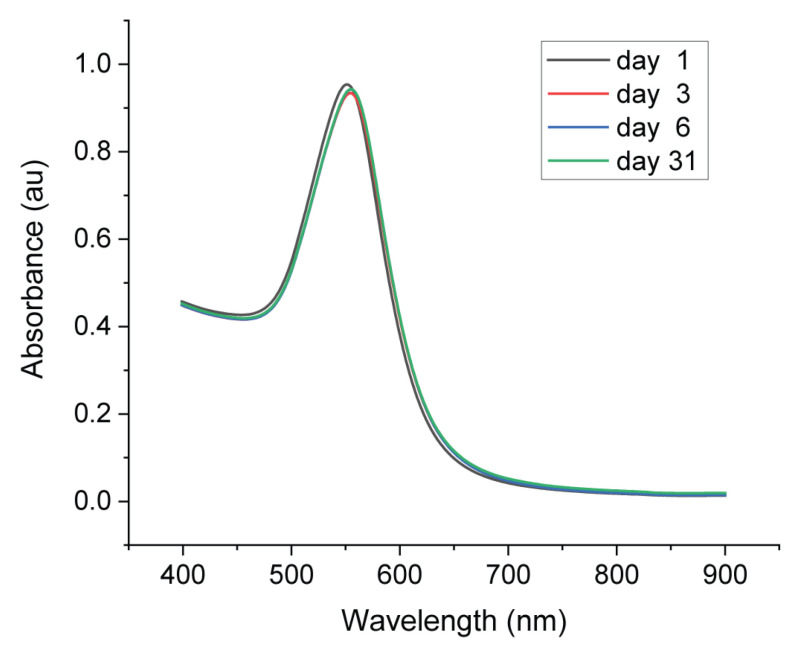
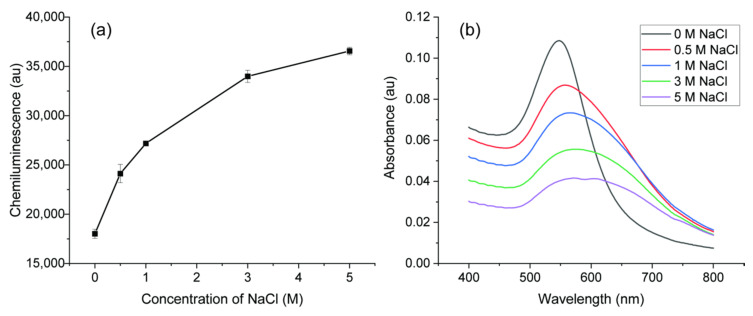
Chemiluminescence assays have shown great advantages compared with other optical techniques. Gold nanoparticles have drawn much attention in chemiluminescence analysis systems as an enzyme-free catalyst. The catalytic activity of gold nanoparticles for chemiluminescence sensing depends on size, shape and the surface charge property, which is hard to characterize in batches. As there is no positive or negative correlation between chemiluminescence signals and sizes of gold nanoparticles, the best way to get optimal gold nanoparticles is to control the reaction conditions via online chemiluminescence sensing systems. Therefore, a new method was developed for online synthesis of gold nanoparticles with a three-dimension hydrodynamic focusing microreactor, directly coupled with a microfluidic chemiluminescence sensing chip, which was coupled to a charge-coupled device camera for direct catalytical characterization of gold nanoparticles. All operations were performed in an automatic way with a program controlled by Matlab. Gold nanoparticles were synthesized through a single-phase reaction using glucose as a reducing agent and stabilizer at room temperature. The property of gold nanoparticles was easily controlled with the three-dimension microreactor during synthesis. The catalyst property of synthesized gold nanoparticles was characterized in a luminol-NaOCl chemiluminescence system. After optimizing parameters of synthesis, the chemiluminescence signal was enhanced to a factor of 171. The gold nanoparticles synthesized under optimal conditions for the luminol-NaOCl system were stable for at least one month. To further investigate the catalytic activity of synthesized gold nanoparticles in various situations, two methods were used to change the property of gold nanoparticles. After adding a certain amount of salt (NaCl), gold nanoparticles aggregated with a changed surface charge property and the catalytic activity was greatly enhanced. Glutathione was used as an example of molecules with thiol groups which interact with gold nanoparticles and reduce the catalytic activity. The chemiluminescence intensity was reduced by 98.9%. Therefore, we could show that using a microreactor for gold nanoparticles synthesis and direct coupling with microfluidic chemiluminescence sensing offers a promising monitoring method to find the best synthesis condition of gold nanoparticles for catalytic activity.
化学发光分析与其他光学技术相比具有很大的优势。金纳米粒子作为一种无酶催化剂,在化学发光分析系统中引起了广泛关注。金纳米粒子的化学发光传感催化活性取决于其尺寸、形状和表面电荷特性,这在批量生产中很难进行表征。由于化学发光信号与金纳米粒子的尺寸之间没有正相关或负相关关系,因此获得最佳金纳米粒子的最佳方法是通过在线化学发光传感系统控制反应条件。因此,开发了一种新的方法,使用三维流体动力学聚焦微反应器在线合成金纳米粒子,直接与微流控化学发光传感芯片耦合,并用电荷耦合器件(CCD)相机直接对金纳米粒子进行催化特性表征。所有操作均通过 Matlab 编程控制的程序自动进行。金纳米粒子通过单相反应在室温下使用葡萄糖作为还原剂和稳定剂合成。在合成过程中,使用三维微反应器可以轻松控制金纳米粒子的性质。在鲁米诺-NaOCl 化学发光系统中对合成的金纳米粒子的催化剂性质进行了表征。在优化合成参数后,化学发光信号增强到 171 倍。在优化条件下合成的金纳米粒子在鲁米诺-NaOCl 体系中至少稳定一个月。为了进一步研究合成的金纳米粒子在各种情况下的催化活性,使用两种方法改变金纳米粒子的性质。加入一定量的盐(NaCl)后,金纳米粒子聚集,表面电荷性质发生变化,催化活性大大增强。谷胱甘肽是具有巯基的分子的一个例子,它与金纳米粒子相互作用并降低催化活性。化学发光强度降低了 98.9%。因此,我们可以表明,使用微反应器进行金纳米粒子合成并直接与微流控化学发光传感耦合提供了一种有前途的监测方法,可以找到用于催化活性的最佳金纳米粒子合成条件。