Lu Mengqian, Ozcelik Adem, Grigsby Christopher L, Zhao Yanhui, Guo Feng, Leong Kam W, Huang Tony Jun
Department of Engineering Science and Mechanics, The Pennsylvania State University, University Park, PA, 16802, USA.
Department of Biomedical Engineering, Duke University, Durham, North Carolina, 27708, USA.
Nano Today. 2016 Dec;11(6):778-792. doi: 10.1016/j.nantod.2016.10.006. Epub 2016 Nov 12.
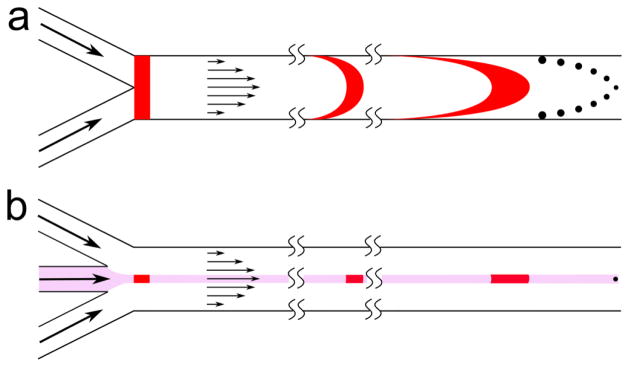
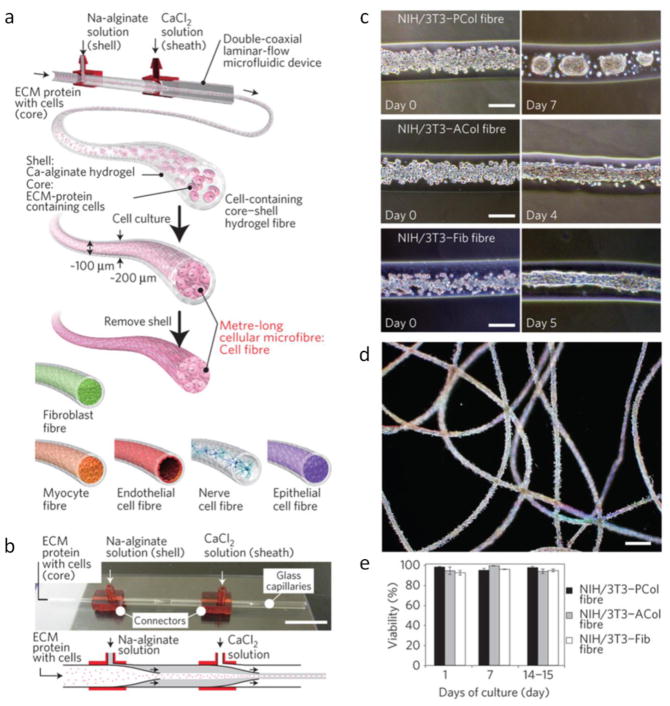
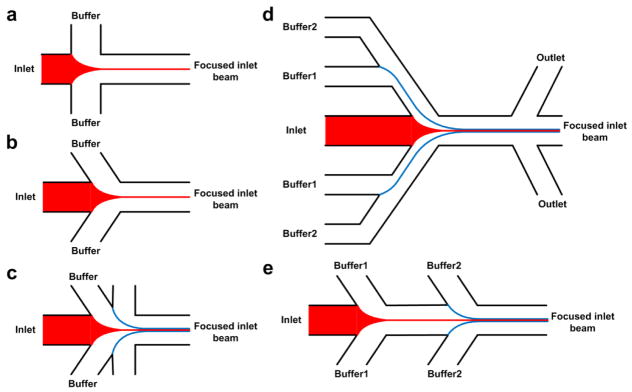
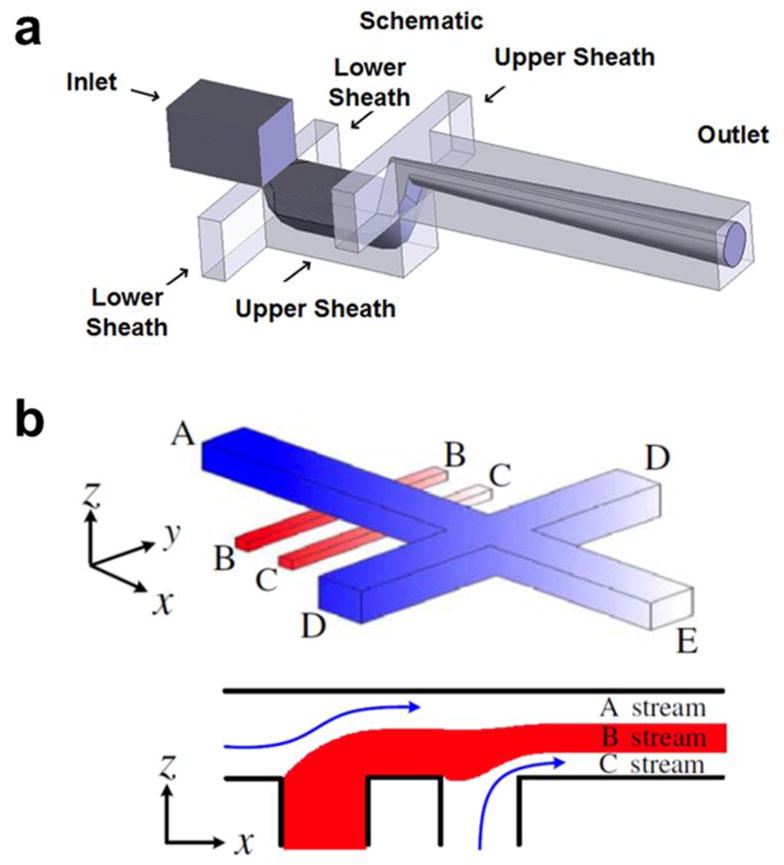
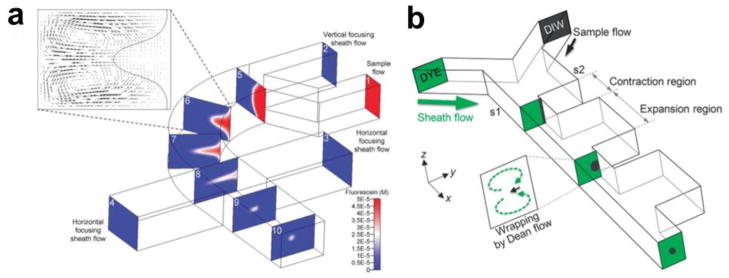
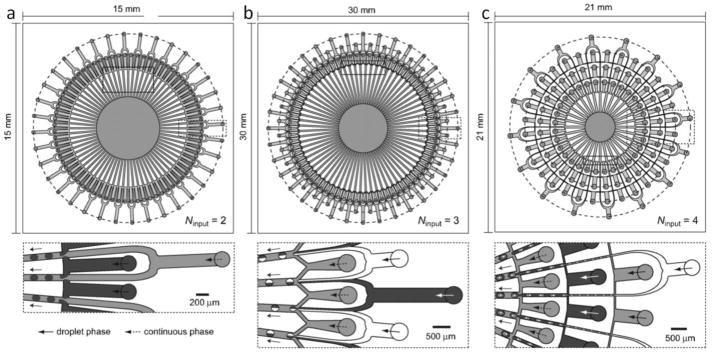
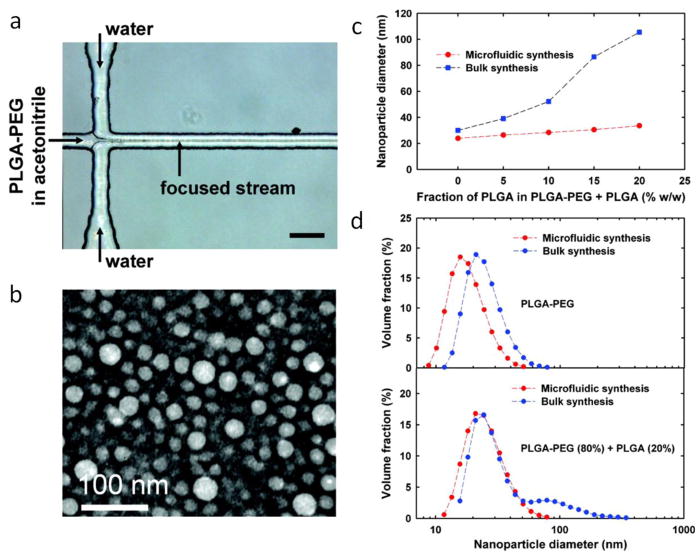
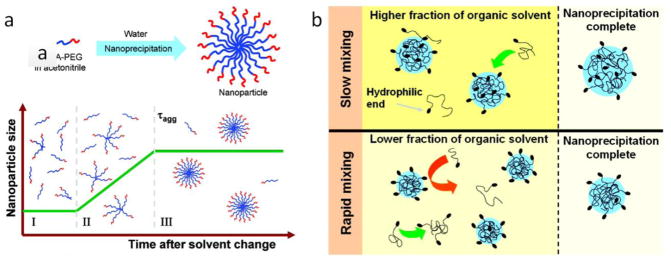
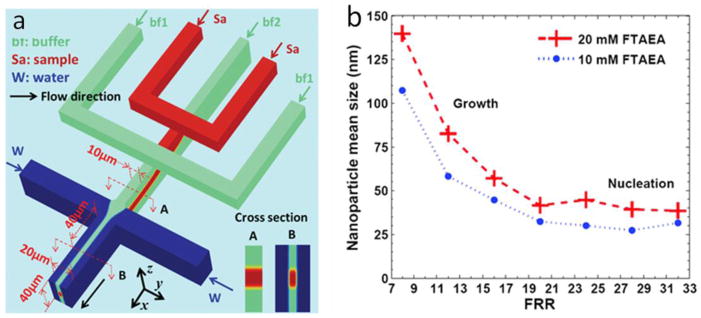
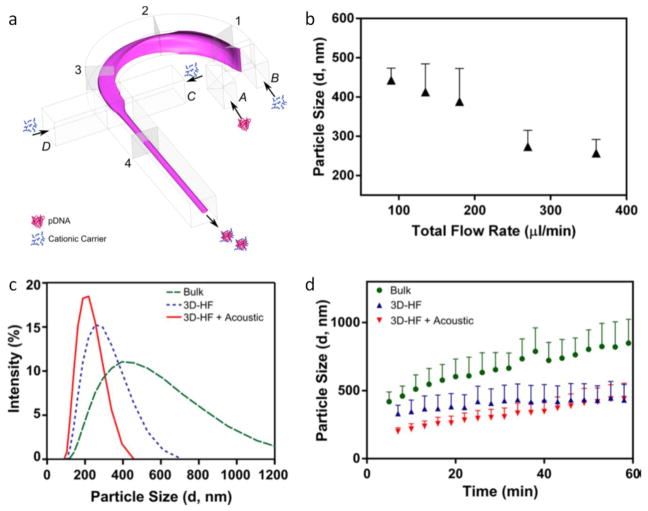
Microfluidics expands the synthetic space such as heat transfer, mass transport, and reagent consumption to conditions not easily achievable in conventional batch processes. Hydrodynamic focusing in particular enables the generation and study of complex engineered nanostructures and new materials systems. In this review, we present an overview of recent progress in the synthesis of nanostructures and microfibers using microfluidic hydrodynamic focusing techniques. Emphasis is placed on distinct designs of flow focusing methods and their associated mechanisms, as well as their applications in material synthesis, determination of reaction kinetics, and study of synthetic mechanisms.
微流控技术将诸如传热、传质和试剂消耗等合成空间扩展到传统批量过程中难以实现的条件。特别是流体动力聚焦能够生成和研究复杂的工程纳米结构和新型材料系统。在本综述中,我们概述了使用微流控流体动力聚焦技术合成纳米结构和微纤维的最新进展。重点介绍了流动聚焦方法的独特设计及其相关机制,以及它们在材料合成、反应动力学测定和合成机制研究中的应用。