Korea Food Research Institute, Wanju-gun 55365, Korea.
Department of Physiology and Biophysics, Virginia Commonwealth University, Richmond, VA 23298, USA.
Int J Mol Sci. 2021 Mar 25;22(7):3360. doi: 10.3390/ijms22073360.
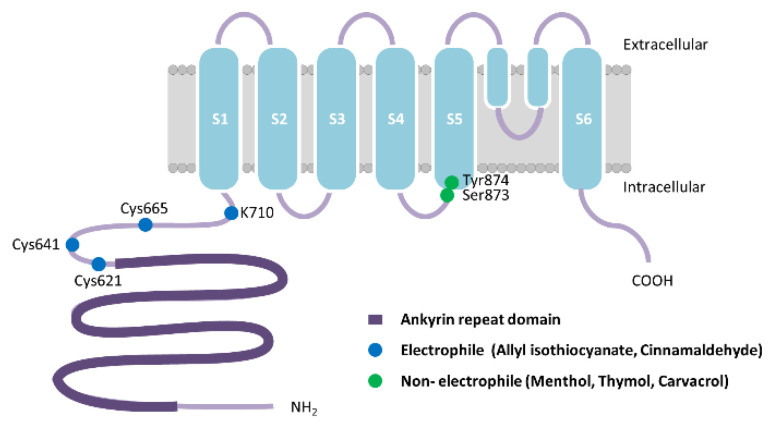
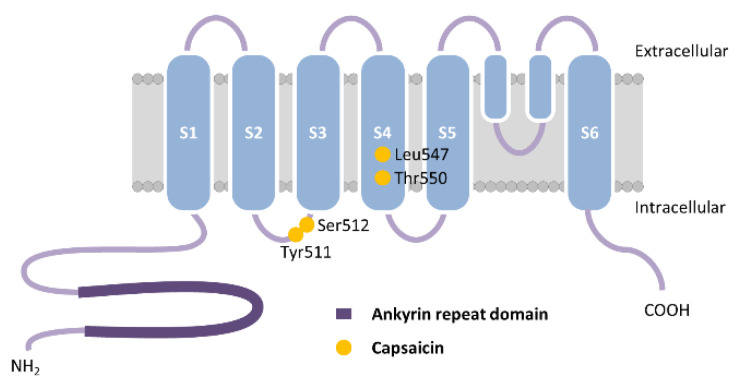
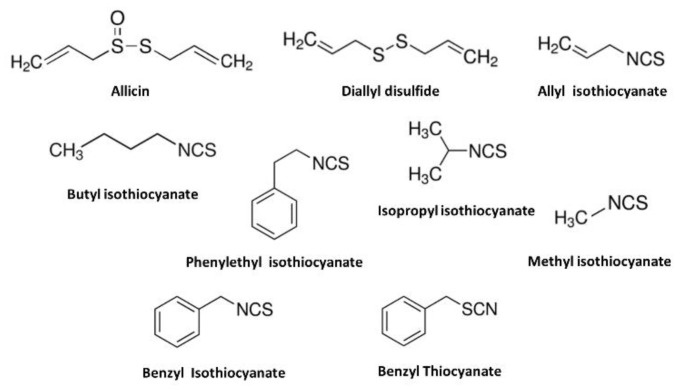
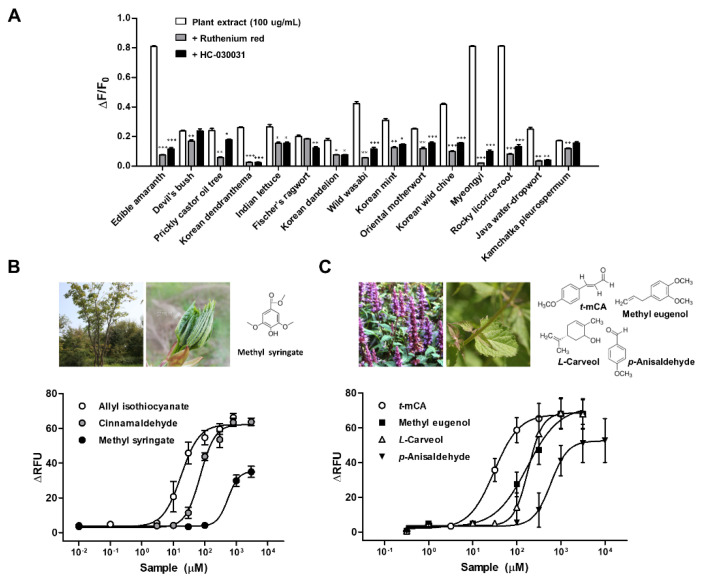
In addition to the sense of taste and olfaction, chemesthesis, the sensation of irritation, pungency, cooling, warmth, or burning elicited by spices and herbs, plays a central role in food consumption. Many plant-derived molecules demonstrate their chemesthetic properties via the opening of transient receptor potential ankyrin 1 (TRPA1) and transient receptor potential vanilloid 1 (TRPV1) channels. TRPA1 and TRPV1 are structurally related thermosensitive cation channels and are often co-expressed in sensory nerve endings. TRPA1 and TRPV1 can also indirectly influence some, but not all, primary taste qualities via the release of substance P and calcitonin gene-related peptide (CGRP) from trigeminal neurons and their subsequent effects on CGRP receptor expressed in Type III taste receptor cells. Here, we will review the effect of some chemesthetic agonists of TRPA1 and TRPV1 and their influence on bitter, sour, and salt taste qualities.
除味觉和嗅觉外,化学感觉(由香料和草药引起的刺激、辛辣、清凉、温热或灼烧感)在食物消费中也起着核心作用。许多植物衍生分子通过瞬时受体电位锚蛋白 1(TRPA1)和瞬时受体电位香草素 1(TRPV1)通道的开放来表现出其化学感觉特性。TRPA1 和 TRPV1 是结构相关的热敏阳离子通道,通常在感觉神经末梢中共表达。TRPA1 和 TRPV1 还可以通过三叉神经神经元中 P 物质和降钙素基因相关肽(CGRP)的释放,间接地影响一些(但不是全部)主要味觉品质,其随后对 III 型味觉受体细胞中表达的 CGRP 受体产生影响。在这里,我们将回顾 TRPA1 和 TRPV1 的一些化学感觉激动剂的作用及其对苦味、酸味和咸味的影响。