Anti-Aging Research Center, Dong-eui University, Busan 47340, Korea.
Department of Molecular Biology, Pusan National University, Busan 46241, Korea.
Molecules. 2021 Mar 4;26(5):1381. doi: 10.3390/molecules26051381.
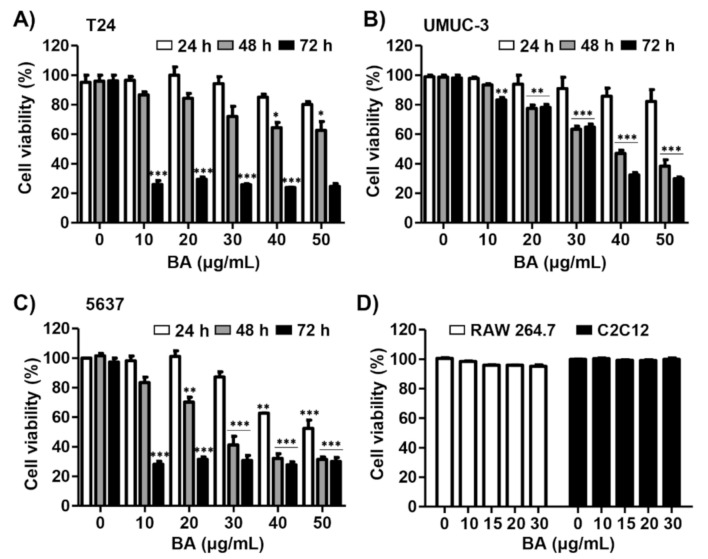
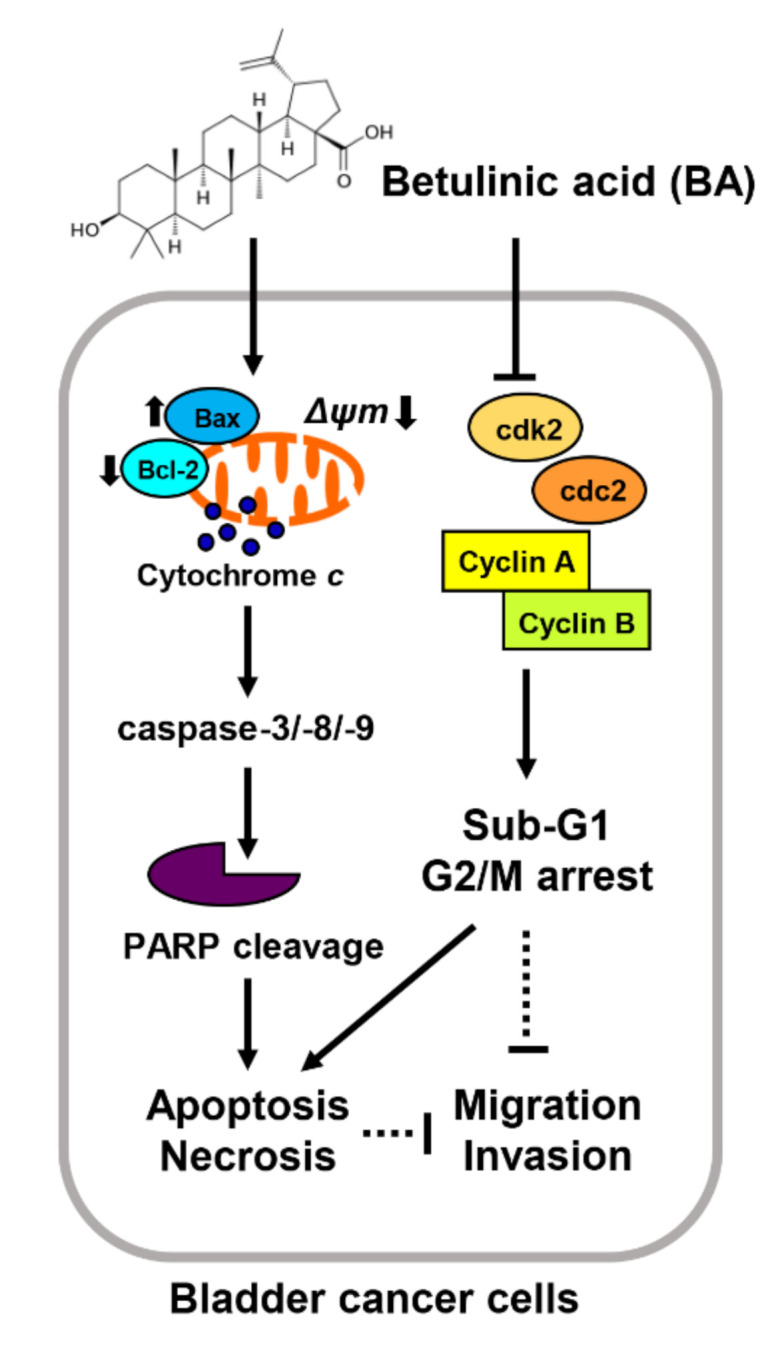
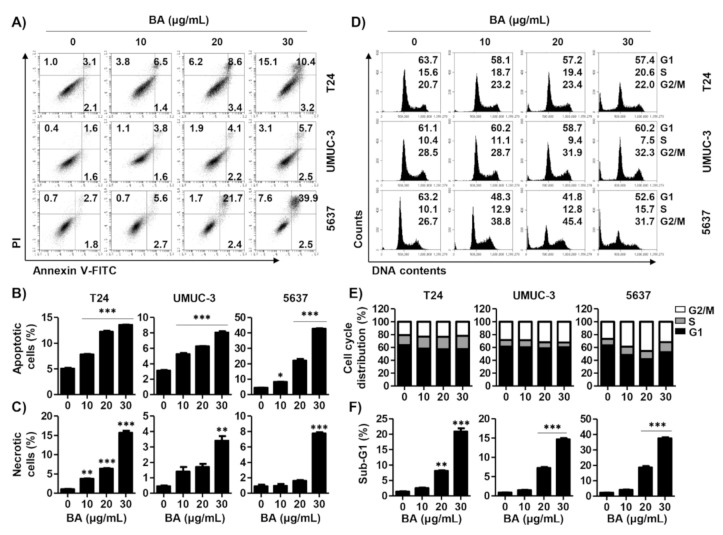
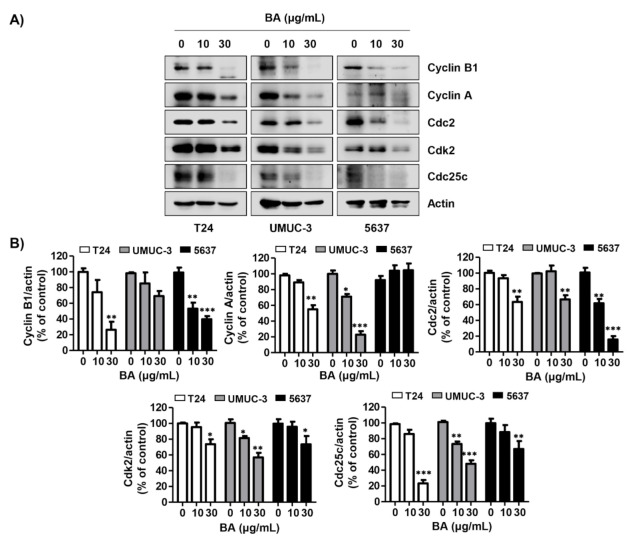
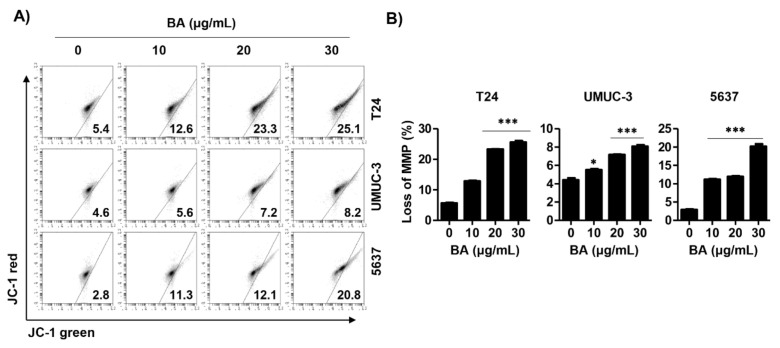
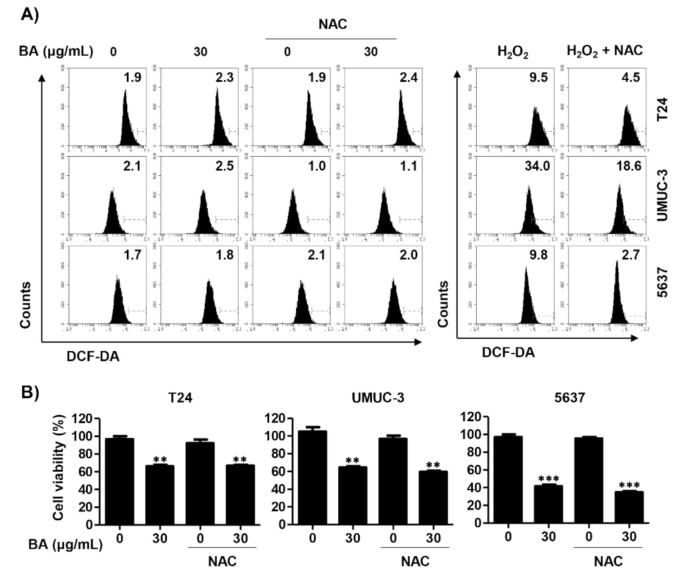
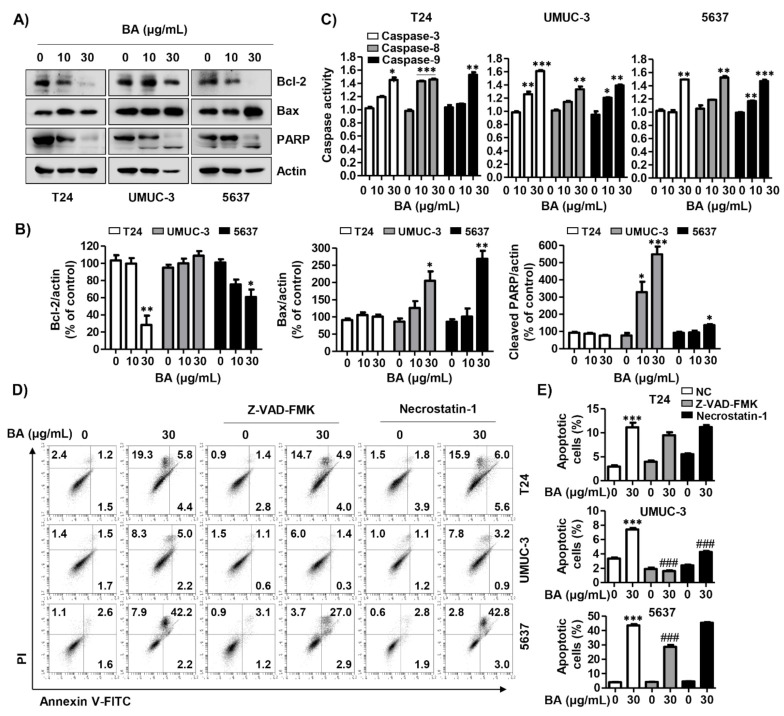
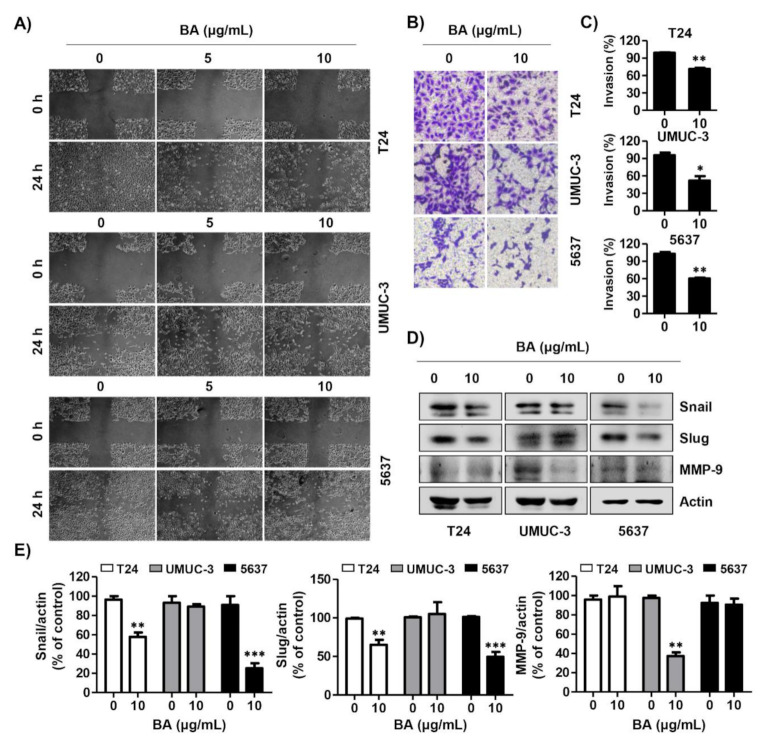
Betulinic acid (BA) is a naturally occurring pentacyclic triterpenoid and generally found in the bark of birch trees ( sp.). Although several studies have been reported that BA has diverse biological activities, including anti-tumor effects, the underlying anti-cancer mechanism in bladder cancer cells is still lacking. Therefore, this study aims to investigate the anti-proliferative effect of BA in human bladder cancer cell lines T-24, UMUC-3, and 5637, and identify the underlying mechanism. Our results showed that BA induced cell death in bladder cancer cells and that are accompanied by apoptosis, necrosis, and cell cycle arrest. Furthermore, BA decreased the expression of cell cycle regulators, such as cyclin B1, cyclin A, cyclin-dependent kinase (Cdk) 2, cell division cycle (Cdc) 2, and Cdc25c. In addition, BA-induced apoptosis was associated with mitochondrial dysfunction that is caused by loss of mitochondrial membrane potential, which led to the activation of mitochondrial-mediated intrinsic pathway. BA up-regulated the expression of Bcl-2-accociated X protein (Bax) and cleaved poly-ADP ribose polymerase (PARP), and subsequently activated caspase-3, -8, and -9. However, pre-treatment of pan-caspase inhibitor markedly suppressed BA-induced apoptosis. Meanwhile, BA did not affect the levels of intracellular reactive oxygen species (ROS), indicating BA-mediated apoptosis was ROS-independent. Furthermore, we found that BA suppressed the wound healing and invasion ability, and decreased the expression of Snail and Slug in T24 and 5637 cells, and matrix metalloproteinase (MMP)-9 in UMUC-3 cells. Taken together, this is the first study showing that BA suppresses the proliferation of human bladder cancer cells, which is due to induction of apoptosis, necrosis, and cell cycle arrest, and decrease of migration and invasion. Furthermore, BA-induced apoptosis is regulated by caspase-dependent and ROS-independent pathways, and these results provide the underlying anti-proliferative molecular mechanism of BA in human bladder cancer cells.
桦木酸(BA)是一种天然存在的五环三萜,通常存在于桦树皮(sp.)中。尽管已经有几项研究报道 BA 具有多种生物学活性,包括抗肿瘤作用,但膀胱癌细胞中潜在的抗癌机制仍不清楚。因此,本研究旨在探讨 BA 对人膀胱癌细胞系 T-24、UMUC-3 和 5637 的增殖抑制作用,并确定其潜在机制。我们的结果表明,BA 诱导膀胱癌细胞死亡,并伴有细胞凋亡、坏死和细胞周期停滞。此外,BA 降低了细胞周期调节剂的表达,如细胞周期蛋白 B1、细胞周期蛋白 A、细胞周期蛋白依赖性激酶(Cdk)2、细胞分裂周期(Cdc)2 和 Cdc25c。此外,BA 诱导的细胞凋亡与线粒体功能障碍有关,线粒体功能障碍导致线粒体膜电位丧失,从而激活线粒体介导的内在途径。BA 上调 Bcl-2 相关 X 蛋白(Bax)和聚 ADP 核糖聚合酶(PARP)的表达,随后激活 caspase-3、-8 和 -9。然而,预先用泛半胱天冬酶抑制剂处理显著抑制了 BA 诱导的细胞凋亡。同时,BA 不影响细胞内活性氧物种(ROS)的水平,表明 BA 介导的细胞凋亡与 ROS 无关。此外,我们发现 BA 抑制了 T24 和 5637 细胞的伤口愈合和侵袭能力,并降低了 Snail 和 Slug 的表达,以及 UMUC-3 细胞的基质金属蛋白酶(MMP)-9 的表达。总之,这是第一项表明 BA 抑制人膀胱癌细胞增殖的研究,这是由于诱导细胞凋亡、坏死和细胞周期停滞,以及迁移和侵袭减少所致。此外,BA 诱导的细胞凋亡受半胱天冬酶依赖性和 ROS 非依赖性途径调节,这些结果为 BA 在人膀胱癌细胞中的潜在增殖抑制分子机制提供了依据。