UMR 1161 Virologie, INRAE, ANSES, Ecole Nationale Vétérinaire d'Alfort, Université Paris-Est, 94700 Maisons-Alfort, France.
Agence Nationale de Sécurité Sanitaire, De L'environnement et du Travail (ANSES), Laboratory of Ploufragan-Plouzané-Niort, Viral Genetic and Biosafety (GVB) Unit, 22440 Ploufragan, France.
Viruses. 2021 Mar 4;13(3):406. doi: 10.3390/v13030406.
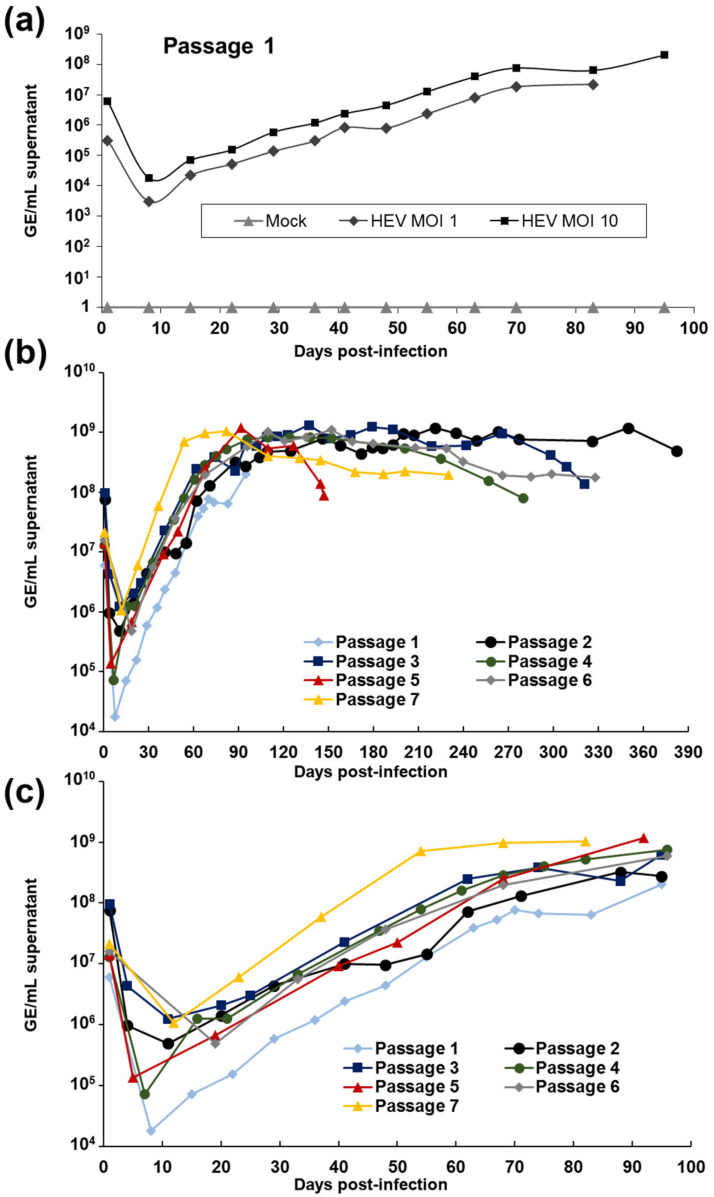
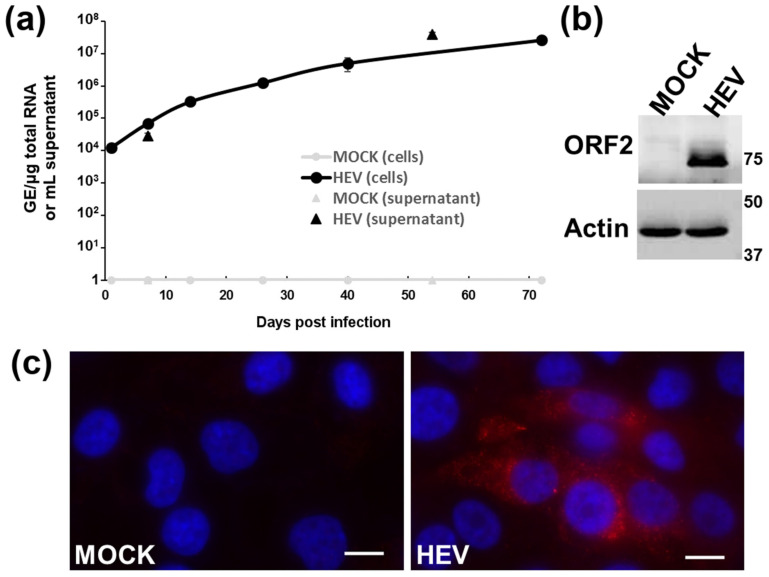
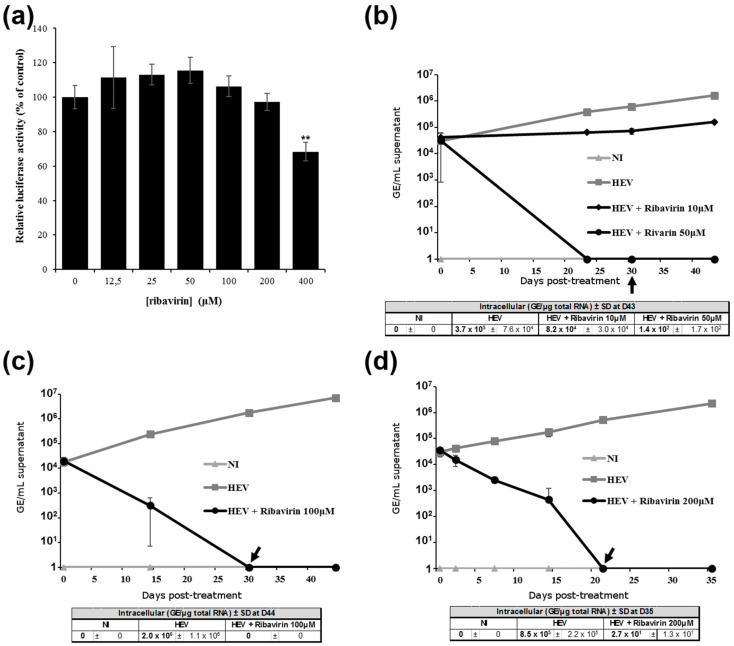
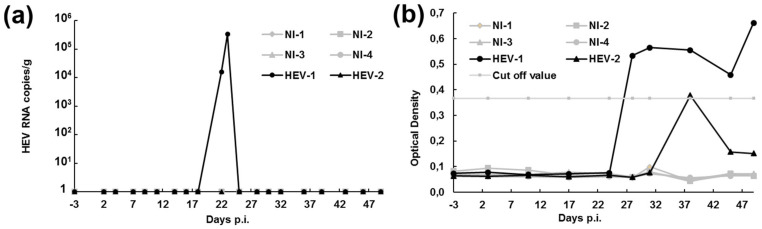
Hepatitis E virus (HEV) is considered as an emerging global health problem. In most cases, hepatitis E is a self-limiting disease and the virus is cleared spontaneously without the need of antiviral therapy. However, immunocompromised individuals can develop chronic infection and liver fibrosis that can progress rapidly to cirrhosis and liver failure. The lack of efficient and relevant cell culture system and animal models has limited our understanding of the biology of HEV and the development of effective drugs for chronic cases. In the present study, we developed a model of persistent HEV infection in human hepatocytes in which HEV replicates efficiently. This HEV cell culture system is based on differentiated HepaRG cells infected with an isolate of HEV-3 derived from a patient suffering from acute hepatitis E. Efficient replication was maintained for several weeks to several months as well as after seven successive passages on HepaRG naïve cells. Moreover, after six passages onto HepaRG, we found that the virus was still infectious after oral inoculation into pigs. We also showed that ribavirin had an inhibitory effect on HEV replication in HepaRG. In conclusion, this system represents a relevant and efficient in vitro model of HEV replication that could be useful to study HEV biology and identify effective antiviral drugs against chronic HEV infection.
戊型肝炎病毒(HEV)被认为是一个新出现的全球健康问题。在大多数情况下,戊型肝炎是一种自限性疾病,病毒会自发清除,无需抗病毒治疗。然而,免疫功能低下的个体可能会发展为慢性感染和肝纤维化,这可能迅速进展为肝硬化和肝衰竭。缺乏有效的细胞培养系统和动物模型限制了我们对 HEV 生物学的理解以及慢性病例有效药物的开发。在本研究中,我们开发了一种人肝细胞中持续 HEV 感染的模型,其中 HEV 能够高效复制。这种 HEV 细胞培养系统基于分化的 HepaRG 细胞感染来自急性肝炎 E 患者的 HEV-3 分离株。高效复制可以维持数周至数月,并且在 HepaRG 未感染细胞上连续传代 7 次后仍能维持。此外,在 HepaRG 上传代 6 次后,我们发现该病毒在口服接种给猪后仍具有感染性。我们还表明,利巴韦林对 HepaRG 中的 HEV 复制具有抑制作用。总之,该系统代表了一种相关且高效的 HEV 复制体外模型,可用于研究 HEV 生物学并鉴定针对慢性 HEV 感染的有效抗病毒药物。