Shehata Tamer M, Ibrahim Mahmoud M, Elsewedy Heba S
Department of Pharmaceutical Sciences, College of Clinical Pharmacy, King Faisal University, Al Hofuf 31982, Saudi Arabia.
Department of Pharmaceutics, Oman College of Health Sciences, Pharmacy Program, Ministry of Health, Muscat 123, Oman.
Polymers (Basel). 2021 Mar 4;13(5):791. doi: 10.3390/polym13050791.
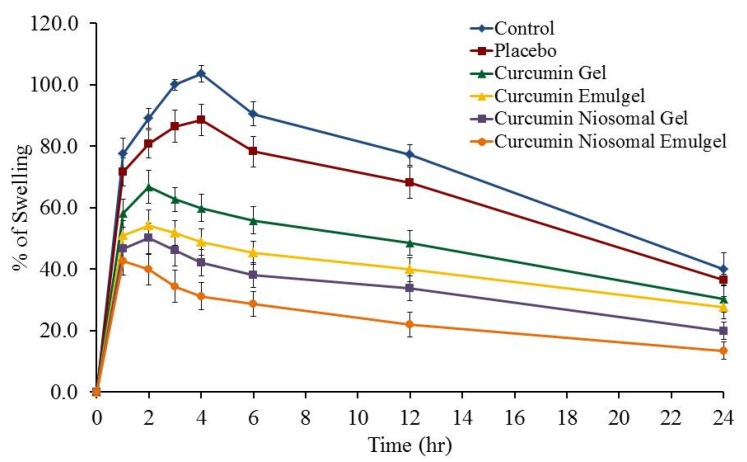
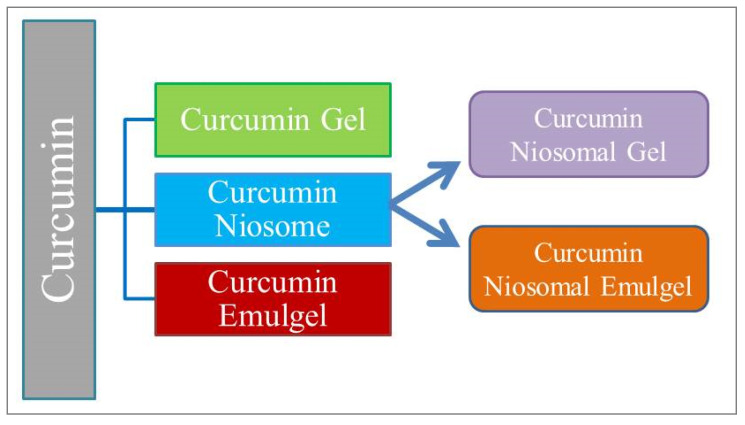
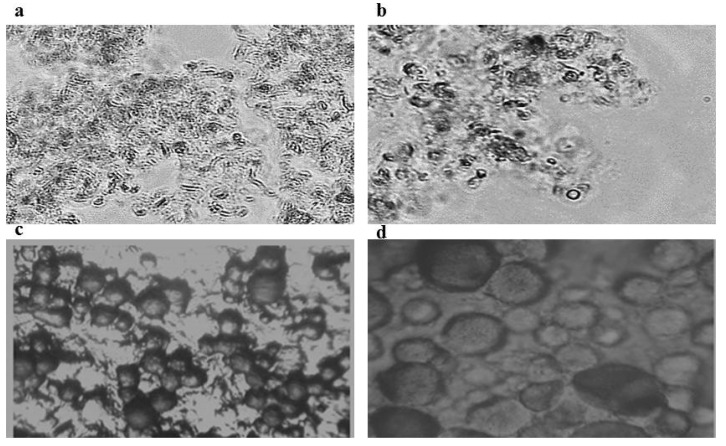
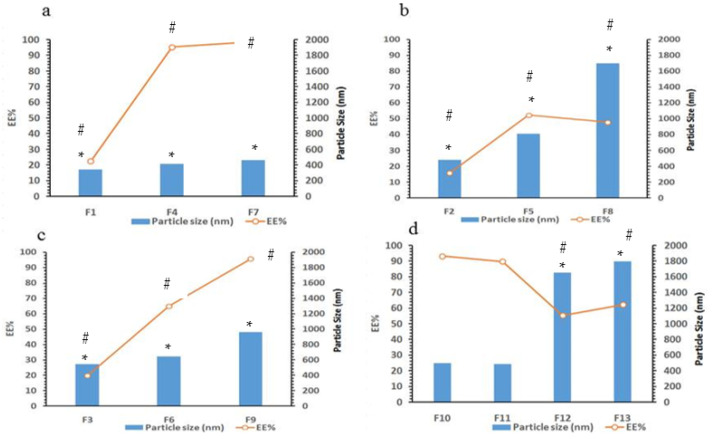
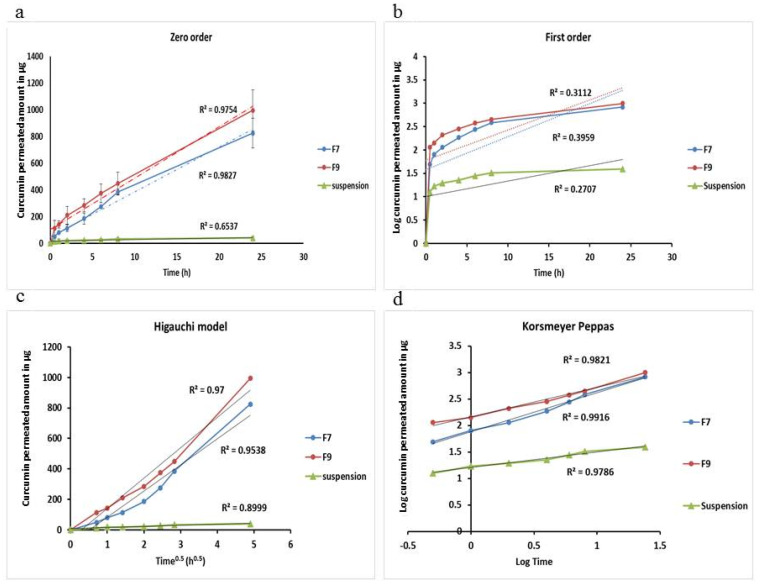
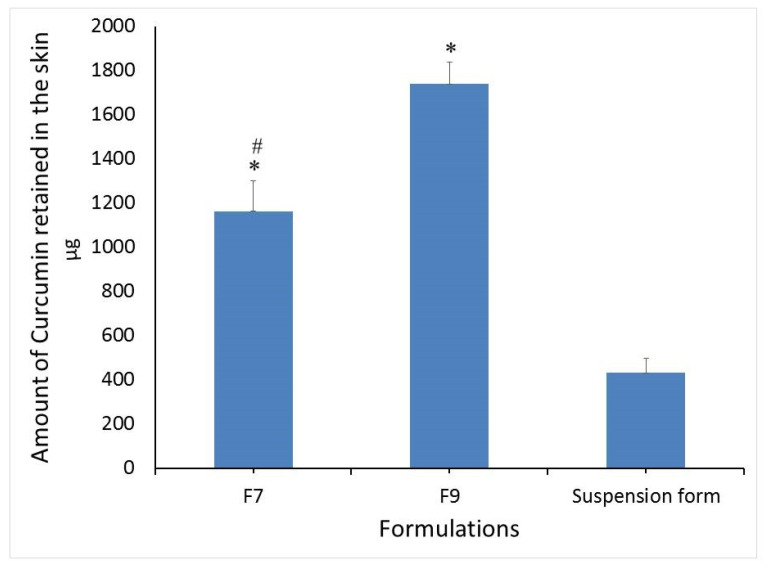
Curcumin is a poorly water-soluble drug that is used for the treatment of inflammations, tumors, wound healing antioxidant and other diseases. In the current manuscript, it is successfully formulated into proniosome gels. The proniosomes are readily hydrated into niosomal formulations using warm water. Proniosomes were prepared using nonionic surfactants (tween 80, span 60) either solely or in combinations with cholesterol. The produced niosomal formulations were homogenous in size with vesicular sizes >343 and <1800 nm. The encapsulation efficiency percentage "EE%" of curcumin in niosomal formulations was different according to niosomal composition. It increased up to 99.74% in formulations of tween 80/Chol of 200 μmole/mL lipid concentration. Span 60/chol niosomes showed decreased curcumin EE%. Niosomal formulations showed increased SSTF and PC with enhancement ratios of more than 20-fold compared with curcumin suspension form. Kinetically, niosomes fitted to the Korsemeyer-Peppas model with non-Fickian transport according to their calculated n-values where curcumin suspension form showed Korsemeyer-Peppas kinetics with Fickian transport. Niosomal formulations deposited higher curcumin amounts in the skin compared with the suspension form. The best niosomal formulation (F9) was used for niosomal gel and emulgel fabrication. Finally, the anti-inflammatory activity of curcumin in various formulations was evaluated using a rat hind paw edema method and the % of swelling was 17.5% following 24 h in group treated with curcumin niosomal emulgel. In conclusion, this study suggests that the developed niosomal emulgel could significantly enhance the anti-inflammatory effect of curcumin and be an efficient carrier for the transdermal delivery of the drug.
姜黄素是一种水溶性较差的药物,用于治疗炎症、肿瘤、伤口愈合、抗氧化及其他疾病。在当前的手稿中,它被成功制成前体脂质体凝胶。前体脂质体使用温水很容易水合形成脂质体制剂。前体脂质体是使用非离子表面活性剂(吐温80、司盘60)单独或与胆固醇组合制备的。所制备的脂质体制剂大小均匀,囊泡大小>343且<1800nm。姜黄素在脂质体制剂中的包封率“EE%”因脂质体组成而异。在脂质浓度为200μmole/mL的吐温80/胆固醇制剂中,包封率高达99.74%。司盘60/胆固醇脂质体显示姜黄素的包封率降低。脂质体制剂显示出SSTF和PC增加,与姜黄素悬浮液形式相比增强率超过20倍。从动力学角度来看,脂质体根据其计算的n值符合Korsemeyer-Peppas模型且为非菲克转运方式,而姜黄素悬浮液形式显示为菲克转运的Korsemeyer-Peppas动力学。与悬浮液形式相比,脂质体制剂在皮肤中沉积的姜黄素量更高。最佳脂质体制剂(F9)用于制备脂质体凝胶和乳胶凝胶。最后,使用大鼠后爪水肿法评估了各种制剂中姜黄素的抗炎活性,在用姜黄素脂质体乳胶凝胶治疗的组中,24小时后肿胀百分比为17.5%。总之,本研究表明,所开发的脂质体乳胶凝胶可显著增强姜黄素的抗炎作用,并且是该药物经皮递送的有效载体。