Maize Breeding Program, Crop Breeding Institute, Causeway, Harare 00263, Zimbabwe.
International Maize and Wheat Improvement Centre (CIMMYT), Mount Pleasant, Harare 00263, Zimbabwe.
Nutrients. 2021 Mar 23;13(3):1039. doi: 10.3390/nu13031039.
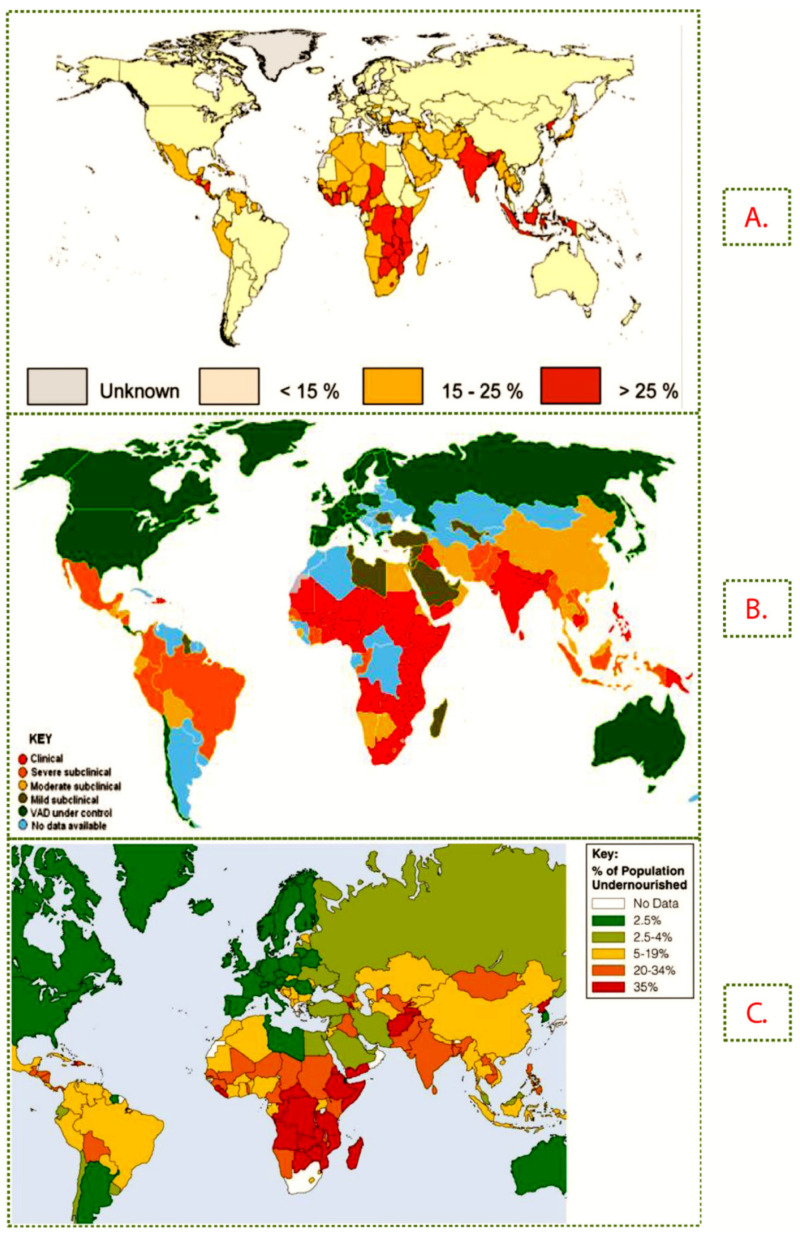
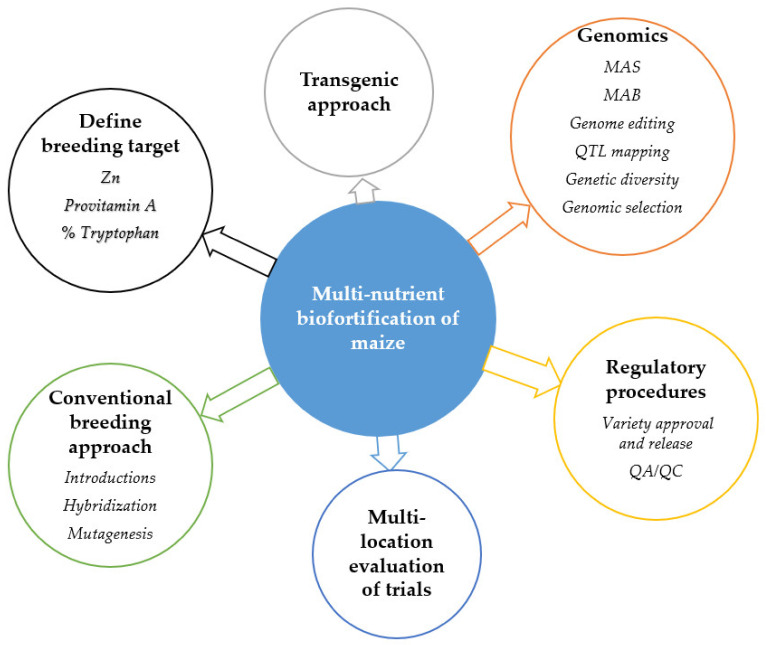
Macro and micronutrient deficiencies pose serious health challenges globally, with the largest impact in developing regions such as subSaharan Africa (SSA), Latin America and South Asia. Maize is a good source of calories but contains low concentrations of essential nutrients. Major limiting nutrients in maize-based diets are essential amino acids such as lysine and tryptophan, and micronutrients such as vitamin A, zinc (Zn) and iron (Fe). Responding to these challenges, separate maize biofortification programs have been designed worldwide, resulting in several cultivars with high levels of provitamin A, lysine, tryptophan, Zn and Fe being commercialized. This strategy of developing single-nutrient biofortified cultivars does not address the nutrient deficiency challenges in SSA in an integrated manner. Hence, development of maize with multinutritional attributes can be a sustainable and cost-effective strategy for addressing the problem of nutrient deficiencies in SSA. This review provides a synopsis of the health challenges associated with Zn, provitamin A and tryptophan deficiencies and link these to vulnerable societies; a synthesis of past and present intervention measures for addressing nutrient deficiencies in SSA; and a discussion on the possibility of developing maize with multinutritional quality attributes, but also with adaptation to stress conditions in SSA.
宏观和微量营养素缺乏对全球健康构成严重挑战,在撒哈拉以南非洲(SSA)、拉丁美洲和南亚等发展中地区影响最大。玉米是卡路里的良好来源,但含有低浓度的必需营养素。以玉米为基础的饮食中的主要限制营养素是必需氨基酸,如赖氨酸和色氨酸,以及微量营养素,如维生素 A、锌(Zn)和铁(Fe)。为应对这些挑战,全球范围内设计了单独的玉米生物强化计划,导致商业化了几种富含类胡萝卜素、赖氨酸、色氨酸、Zn 和 Fe 的品种。这种开发单一营养素生物强化品种的策略不能以综合方式解决 SSA 的营养缺乏挑战。因此,开发具有多种营养特性的玉米可能是解决 SSA 营养缺乏问题的一种可持续和具有成本效益的策略。本文综述了与 Zn、类胡萝卜素和色氨酸缺乏相关的健康挑战,并将这些挑战与弱势社会联系起来;综合了过去和现在解决 SSA 营养缺乏问题的干预措施;并讨论了开发具有多种营养质量特性的玉米的可能性,但也需要适应 SSA 的胁迫条件。