Graduate School of Technology Management-MOT, Ritsumeikan University, Osaka 567-8570, Japan.
Faculty of Business Administration, Ritsumeikan University, Osaka 567-8570, Japan.
Int J Environ Res Public Health. 2020 Apr 23;17(8):2935. doi: 10.3390/ijerph17082935.
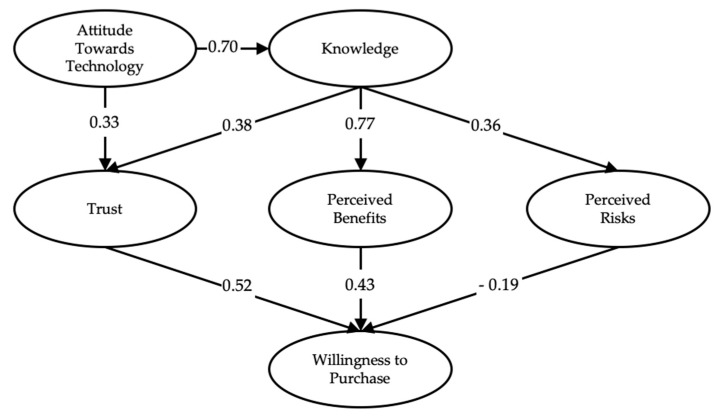
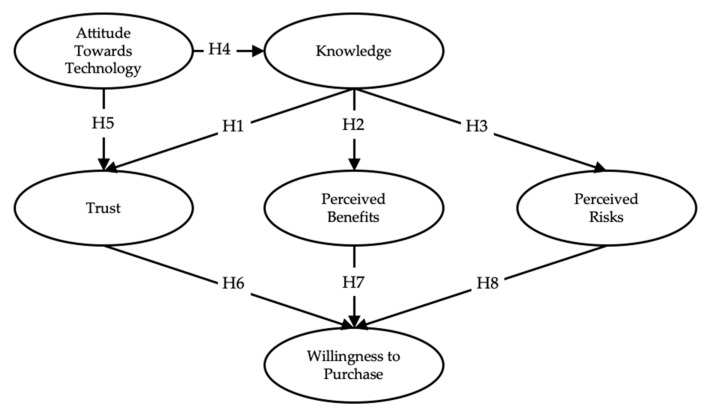
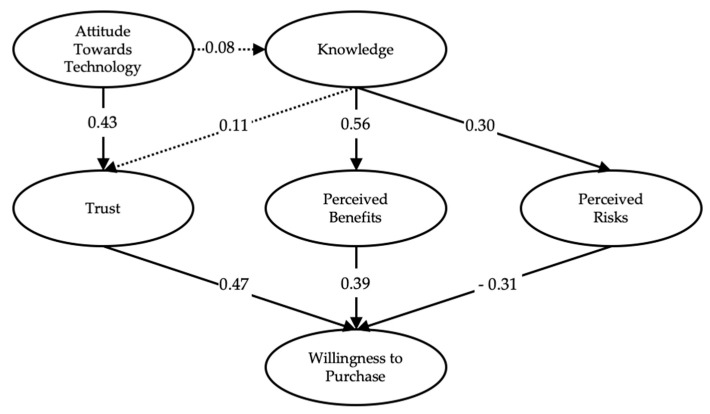
Genetically edited food utilizes new techniques that may decrease all of the risks associated with genetically modified food, or "GMO" food. Safety and labeling regulations for genetically edited food are still new, and it is challenging for the consumer to differentiate it from conventional food. Although genetically edited food has the potential for reducing the risks associated with the gene introduction process, consumer perceptions toward it are still unclear. The research has compared the regulations governing GMO food and genetically edited food in Japan, Europe, and the United States. We found that the genetically edited food regulations in Japan are the most science-based, in the meaning that genetically edited food products are allowed to be sold without any safety evaluation. Based on the difference among regions, we further studied the potential acceptance level for such products among Japanese consumers, where regulation seemed science-based as policy. To understand the factors that may affect the adoption of genetically edited food among youth in Japan, we utilized the structural equation modeling (SEM) method with 180 surveys of Japanese university students to measure six factors: Knowledge, Attitude Towards Technology, Perceived Benefits, Perceived Risks, Trust, and Willingness to Purchase. The survey was conducted twice with an intervention in the middle to measure the effect of science communication, and we found significant differences when comparing the two datasets. The results of this survey indicate the importance of increasing knowledge and the positive role of science communication in increasing the adoption and trust of biotechnology products, such as genetically edited food.
基因编辑食品利用了新技术,可能降低与基因改造食品(即“转基因食品”)相关的所有风险。基因编辑食品的安全和标签法规尚属新生事物,消费者难以将其与传统食品区分开来。尽管基因编辑食品有可能降低与基因导入过程相关的风险,但消费者对其的看法仍不明确。本研究比较了日本、欧洲和美国的转基因食品和基因编辑食品的监管规定。我们发现,日本的基因编辑食品监管规定最具科学性,即无需进行任何安全评估就可以允许销售基因编辑食品产品。基于各地区之间的差异,我们进一步研究了日本消费者对这类产品的潜在接受程度,在这些地区,政策基于科学的监管规定似乎更受欢迎。为了了解日本年轻人对基因编辑食品的接受程度,我们利用结构方程模型(SEM)方法,对 180 名日本大学生进行了调查,以衡量六个因素:知识、对技术的态度、预期收益、预期风险、信任和购买意愿。我们进行了两次调查,并在中间进行了干预,以衡量科学传播的效果,我们发现两次数据集的结果存在显著差异。这项调查的结果表明,增加知识和科学传播的积极作用对于提高生物技术产品(如基因编辑食品)的采用率和信任度非常重要。