USU Walter Reed Surgery, Uniformed Services University, Bethesda, MD 20814, USA.
Henry M. Jackson Foundation for the Advancement of Military Medicine, Inc., Bethesda, MD 20817, USA.
Biomolecules. 2021 Mar 31;11(4):522. doi: 10.3390/biom11040522.
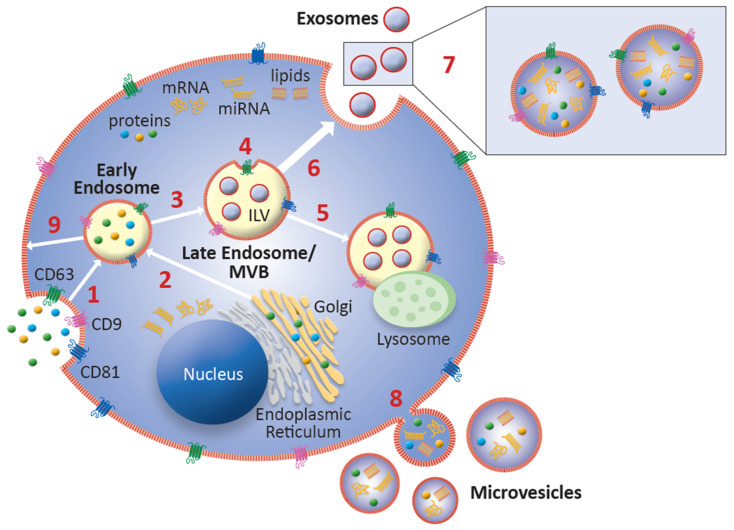
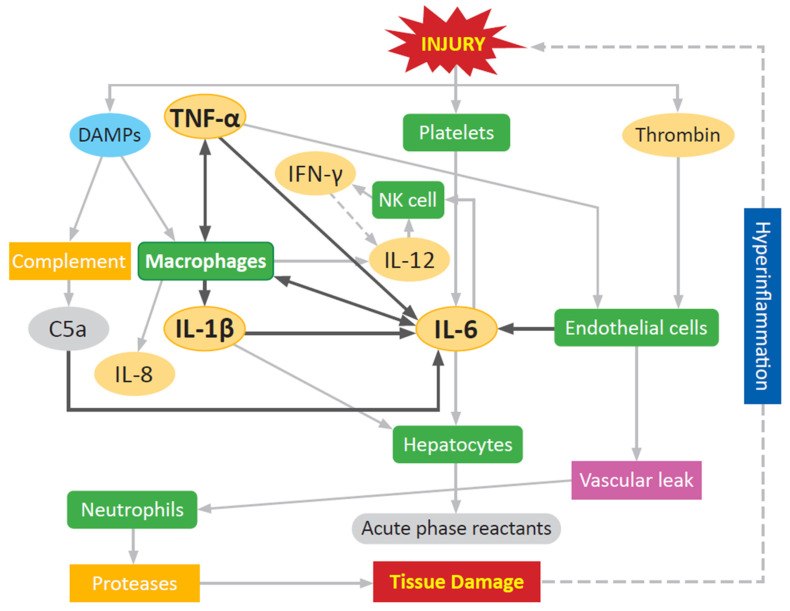
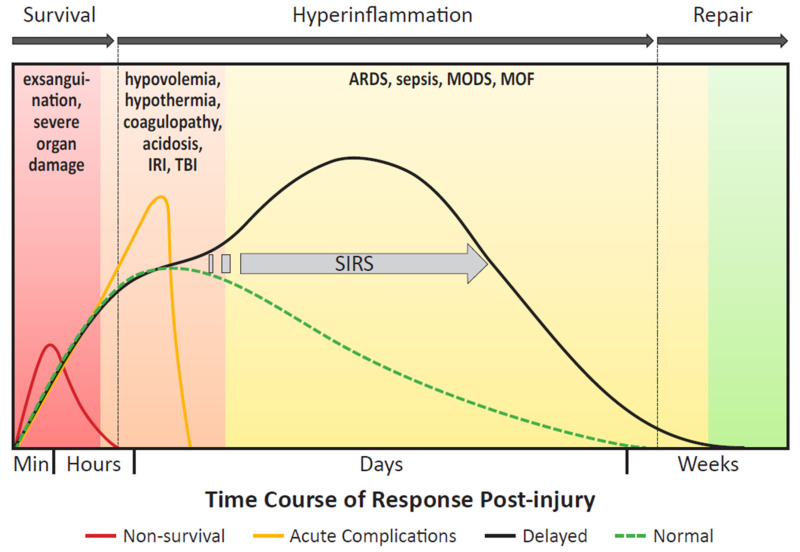
Severe polytraumatic injury initiates a robust immune response. Broad immune dysfunction in patients with such injuries has been well-documented; however, early biomarkers of immune dysfunction post-injury, which are critical for comprehensive intervention and can predict the clinical course of patients, have not been reported. Current circulating markers such as IL-6 and IL-10 are broad, non-specific, and lag behind the clinical course of patients. General blockade of the inflammatory response is detrimental to patients, as a certain degree of regulated inflammation is critical and necessary following trauma. Exosomes, small membrane-bound extracellular vesicles, found in a variety of biofluids, carry within them a complex functional cargo, comprised of coding and non-coding RNAs, proteins, and metabolites. Composition of circulating exosomal cargo is modulated by changes in the intra- and extracellular microenvironment, thereby serving as a homeostasis sensor. With its extensively documented involvement in immune regulation in multiple pathologies, study of exosomal cargo in polytrauma patients can provide critical insights on trauma-specific, temporal immune dysregulation, with tremendous potential to serve as unique biomarkers and therapeutic targets for timely and precise intervention.
严重多发创伤会引发强烈的免疫反应。有大量文献记录了此类损伤患者的广泛免疫功能障碍;然而,尚未有关于损伤后免疫功能障碍的早期生物标志物的报道,这些标志物对于全面干预至关重要,并可预测患者的临床病程。目前的循环标志物,如 IL-6 和 IL-10,较为广泛、非特异性,且滞后于患者的临床病程。对炎症反应的一般性抑制对患者不利,因为在创伤后,一定程度的调节性炎症是至关重要且必要的。外泌体是在各种生物体液中发现的、带有小膜的细胞外囊泡,其内携带有编码和非编码 RNA、蛋白质和代谢物等复杂的功能货物。循环外泌体货物的组成受细胞内外微环境变化的调节,从而作为一种体内平衡传感器。由于其在多种病理中的免疫调节作用已被广泛证实,因此研究多发创伤患者的外泌体货物可以提供关于创伤特异性、时间性免疫失调的关键见解,并有可能成为独特的生物标志物和治疗靶点,以便及时、精准地进行干预。