Sohn Sung-Hwa, Kim Tae-Hee, Kim Tae-Sik, Min Too-Jae, Lee Ju-Han, Yoo Sung-Mook, Kim Ji-Won, Lee Ji-Eun, Kim Chae-Hwa, Park Suk-Hee, Jo Won-Min
Department of Thoracic & Cardiovascular Surgery, Korea University Ansan Hospital, Korea University College of Medicine, Ansan 15355, Korea.
Advanced Textile R&D Department, Korea Institute of Industrial Technology, Ansan 15588, Korea.
Materials (Basel). 2021 Mar 5;14(5):1239. doi: 10.3390/ma14051239.
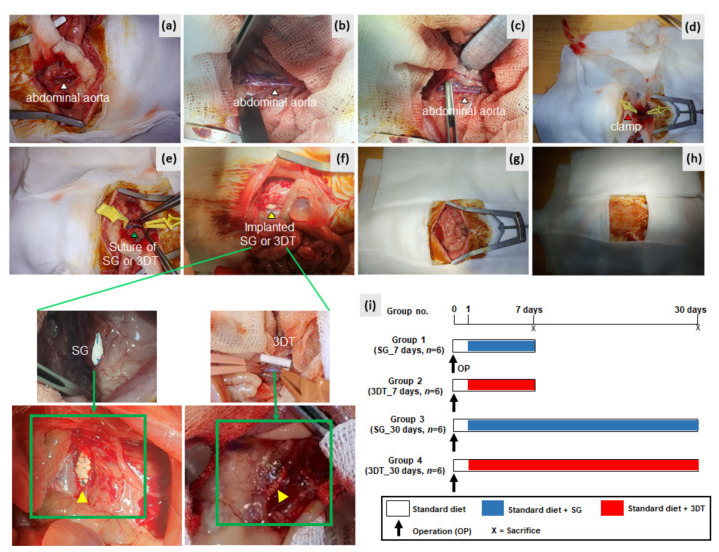
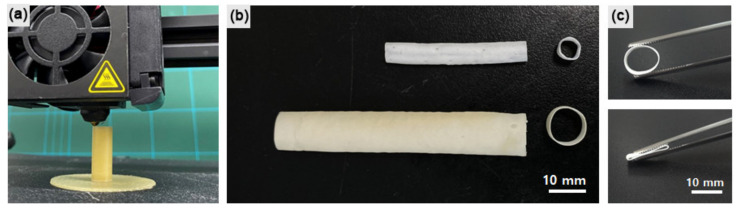
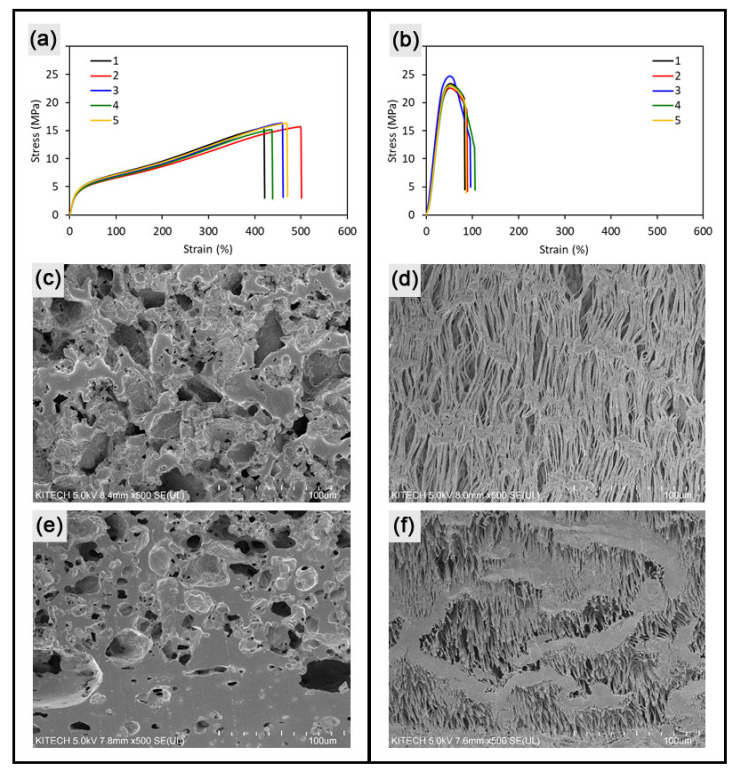
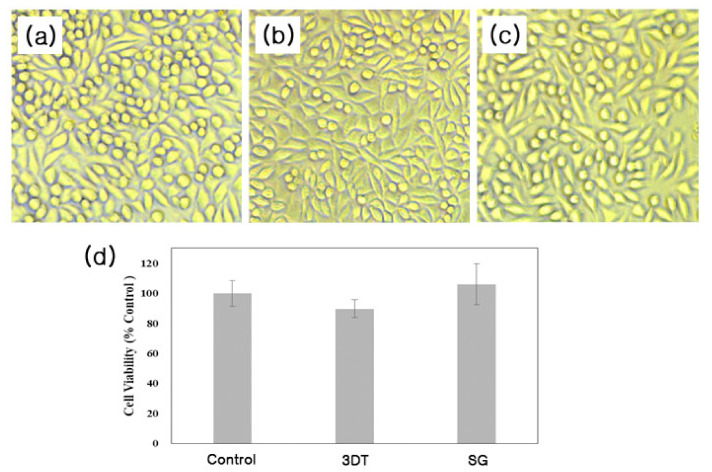
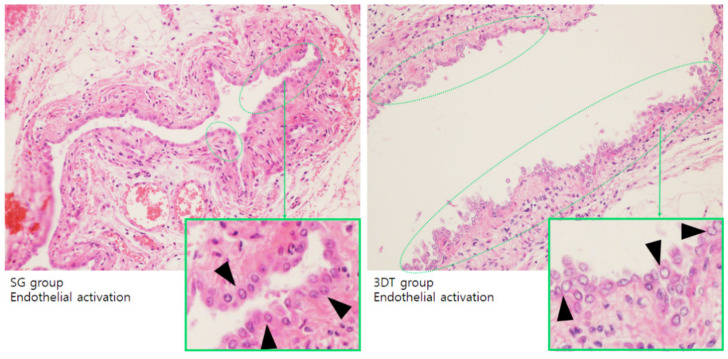
Although the number of vascular surgeries using vascular grafts is increasing, they are limited by vascular graft-related complications and size discrepancy. Current efforts to develop the ideal synthetic vascular graft for clinical application using tissue engineering or 3D printing are far from satisfactory. Therefore, we aimed to re-design the vascular graft with modified materials and 3D printing techniques and also demonstrated the improved applications of our new vascular graft clinically. We designed the 3D printed polyvinyl alcohol (PVA) templates according to the vessel size and shape, and these were dip-coated with salt-suspended thermoplastic polyurethane (TPU). Next, the core template was removed to obtain a customized porous TPU graft. The mechanical testing and cytotoxicity studies of the new synthetic 3D templated vascular grafts (3DT) were more appropriate compared with commercially available polytetrafluoroethylene (PTFE) grafts (ePTFE; standard graft, SG) for clinical use. Finally, we performed implantation of the 3DTs and SGs into the rat abdominal aorta as a patch technique. Four groups of the animal model (SG_7 days, SG_30 days, 3DT_7 days, and 3DT_30 days) were enrolled in this study. The abdominal aorta was surgically opened and sutured with SG or 3DT with 8/0 Prolene. The degree of endothelial cell activation, neovascularization, thrombus formation, calcification, inflammatory infiltrates, and fibrosis were analyzed histopathologically. There was significantly decreased thrombogenesis in the group treated with the 3DT for 30 days compared with the group treated with the SG for 7 and 30 days, and the 3DT for 7 days. In addition, the group treated with the 3DT for 30 days may also have shown increased postoperative endothelialization in the early stages. In conclusion, this study suggests the possibility of using the 3DT as an SG substitute in vascular surgery.
尽管使用血管移植物的血管手术数量在增加,但它们受到血管移植物相关并发症和尺寸差异的限制。目前利用组织工程或3D打印技术开发适用于临床的理想合成血管移植物的努力远不能令人满意。因此,我们旨在用改性材料和3D打印技术重新设计血管移植物,并在临床上展示我们新型血管移植物的改进应用。我们根据血管的尺寸和形状设计了3D打印的聚乙烯醇(PVA)模板,并用盐悬浮的热塑性聚氨酯(TPU)进行浸涂。接下来,去除核心模板以获得定制的多孔TPU移植物。与临床使用的市售聚四氟乙烯(PTFE)移植物(ePTFE;标准移植物,SG)相比,新型合成3D模板血管移植物(3DT)的力学测试和细胞毒性研究更合适。最后,我们采用贴片技术将3DT和SG植入大鼠腹主动脉。本研究纳入了四组动物模型(SG_7天、SG_30天、3DT_7天和3DT_30天)。通过手术打开腹主动脉,并用8/0普理灵缝线将SG或3DT缝合。通过组织病理学分析内皮细胞活化、新生血管形成、血栓形成、钙化、炎症浸润和纤维化的程度。与接受SG治疗7天和30天以及接受3DT治疗7天的组相比,接受3DT治疗30天的组血栓形成明显减少。此外,接受3DT治疗30天的组在早期可能也显示出术后内皮化增加。总之,本研究表明在血管手术中使用3DT替代SG的可能性。