Cirmi Santa, Maugeri Alessandro, Lombardo Giovanni Enrico, Russo Caterina, Musumeci Laura, Gangemi Sebastiano, Calapai Gioacchino, Barreca Davide, Navarra Michele
Department of Pharmacy-Drug Sciences, University of Bari "Aldo Moro", 70125 Bari, Italy.
Department of Chemical, Biological, Pharmaceutical and Environmental Sciences, University of Messina, 98168 Messina, Italy.
Antioxidants (Basel). 2021 Mar 30;10(4):539. doi: 10.3390/antiox10040539.
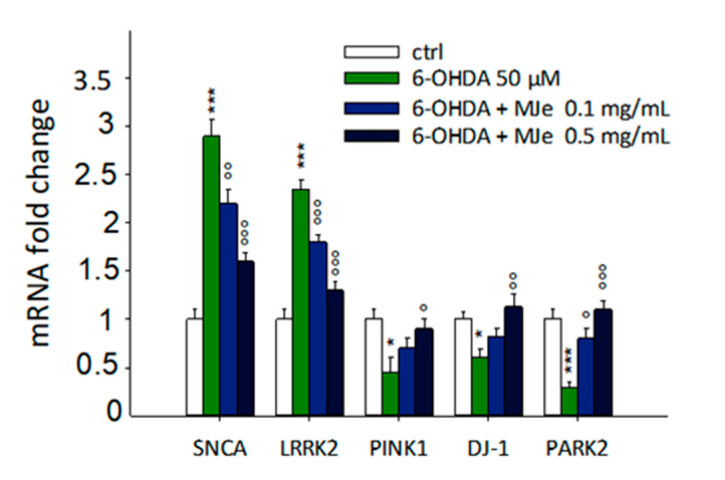
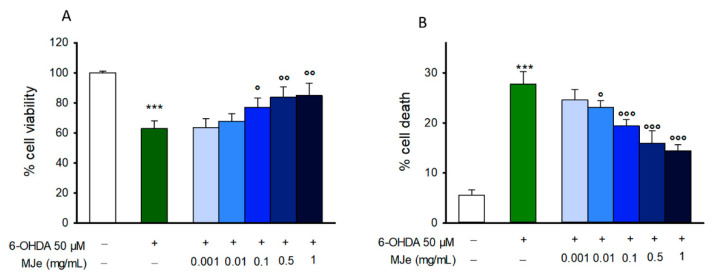
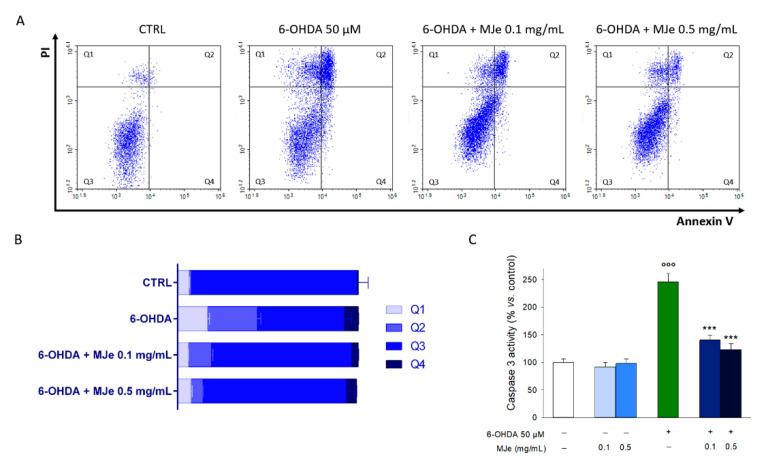
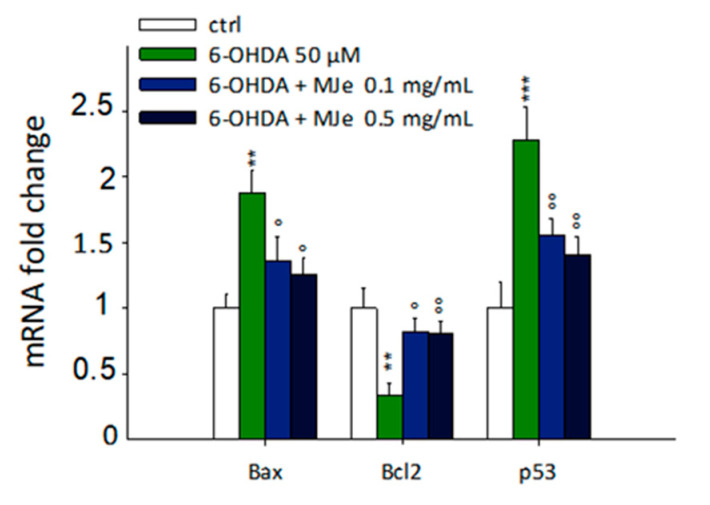
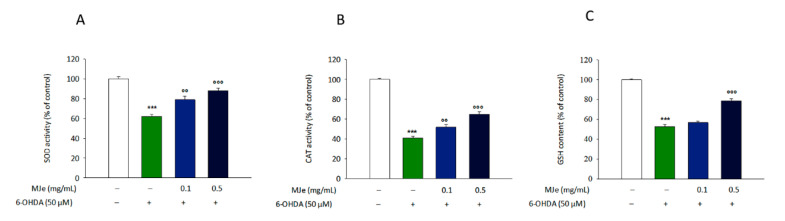
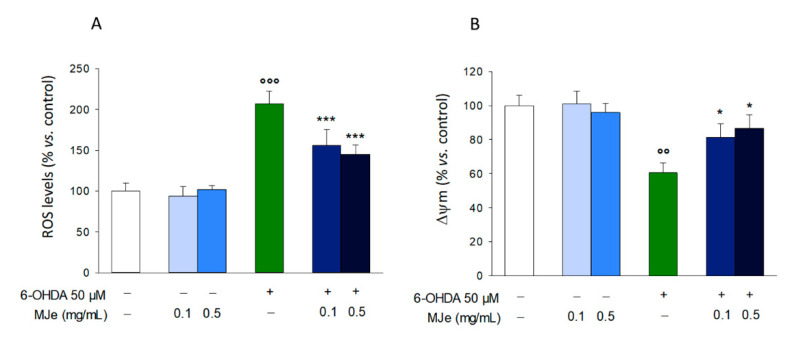
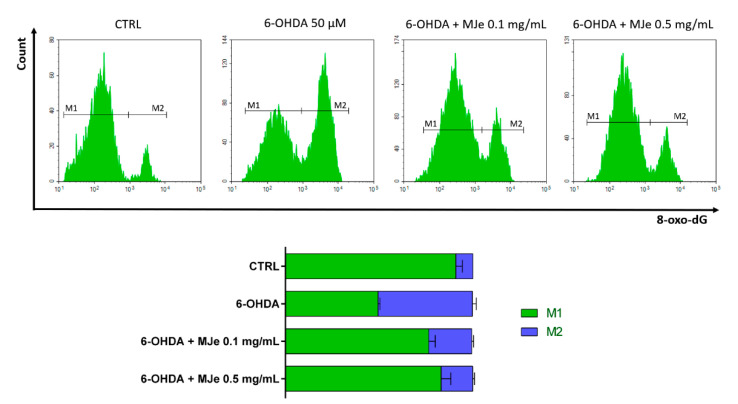
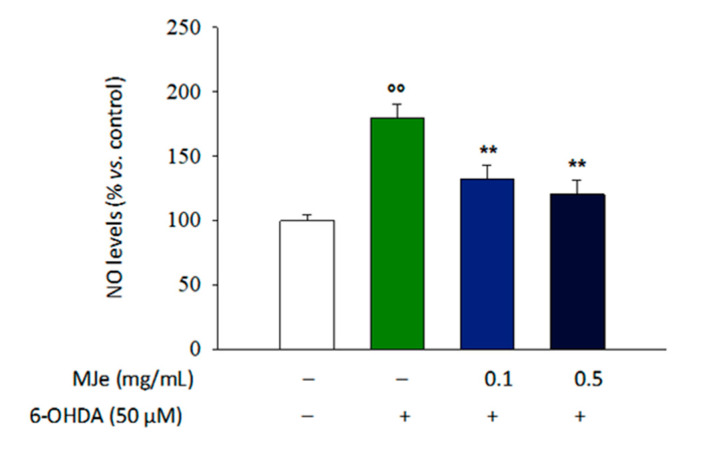
Parkinson's disease (PD) is a degenerative disorder of the nervous system due to unceasing impairment of dopaminergic neurons situated in the substantia nigra. At present, anti-PD drugs acting on dopamine receptors are mainly symptomatic and have only very limited neuroprotective effects, whereas drugs slowing down neurodegeneration of dopaminergic neurons and deterioration of clinical symptoms are not yet available. Given that, the development of more valuable pharmacological strategies is highly demanded. Comprehensive research on innovative neuroprotective drugs has proven that anti-inflammatory and antioxidant molecules from food sources may prevent and/or counteract neurodegenerative diseases, such as PD. The present study was aimed at the evaluation the protective effect of mandarin juice extract (MJe) against 6-hydroxydopamine (6-OHDA)-induced SH-SY5Y human neuroblastoma cell death. Treatment of differentiated SH-SY5Y cells with 6-OHDA brought cell death, and specifically, apoptosis, which was significantly inhibited by the preincubation with MJe through caspase 3 blockage and the modulation of p53, Bax, and Bcl-2 genes. In addition, it showed antioxidant properties in abiotic models as well as in vitro, where it reduced both reactive oxygen and nitrogen species induced by 6-OHDA, along with restored mitochondrial membrane potential, and prevented the oxidative DNA damage evoked by 6-OHDA. Furthermore, MJe restored the impaired balance of SNCA, LRRK2, PINK1, parkin, and DJ-1 gene levels, PD-related factors, caused by 6-OHDA oxidative stress. Overall, these results indicate that MJe exerts neuroprotective effects against 6-OHDA-induced cell death in SH-SY5Y cells by mechanisms involving both the specific interaction with intracellular pathways and its antioxidant capability. Our study suggests a novel possible strategy to prevent and/or ameliorate neurodegenerative diseases, such as PD.
帕金森病(PD)是一种神经系统退行性疾病,起因是黑质中多巴胺能神经元持续受损。目前,作用于多巴胺受体的抗帕金森病药物主要是对症治疗,神经保护作用非常有限,而减缓多巴胺能神经元神经退行性变和临床症状恶化的药物尚未问世。鉴于此,迫切需要开发更有价值的药理策略。对创新型神经保护药物的综合研究表明,食物来源的抗炎和抗氧化分子可能预防和/或对抗神经退行性疾病,如帕金森病。本研究旨在评估柑橘汁提取物(MJe)对6-羟基多巴胺(6-OHDA)诱导的SH-SY5Y人神经母细胞瘤细胞死亡的保护作用。用6-OHDA处理分化的SH-SY5Y细胞会导致细胞死亡,具体而言是凋亡,而预先用MJe孵育可通过阻断半胱天冬酶3以及调节p53、Bax和Bcl-2基因,显著抑制这种凋亡。此外,MJe在非生物模型以及体外均表现出抗氧化特性,它能减少6-OHDA诱导的活性氧和活性氮,恢复线粒体膜电位,并防止6-OHDA引起的氧化性DNA损伤。此外,MJe还恢复了由6-OHDA氧化应激导致的与帕金森病相关的因子SNCA、LRRK2、PINK1、帕金和DJ-1基因水平受损的平衡。总体而言,这些结果表明,MJe通过与细胞内途径的特异性相互作用及其抗氧化能力,对6-OHDA诱导的SH-SY5Y细胞死亡发挥神经保护作用。我们的研究提出了一种预防和/或改善神经退行性疾病(如帕金森病)的新的可能策略。