Saenz-Pipaon Goren, Martinez-Aguilar Esther, Orbe Josune, González Miqueo Arantxa, Fernandez-Alonso Leopoldo, Paramo Jose Antonio, Roncal Carmen
Laboratory of Atherothrombosis, Program of Cardiovascular Diseases, Cima Universidad de Navarra, 31008 Pamplona, Spain.
IdiSNA, Instituto de Investigación Sanitaria de Navarra, 31008 Pamplona, Spain.
Int J Mol Sci. 2021 Mar 30;22(7):3601. doi: 10.3390/ijms22073601.
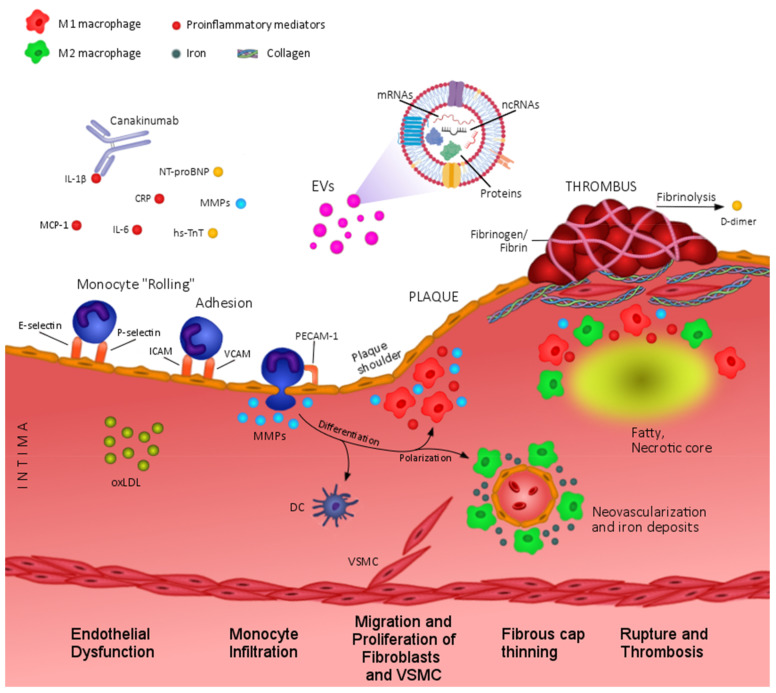
Peripheral arterial disease (PAD) of the lower extremities is a chronic illness predominantly of atherosclerotic aetiology, associated to traditional cardiovascular (CV) risk factors. It is one of the most prevalent CV conditions worldwide in subjects >65 years, estimated to increase greatly with the aging of the population, becoming a severe socioeconomic problem in the future. The narrowing and thrombotic occlusion of the lower limb arteries impairs the walking function as the disease progresses, increasing the risk of CV events (myocardial infarction and stroke), amputation and death. Despite its poor prognosis, PAD patients are scarcely identified until the disease is advanced, highlighting the need for reliable biomarkers for PAD patient stratification, that might also contribute to define more personalized medical treatments. In this review, we will discuss the usefulness of inflammatory molecules, matrix metalloproteinases (MMPs), and cardiac damage markers, as well as novel components of the liquid biopsy, extracellular vesicles (EVs), and non-coding RNAs for lower limb PAD identification, stratification, and outcome assessment. We will also explore the potential of machine learning methods to build prediction models to refine PAD assessment. In this line, the usefulness of multimarker approaches to evaluate this complex multifactorial disease will be also discussed.
下肢外周动脉疾病(PAD)是一种主要由动脉粥样硬化病因引起的慢性疾病,与传统心血管(CV)危险因素相关。它是全球65岁以上人群中最常见的心血管疾病之一,预计随着人口老龄化将大幅增加,在未来成为一个严重的社会经济问题。随着疾病进展,下肢动脉的狭窄和血栓闭塞会损害行走功能,增加心血管事件(心肌梗死和中风)、截肢和死亡的风险。尽管预后较差,但PAD患者在疾病晚期之前很少被识别出来,这凸显了需要可靠的生物标志物用于PAD患者分层,这也可能有助于确定更个性化的医疗治疗方案。在这篇综述中,我们将讨论炎症分子、基质金属蛋白酶(MMPs)和心脏损伤标志物的作用,以及液体活检的新成分、细胞外囊泡(EVs)和非编码RNA在下肢PAD识别、分层和结局评估中的作用。我们还将探索机器学习方法构建预测模型以完善PAD评估的潜力。在此方面,还将讨论多标志物方法评估这种复杂多因素疾病的作用。