Centro de Investigação em Ciências da Saúde (CICS-UBI), Universidade da Beira Interior, 6200-506 Covilhã, Portugal.
CNC-Center for Neuroscience and Cell Biology, University of Coimbra, 3004-504 Coimbra, Portugal.
Int J Mol Sci. 2021 Mar 19;22(6):3142. doi: 10.3390/ijms22063142.
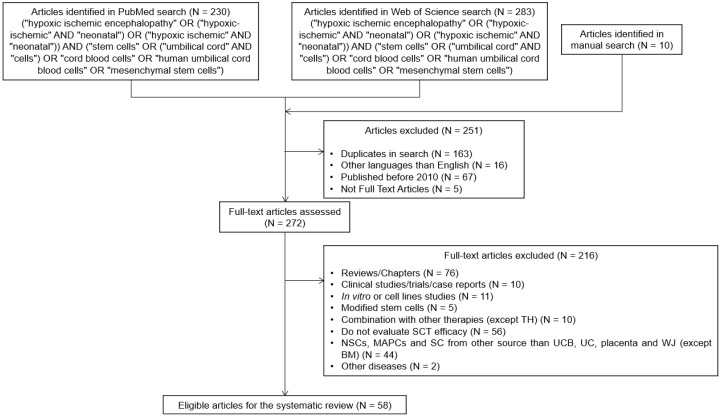
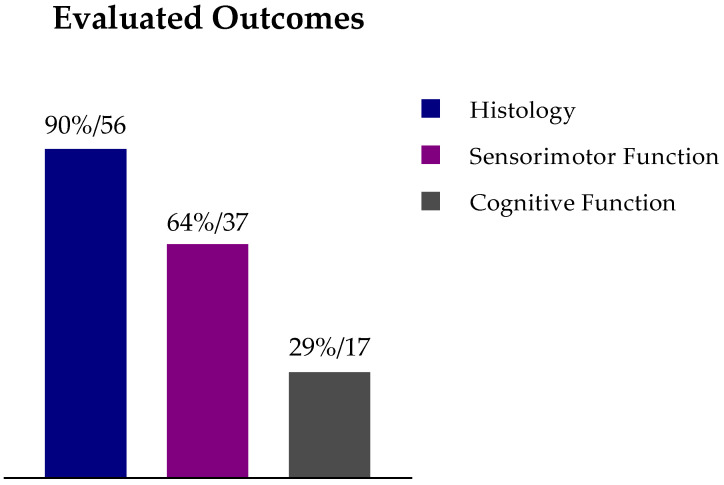
Neonatal hypoxic-ischemic encephalopathy (HIE) is an important cause of mortality and morbidity in the perinatal period. This condition results from a period of ischemia and hypoxia to the brain of neonates, leading to several disorders that profoundly affect the daily life of patients and their families. Currently, therapeutic hypothermia (TH) is the standard of care in developing countries; however, TH is not always effective, especially in severe cases of HIE. Addressing this concern, several preclinical studies assessed the potential of stem cell therapy (SCT) for HIE. With this systematic review, we gathered information included in 58 preclinical studies from the last decade, focusing on the ones using stem cells isolated from the umbilical cord blood, umbilical cord tissue, placenta, and bone marrow. Outstandingly, about 80% of these studies reported a significant improvement of cognitive and/or sensorimotor function, as well as decreased brain damage. These results show the potential of SCT for HIE and the possibility of this therapy, in combination with TH, becoming the next therapeutic approach for HIE. Nonetheless, few preclinical studies assessed the combination of TH and SCT for HIE, and the existent studies show some contradictory results, revealing the need to further explore this line of research.
新生儿缺氧缺血性脑病(HIE)是围产期死亡和发病的重要原因。这种情况是由于新生儿大脑的一段时间缺血和缺氧引起的,导致了几个严重影响患者及其家庭日常生活的疾病。目前,治疗性低体温(TH)是发展中国家的标准治疗方法;然而,TH 并不总是有效,特别是在严重的 HIE 病例中。为了解决这个问题,一些临床前研究评估了干细胞治疗(SCT)对 HIE 的潜在作用。通过这项系统评价,我们收集了过去十年中来自 58 项临床前研究的信息,重点关注那些使用来自脐带血、脐带组织、胎盘和骨髓分离的干细胞的研究。值得注意的是,这些研究中有约 80%报告称认知和/或感觉运动功能有显著改善,并且脑损伤减少。这些结果表明 SCT 对 HIE 的潜在作用,以及这种治疗方法与 TH 结合,成为 HIE 的下一种治疗方法的可能性。然而,很少有临床前研究评估 TH 和 SCT 联合治疗 HIE,现有的研究显示出一些矛盾的结果,表明需要进一步探索这一研究方向。