Park Won Soon, Sung Se In, Ahn So Yoon, Yoo Hye Soo, Sung Dong Kyung, Im Geun Ho, Choi Soo Jin, Chang Yun Sil
Department of Pediatrics, Samsung Medical Center, Sungkyunkwan University School of Medicine, Seoul, Korea; Samsung Biomedical Research Institute, Sungkyunkwan University School of Medicine, Seoul, Korea.
Department of Pediatrics, Samsung Medical Center, Sungkyunkwan University School of Medicine, Seoul, Korea.
PLoS One. 2015 Mar 27;10(3):e0120893. doi: 10.1371/journal.pone.0120893. eCollection 2015.
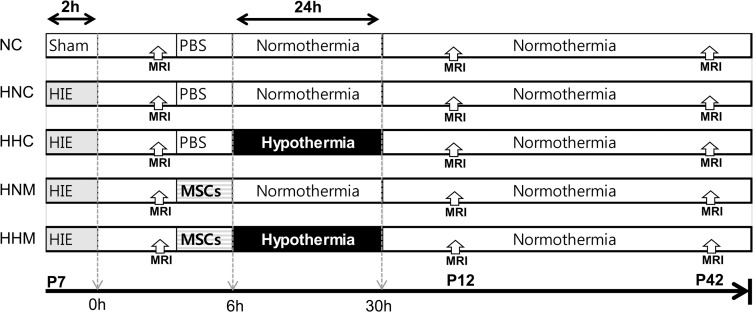
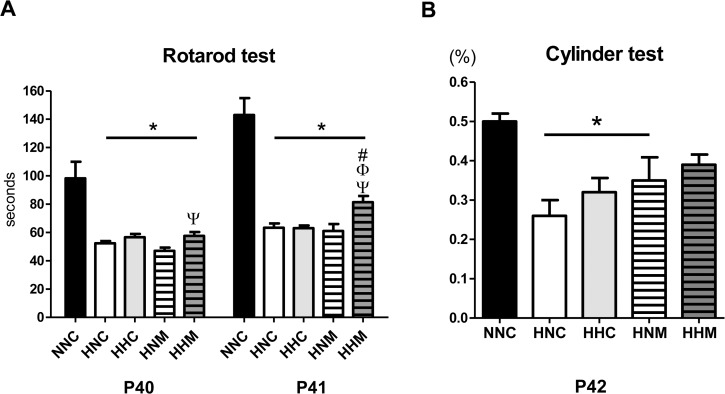
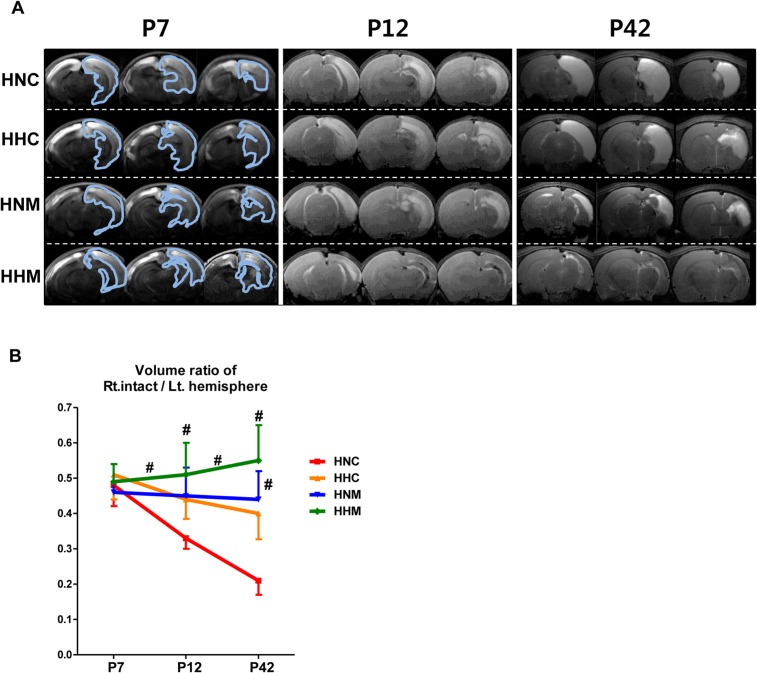
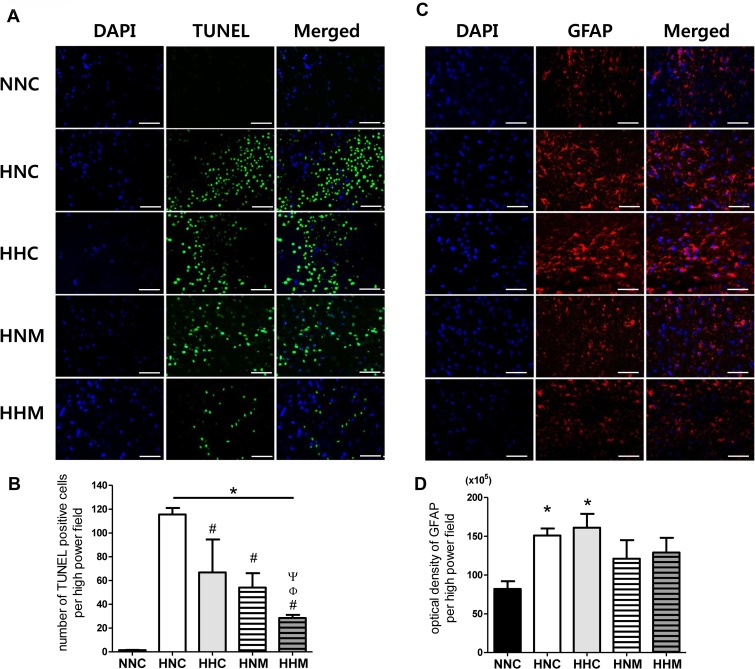
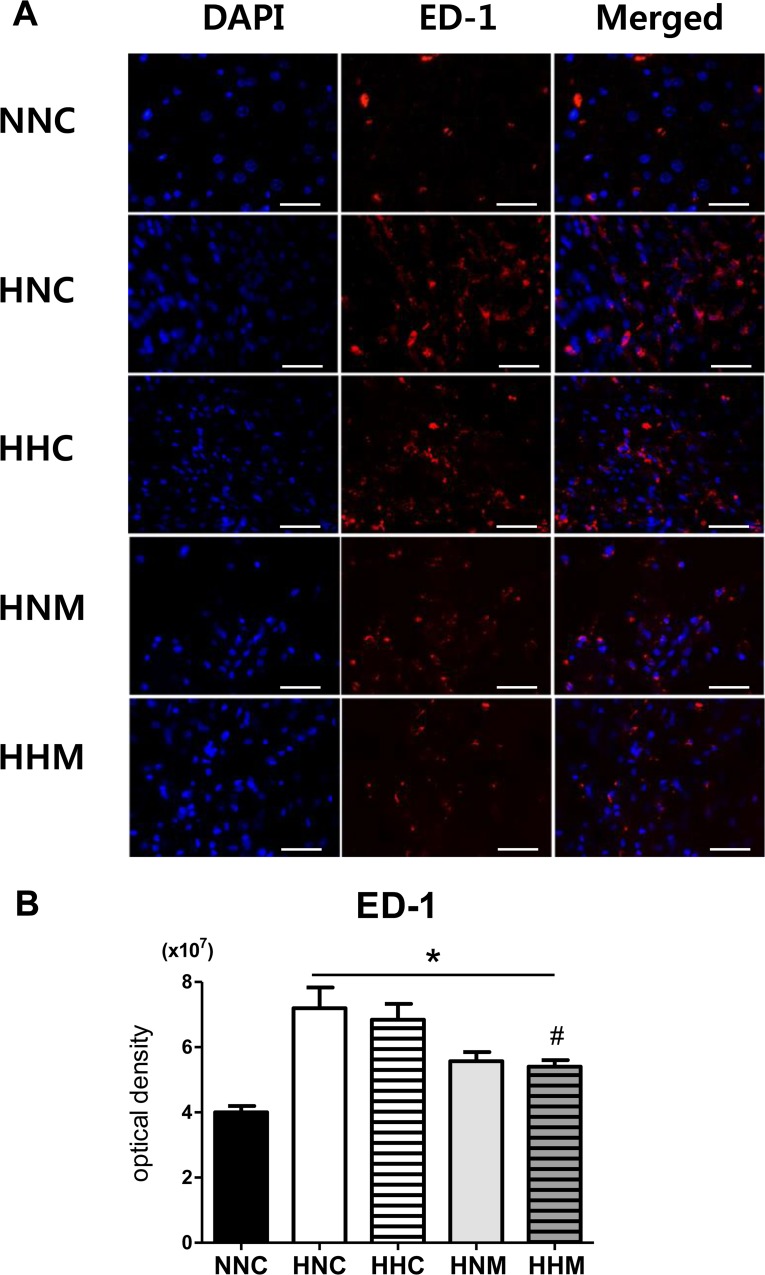
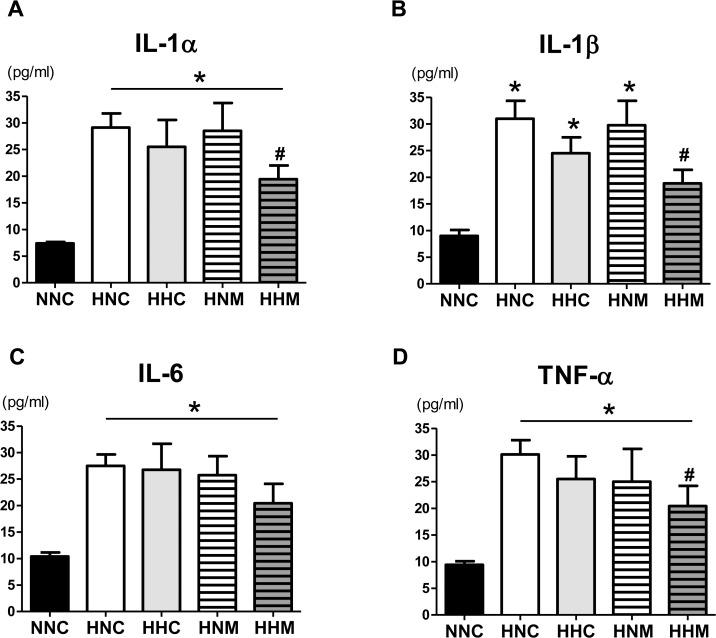
Though hypothermia is the only clinically available treatment for neonatal hypoxic-ischemic encephalopathy (HIE), it is not completely effective in severe cases. We hypothesized that combined treatment with hypothermia and transplantation of human umbilical cord blood (UCB)-derived mesenchymal stem cells (MSCs) would synergistically attenuate severe HIE compared to stand-alone therapy. To induce hypoxia-ischemia (HI), male Sprague-Dawley rats were subjected to 8% oxygen for 120 min after unilateral carotid artery ligation on postnatal day (P) 7. After confirmation of severe HIE involving >50% of the ipsilateral hemisphere volume as determined by diffusion-weighted brain magnetic resonance imaging (MRI) within 2 h after HI, intraventricular MSC transplantation (1 × 10⁵ cells) and/or hypothermia with target temperature at 32°C for 24 h were administered 6 h after induction of HI. Follow-up brain MRI at P12 and P42, sensorimotor function tests at P40-42, evaluation of cytokines in the cerebrospinal fluid (CSF) at P42, and histologic analysis of peri-infarct tissues at P42 were performed. Severe HI resulted in progressively increased brain infarction over time as assessed by serial MRI, increased number of cells positive for terminal deoxynucleotidyl transferase nick-end labeling, microgliosis and astrocytosis, increased CSF cytokine levels, and impaired function in behavioral tests such as rotarod and cylinder tests. All of the abnormalities observed in severe HIE showed greater improvement after combined treatment with hypothermia and MSC transplantation than with either therapy alone. Overall, these findings suggest that combined treatment with hypothermia and human UCB-derived MSC transplantation might be a novel therapeutic modality to improve the prognosis of severe HIE, an intractable disease that currently has no effective treatment.
尽管低温疗法是目前临床上治疗新生儿缺氧缺血性脑病(HIE)的唯一方法,但在重症病例中并不完全有效。我们推测,与单独治疗相比,低温疗法与人脐带血(UCB)来源的间充质干细胞(MSCs)联合治疗可协同减轻重症HIE。为诱导缺氧缺血(HI),在出生后第7天(P7)对雄性Sprague-Dawley大鼠进行单侧颈动脉结扎,然后置于8%氧气环境中120分钟。在HI后2小时内,通过扩散加权脑磁共振成像(MRI)确认重症HIE累及同侧半球体积的>50%后,在HI诱导后6小时进行脑室内MSC移植(1×10⁵个细胞)和/或目标温度为32°C的低温治疗24小时。在P12和P42进行随访脑MRI检查,在P40 - 42进行感觉运动功能测试,在P42评估脑脊液(CSF)中的细胞因子,并在P42对梗死周围组织进行组织学分析。连续MRI评估显示,重症HI导致脑梗死随时间逐渐增加,末端脱氧核苷酸转移酶缺口末端标记阳性细胞数量增加、小胶质细胞增生和星形细胞增生,CSF细胞因子水平升高,以及行为测试(如转棒试验和圆筒试验)中的功能受损。与单独任何一种治疗相比,在低温疗法和MSC移植联合治疗后,重症HIE中观察到的所有异常均有更大改善。总体而言,这些发现表明,低温疗法与人UCB来源的MSC移植联合治疗可能是一种改善重症HIE预后的新型治疗方式,重症HIE是一种目前尚无有效治疗方法的难治性疾病。