College of Veterinary Medicine/Joint International Research Laboratory of Agriculture and Agri-Product Safety, the Ministry of Education of China, Yangzhou University, Yangzhou 225009, China.
Jiangsu Co-Innovation Center for Prevention and Control of Important Animal Infectious Diseases and Zoonoses/Jiangsu Key Laboratory of Zoonosis, Yangzhou 225009, China.
Cells. 2021 Mar 19;10(3):682. doi: 10.3390/cells10030682.
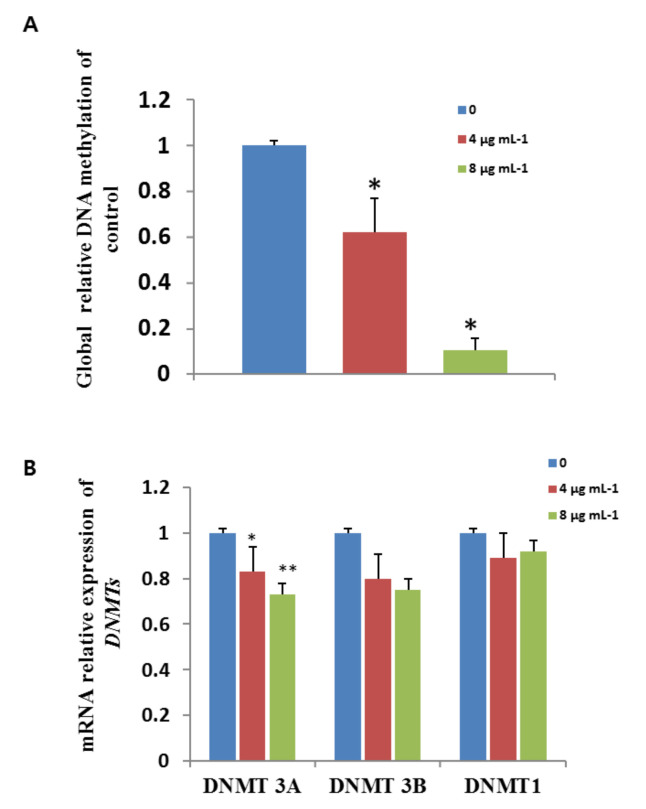
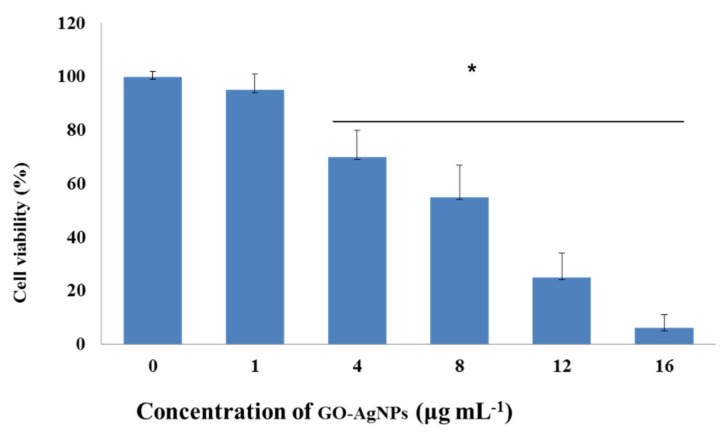
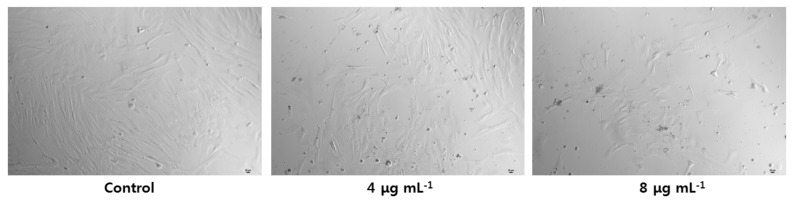
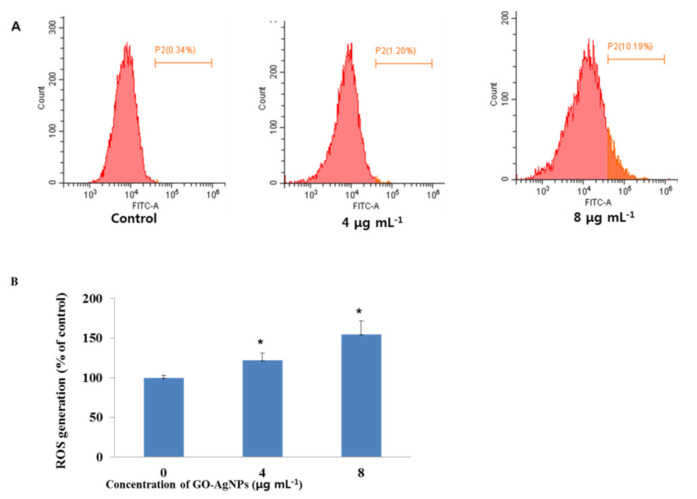
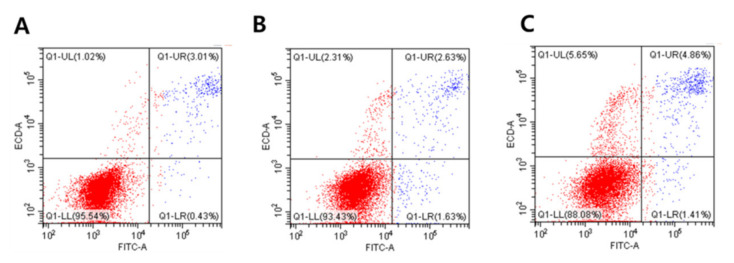
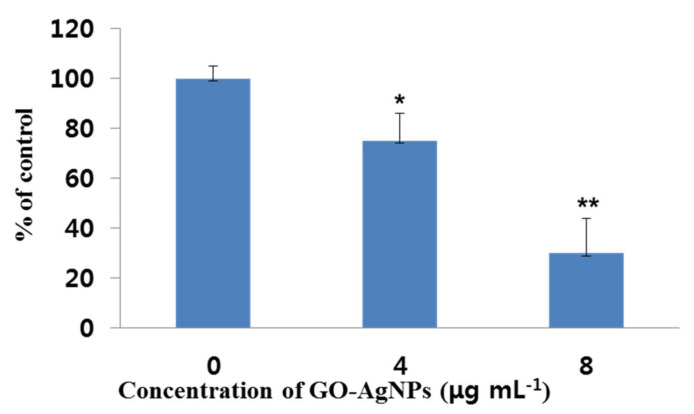
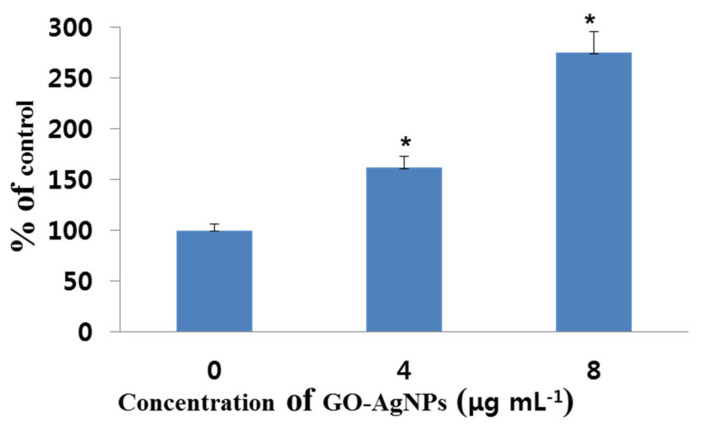
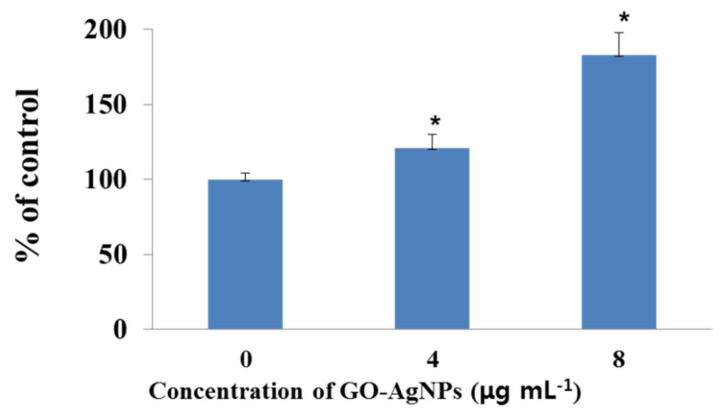
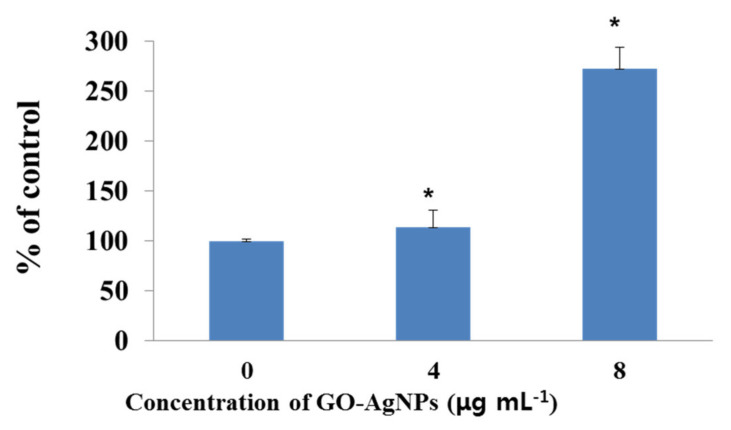
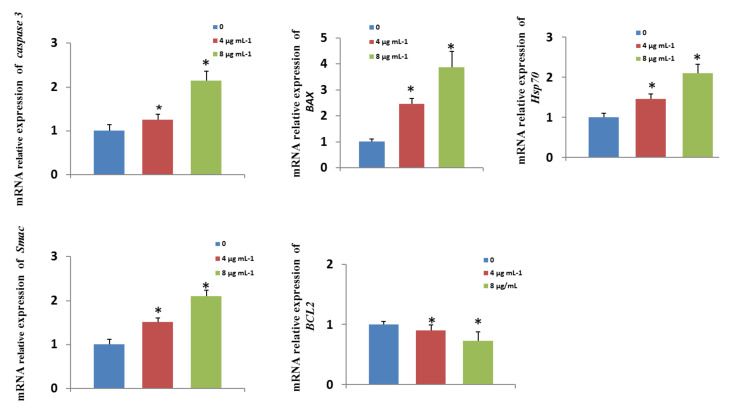
Graphene oxide-silver nanoparticle (GO-AgNPs) nanocomposites have drawn much attention for their potential in biomedical uses. However, the potential toxicity of GO-AgNPs in animals and humans remains unknown, particularly in the developing fetus. Here, we reported the GO-AgNP-mediated cytotoxicity and epigenetic alteration status in caprine fetal fibroblast cells (CFFCs). In brief, the proliferation and apoptosis rate of GO-AgNP-treated CFFCs (4 and 8 µg/mL of GO-AgNPs) were measured using the cell-counting kit (CCK-8) assay and the annexin V/propidium iodide (PI) assay, respectively. In addition, the oxidative stress induced by GO-AgNPs and detailed mechanisms were studied by evaluating the generation of reactive oxygen species (ROS), superoxide dismutase (SOD), lactate dehydrogenase (LDH), malondialdehyde (MDA), and caspase-3 and abnormal methylation. The expression of pro- and anti-apoptotic genes and DNA methyltransferases was measured using reverse transcription followed by RT-qPCR. Our data indicated that GO-AgNPs cause cytotoxicity in a dose-dependent manner. GO-AgNPs induced significant cytotoxicity by the loss of cell viability, production of ROS, increasing leakage of LDH and level of MDA, increasing expression of pro-apoptotic genes, and decreasing expression of anti-apoptotic genes. GO-AgNPs incited DNA hypomethylation and the decreased expression of . Taken together, this study showed that GO-AgNPs increase the generation of ROS and cause apoptosis and DNA hypomethylation in CFFCs. Therefore, the potential applications of GO-AgNPs in biomedicine should be re-evaluated.
氧化石墨烯-银纳米粒子(GO-AgNPs)纳米复合材料因其在生物医学用途中的潜力而备受关注。然而,GO-AgNPs 在动物和人类中的潜在毒性仍不清楚,特别是在发育中的胎儿中。在这里,我们报道了 GO-AgNP 介导的山羊胎儿成纤维细胞(CFFC)的细胞毒性和表观遗传改变状态。简而言之,使用细胞计数试剂盒(CCK-8)测定 GO-AgNP 处理的 CFFC 的增殖和凋亡率(GO-AgNPs 的 4 和 8 µg/mL),分别通过 annexin V/碘化丙啶(PI)测定。此外,通过评估活性氧(ROS)、超氧化物歧化酶(SOD)、乳酸脱氢酶(LDH)、丙二醛(MDA)和 caspase-3 的产生以及异常甲基化来研究 GO-AgNPs 诱导的氧化应激和详细机制。使用逆转录 followed by RT-qPCR 测量促凋亡和抗凋亡基因和 DNA 甲基转移酶的表达。我们的数据表明,GO-AgNPs 以剂量依赖的方式引起细胞毒性。GO-AgNPs 通过降低细胞活力、产生 ROS、增加 LDH 和 MDA 水平、增加促凋亡基因的表达和降低抗凋亡基因的表达来诱导显着的细胞毒性。GO-AgNPs 引发 DNA 低甲基化和表达下调。综上所述,这项研究表明,GO-AgNPs 增加 ROS 的产生,导致 CFFC 凋亡和 DNA 低甲基化。因此,应重新评估 GO-AgNPs 在生物医学中的潜在应用。