Kasozi Keneth Iceland, Laudisoit Anne, Osuwat Lawrence Obado, Batiha Gaber El-Saber, Al Omairi Naif E, Aigbogun Eric, Ninsiima Herbert Izo, Usman Ibe Michael, DeTora Lisa M, MacLeod Ewan Thomas, Nalugo Halima, Crawley Francis P, Bierer Barbara E, Mwandah Daniel Chans, Kato Charles Drago, Kiyimba Kenedy, Ayikobua Emmanuel Tiyo, Lillian Linda, Matama Kevin, Nelly Mak Shui Ching, Onanyang David, Pius Theophilus, Nalumenya David Paul, Ssebuufu Robinson, Rugambwa Nina Olivia, Musoke Grace Henry, Bardosh Kevin, Ochieng Juma John, Ssempijja Fred, Kyamanywa Patrick, Tumwine Gabriel, Alzahrani Khalid J, Welburn Susan Christina
Infection Medicine, Deanery of Biomedical Sciences, College of Medicine and Veterinary Medicine, The University of Edinburgh, 1 George Square, Edinburgh EH8 9JZ, UK.
School of Medicine, Kabale University, P.O. Box 317 Kabale, Uganda.
Vaccines (Basel). 2021 Mar 12;9(3):253. doi: 10.3390/vaccines9030253.
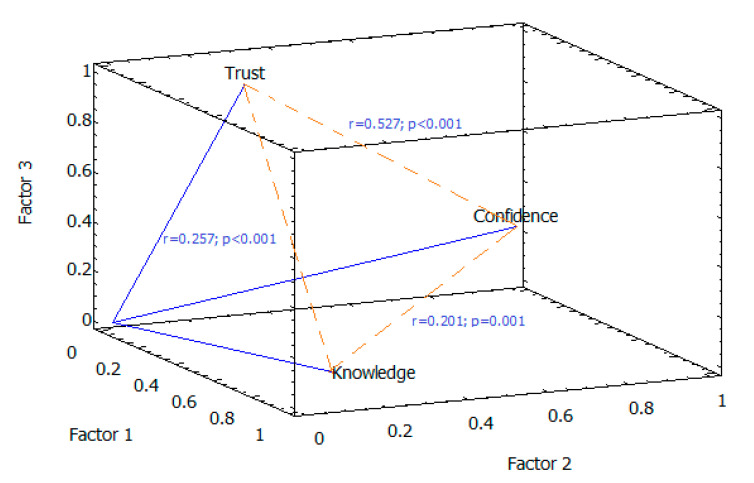
Background-misinformation and mistrust often undermines community vaccine uptake, yet information in rural communities, especially of developing countries, is scarce. This study aimed to identify major challenges associated with coronavirus disease 2019 (COVID-19) vaccine clinical trials among healthcare workers and staff in Uganda. Methods-a rapid exploratory survey was conducted over 5 weeks among 260 respondents (66% male) from healthcare centers across the country using an online questionnaire. Twenty-seven questions assessed knowledge, confidence, and trust scores on COVID-19 vaccine clinical trials from participants in 46 districts in Uganda. Results-we found low levels of knowledge (i.e., confusing COVID-19 with Ebola) with males being more informed than females (OR = 1.5, 95% CI: 0.7-3.0), and mistrust associated with policy decisions to promote herbal treatments in Uganda and the rushed international clinical trials, highlighting challenges for the upcoming Oxford-AstraZeneca vaccinations. Knowledge, confidence and trust scores were higher among the least educated (certificate vs. bachelor degree holders). We also found a high level of skepticism and possible community resistance to DNA recombinant vaccines, such as the Oxford-AstraZeneca vaccine. Preference for herbal treatments (38/260; 14.6%, 95% CI: 10.7-19.3) currently being promoted by the Ugandan government raises major policy concerns. High fear and mistrust for COVID-19 vaccine clinical trials was more common among wealthier participants and more affluent regions of the country. Conclusion-our study found that knowledge, confidence, and trust in COVID-19 vaccines was low among healthcare workers in Uganda, especially those with higher wealth and educational status. There is a need to increase transparency and inclusive participation to address these issues before new trials of COVID-19 vaccines are initiated.
背景——错误信息和不信任常常会削弱社区疫苗接种率,然而农村社区,尤其是发展中国家农村社区的相关信息却很匮乏。本研究旨在确定乌干达医护人员和工作人员在2019冠状病毒病(COVID-19)疫苗临床试验中面临的主要挑战。方法——通过在线问卷,在5周内对全国医疗中心的260名受访者(66%为男性)进行了快速探索性调查。27个问题评估了乌干达46个地区参与者对COVID-19疫苗临床试验的知识、信心和信任得分。结果——我们发现知识水平较低(例如,将COVID-19与埃博拉混淆),男性比女性了解得更多(OR = 1.5,95%CI:0.7 - 3.0),并且存在对乌干达推广草药治疗的政策决定以及仓促进行的国际临床试验的不信任,这凸显了即将进行的牛津-阿斯利康疫苗接种面临的挑战。受教育程度最低者(证书持有者与学士学位持有者相比)的知识、信心和信任得分更高。我们还发现对DNA重组疫苗,如牛津-阿斯利康疫苗,存在高度怀疑以及社区可能的抵制。乌干达政府目前正在推广的草药治疗受到青睐(38/260;14.6%,95%CI:10.7 - 19.3),这引发了重大政策担忧。对COVID-19疫苗临床试验的高度恐惧和不信任在较富裕的参与者以及该国较富裕地区更为常见。结论——我们的研究发现,乌干达医护人员对COVID-19疫苗的知识、信心和信任较低,尤其是那些财富和教育水平较高的人。在启动新的COVID-19疫苗试验之前,有必要提高透明度并进行包容性参与以解决这些问题。