Manna Sara La, Florio Daniele, Iacobucci Ilaria, Napolitano Fabiana, Benedictis Ilaria De, Malfitano Anna Maria, Monti Maria, Ravera Mauro, Gabano Elisabetta, Marasco Daniela
Department of Pharmacy, University of Naples "Federico II", 80131 Naples, Italy.
Department of Chemical Sciences, CEINGE Biotecnologie Avanzate S.c.a r.l., "University of Naples Federico II", 80131 Naples, Italy.
Int J Mol Sci. 2021 Mar 16;22(6):3015. doi: 10.3390/ijms22063015.
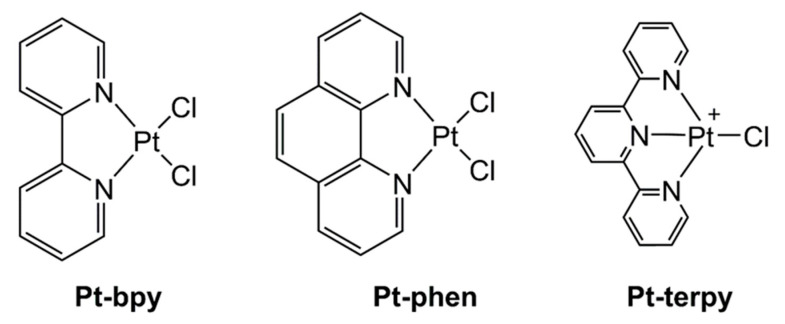
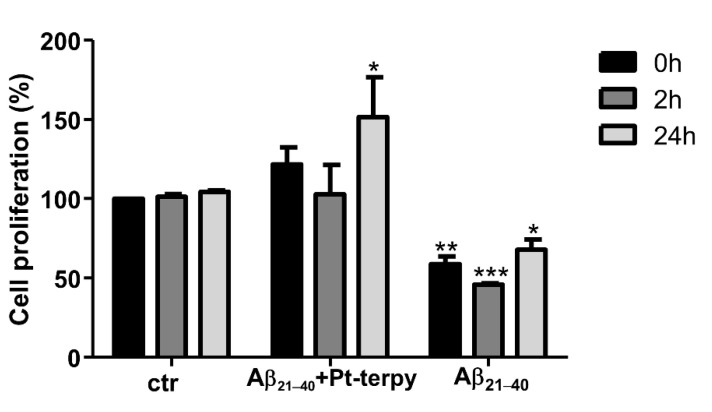
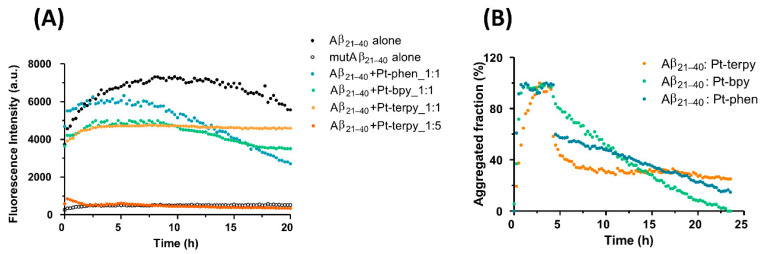
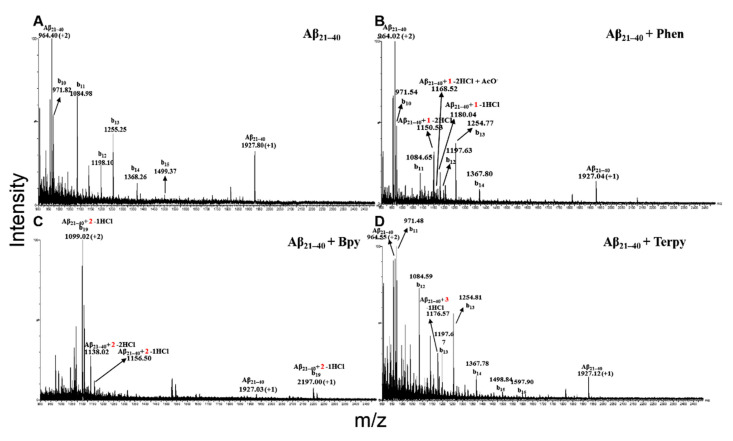
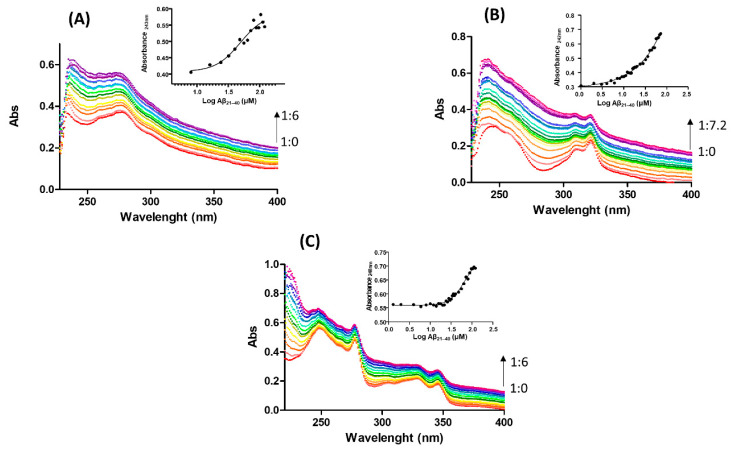
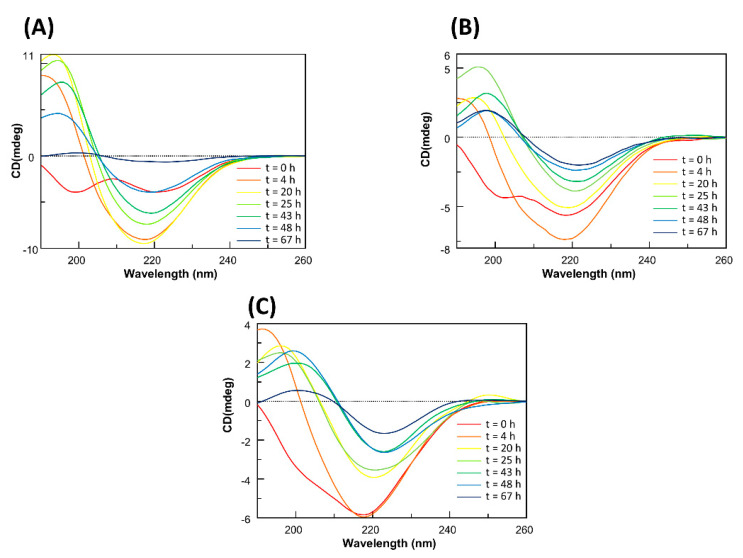
Herein the effects of three platinum complexes, namely (-4-2)-(2,2'-bipyridine)dichloridoplatinum(II), Pt-bpy, (-4-2)-dichlorido(1,10-phenanthroline) platinum(II), Pt-phen, and (-4-2)-chlorido(2,2':6',2''-terpyridine)platinum(II) chloride, Pt-terpy, on the aggregation of an amyloid model system derived from the C-terminal domain of Aβ peptide (Aβ) were investigated. Thioflavin T (ThT) binding assays revealed the ability of Pt(II) compounds to repress amyloid aggregation in a dose-dependent way, whereas the ability of Aβ peptide to interfere with ligand field of metal complexes was analyzed through UV-Vis absorption spectroscopy and electrospray ionization mass spectrometry. Spectroscopic data provided micromolar EC values and allowed to assess that the observed inhibition of amyloid aggregation is due to the formation of adducts between Aβ peptide and complexes upon the release of labile ligands as chloride and that they can explore different modes of coordination toward Aβ with respect to the entire Aβ polypeptide. In addition, conformational studies through circular dichroism (CD) spectroscopy suggested that Pt-terpy induces soluble β-structures of monomeric Aβ, thus limiting self-recognition. Noticeably, Pt-terpy demonstrated the ability to reduce the cytotoxicity of amyloid peptide in human SH-SY5Y neuroblastoma cells. Presented data corroborate the hypothesis to enlarge the application field of already known metal-based agents to neurodegenerative diseases, as potential neurodrugs.
在此研究了三种铂配合物,即(-4-2)-(2,2'-联吡啶)二氯铂(II),Pt-bpy、(-4-2)-二氯(1,10-菲咯啉)铂(II),Pt-phen和(-4-2)-氯(2,2':6',2''-三联吡啶)氯化铂(II),Pt-terpy,对源自Aβ肽(Aβ)C末端结构域的淀粉样蛋白模型系统聚集的影响。硫黄素T(ThT)结合试验揭示了Pt(II)化合物以剂量依赖性方式抑制淀粉样蛋白聚集的能力,而通过紫外可见吸收光谱和电喷雾电离质谱分析了Aβ肽干扰金属配合物配体场的能力。光谱数据提供了微摩尔级的EC值,并允许评估观察到的淀粉样蛋白聚集抑制是由于在释放不稳定配体如氯离子后Aβ肽与配合物之间形成加合物,并且它们可以探索相对于整个Aβ多肽与Aβ的不同配位模式。此外,通过圆二色性(CD)光谱进行的构象研究表明,Pt-terpy诱导单体Aβ的可溶性β结构,从而限制自我识别。值得注意的是,Pt-terpy证明了降低人SH-SY5Y神经母细胞瘤细胞中淀粉样肽细胞毒性的能力。所呈现的数据证实了将已知金属基药物的应用领域扩展到神经退行性疾病作为潜在神经药物的假设。