• 文献检索
  • 文档翻译
  • 深度研究
  • 学术资讯
  • Suppr Zotero 插件Zotero 插件
  • 邀请有礼
  • 套餐&价格
  • 历史记录
应用&插件
Suppr Zotero 插件Zotero 插件浏览器插件Mac 客户端Windows 客户端微信小程序
定价
高级版会员购买积分包购买API积分包
服务
文献检索文档翻译深度研究API 文档MCP 服务
关于我们
关于 Suppr公司介绍联系我们用户协议隐私条款
关注我们

Suppr 超能文献

核心技术专利:CN118964589B侵权必究
粤ICP备2023148730 号-1Suppr @ 2026

文献检索

告别复杂PubMed语法,用中文像聊天一样搜索,搜遍4000万医学文献。AI智能推荐,让科研检索更轻松。

立即免费搜索

文件翻译

保留排版,准确专业,支持PDF/Word/PPT等文件格式,支持 12+语言互译。

免费翻译文档

深度研究

AI帮你快速写综述,25分钟生成高质量综述,智能提取关键信息,辅助科研写作。

立即免费体验

移动健康应用用户接受度和使用行为的影响因素:系统评价

Influencing Factors of Acceptance and Use Behavior of Mobile Health Application Users: Systematic Review.

作者信息

Wang Chen, Qi Huiying

机构信息

Department of Health Informatics and Management, School of Health Humanities, Peking University, Beijing 100191, China.

出版信息

Healthcare (Basel). 2021 Mar 22;9(3):357. doi: 10.3390/healthcare9030357.

DOI:10.3390/healthcare9030357
PMID:33809828
原文链接:https://pmc.ncbi.nlm.nih.gov/articles/PMC8004182/
Abstract

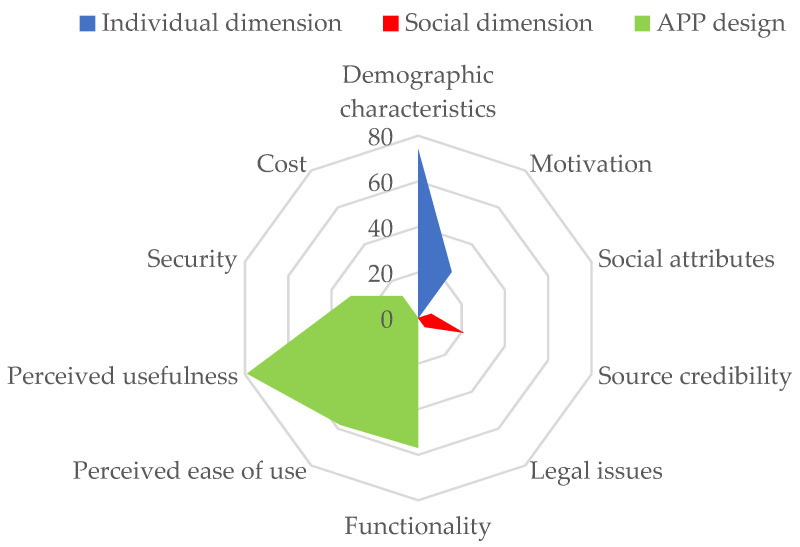
Purpose/Significance: Mobile health applications provide a convenient way for users to obtain health information and services. Studying the factors that influence users' acceptance and use of mobile health applications (apps or Apps) will help to improve users' actual usage behavior. Method/Process: Based on the literature review method and using the Web of Science core database as the data source, this paper summarizes the relevant research results regarding the influencing factors of the acceptance and use behavior of mobile health application users and makes a systematic review of the influencing factors from the perspectives of the individual, society, and application (app or App) design. Result/Conclusion: In terms of the individual dimension, the users' behavior is influenced by demographic characteristics and motivations. Social attributes, source credibility, and legal issues all affect user behavior in the social dimension. In the application design dimension, functionality, perceived ease of use and usefulness, security, and cost are the main factors. At the end of the paper, suggestions are given to improve the users' acceptability of mobile health applications and improve their use behavior.

摘要

目的/意义:移动健康应用程序为用户获取健康信息和服务提供了便捷途径。研究影响用户接受和使用移动健康应用程序(应用或应用程序)的因素将有助于改善用户的实际使用行为。方法/过程:基于文献综述方法,以科学网核心数据库为数据源,本文总结了移动健康应用程序用户接受和使用行为影响因素的相关研究成果,并从个人、社会和应用(应用或应用程序)设计角度对影响因素进行了系统综述。结果/结论:在个人维度方面,用户行为受人口统计学特征和动机影响。社会属性、来源可信度和法律问题在社会维度上均影响用户行为。在应用设计维度方面,功能、感知易用性和有用性、安全性和成本是主要因素。本文最后给出了提高移动健康应用程序用户接受度并改善其使用行为的建议。
https://cdn.ncbi.nlm.nih.gov/pmc/blobs/f0cd/8004182/e3a160ac5d87/healthcare-09-00357-g003.jpg
https://cdn.ncbi.nlm.nih.gov/pmc/blobs/f0cd/8004182/bc345fc68a13/healthcare-09-00357-g001.jpg
https://cdn.ncbi.nlm.nih.gov/pmc/blobs/f0cd/8004182/a29db24391c8/healthcare-09-00357-g002.jpg
https://cdn.ncbi.nlm.nih.gov/pmc/blobs/f0cd/8004182/e3a160ac5d87/healthcare-09-00357-g003.jpg
https://cdn.ncbi.nlm.nih.gov/pmc/blobs/f0cd/8004182/bc345fc68a13/healthcare-09-00357-g001.jpg
https://cdn.ncbi.nlm.nih.gov/pmc/blobs/f0cd/8004182/a29db24391c8/healthcare-09-00357-g002.jpg
https://cdn.ncbi.nlm.nih.gov/pmc/blobs/f0cd/8004182/e3a160ac5d87/healthcare-09-00357-g003.jpg

相似文献

1
Influencing Factors of Acceptance and Use Behavior of Mobile Health Application Users: Systematic Review.移动健康应用用户接受度和使用行为的影响因素:系统评价
Healthcare (Basel). 2021 Mar 22;9(3):357. doi: 10.3390/healthcare9030357.
2
Adoption of Mobile Health Apps in Dietetic Practice: Case Study of Diyetkolik.移动医疗应用在饮食实践中的应用:以 Diyetkolik 为例的个案研究。
JMIR Mhealth Uhealth. 2020 Oct 2;8(10):e16911. doi: 10.2196/16911.
3
Keep Using My Health Apps: Discover Users' Perception of Health and Fitness Apps with the UTAUT2 Model.持续使用我的健康应用程序:运用UTAUT2模型探索用户对健康与健身应用程序的认知
Telemed J E Health. 2015 Sep;21(9):735-41. doi: 10.1089/tmj.2014.0148. Epub 2015 Apr 28.
4
Users' Perspective on the AI-Based Smartphone PROTEIN App for Personalized Nutrition and Healthy Living: A Modified Technology Acceptance Model (mTAM) Approach.用户对基于人工智能的智能手机PROTEIN应用程序实现个性化营养与健康生活的看法:一种改进的技术接受模型(mTAM)方法。
Front Nutr. 2022 Jul 1;9:898031. doi: 10.3389/fnut.2022.898031. eCollection 2022.
5
Understanding and Predicting the Adoption of Fitness Mobile Apps: Evidence from China.理解和预测健身移动应用的采用:来自中国的证据。
Health Commun. 2021 Jul;36(8):950-961. doi: 10.1080/10410236.2020.1724637. Epub 2020 Feb 10.
6
Using a Mobile Social Networking App to Promote Physical Activity: A Qualitative Study of Users' Perspectives.使用移动社交网络应用程序促进身体活动:用户观点的定性研究。
J Med Internet Res. 2018 Dec 21;20(12):e11439. doi: 10.2196/11439.
7
Barriers to and Facilitators of the Use of Mobile Health Apps From a Security Perspective: Mixed-Methods Study.从安全角度看移动健康应用的使用障碍和促进因素:混合方法研究。
JMIR Mhealth Uhealth. 2019 Apr 16;7(4):e11223. doi: 10.2196/11223.
8
Checking the potential shift to perceived usefulness-The analysis of users' response to the updated electronic health record core features.检查感知有用性的潜在变化-对更新的电子健康记录核心功能的用户反应的分析。
Int J Med Inform. 2018 Jul;115:80-91. doi: 10.1016/j.ijmedinf.2018.04.011. Epub 2018 Apr 27.
9
Adults' Preferences for Behavior Change Techniques and Engagement Features in a Mobile App to Promote 24-Hour Movement Behaviors: Cross-Sectional Survey Study.成年人对促进 24 小时运动行为的移动应用程序中行为改变技术和参与功能的偏好:横断面调查研究。
JMIR Mhealth Uhealth. 2019 Dec 20;7(12):e15707. doi: 10.2196/15707.
10
The Continued Use of Mobile Health Apps: Insights From a Longitudinal Study.移动医疗应用的持续使用:一项纵向研究的新发现。
JMIR Mhealth Uhealth. 2019 Aug 29;7(8):e12983. doi: 10.2196/12983.

引用本文的文献

1
Mobile Health Adoption in High-Risk Pregnancies Using Cluster Analysis of Biopsychosocial Outcomes: Observational Longitudinal Cohort Study.利用生物心理社会结局的聚类分析在高危妊娠中采用移动健康:观察性纵向队列研究
JMIR Hum Factors. 2025 Aug 21;12:e67680. doi: 10.2196/67680.
2
Evaluating the Effectiveness of Mobile Apps on Medication Adherence for Chronic Conditions: Systematic Review and Meta-Analysis.评估移动应用程序对慢性病药物依从性的有效性:系统评价与荟萃分析。
J Med Internet Res. 2025 Jul 31;27:e60822. doi: 10.2196/60822.
3
Prevalence and determinants of HealthHub app utilization among community-dwelling adults in Singapore.

本文引用的文献

1
Factors Related to User Ratings and User Downloads of Mobile Apps for Maternal and Infant Health: Cross-Sectional Study.与母婴健康移动应用程序用户评分和用户下载相关的因素:横断面研究。
JMIR Mhealth Uhealth. 2020 Jan 24;8(1):e15663. doi: 10.2196/15663.
2
Assessment of the Intention to Use Mobile Health Applications Using a Technology Acceptance Model in an Israeli Adult Population.在以色列成年人群体中使用技术接受模型评估使用移动健康应用程序的意愿
Telemed J E Health. 2020 Sep;26(9):1141-1149. doi: 10.1089/tmj.2019.0144. Epub 2020 Jan 13.
3
The Determinants of M-Health Adoption in Developing Countries: An Empirical Investigation.
新加坡社区居住成年人中HealthHub应用程序使用情况的患病率及影响因素
PLoS One. 2025 Jul 17;20(7):e0327053. doi: 10.1371/journal.pone.0327053. eCollection 2025.
4
Development of a Smart Health Care Service Using Metaverse and Chatbot Technologies for Adolescents, Parents, and School Health Teachers: User-Centered Design Approach.使用元宇宙和聊天机器人技术为青少年、家长和学校健康教师开发智能医疗服务:以用户为中心的设计方法。
J Med Internet Res. 2025 Jul 3;27:e69190. doi: 10.2196/69190.
5
Evaluation of the acceptability of ESIDA app, a smartphone-based clinical decision support application to improve infectious disease outbreak detection in Tanzania: clinician perspectives.评估ESIDA应用程序的可接受性,这是一款基于智能手机的临床决策支持应用程序,旨在改善坦桑尼亚的传染病爆发检测:临床医生的观点。
BMC Public Health. 2025 Jul 2;25(1):2197. doi: 10.1186/s12889-025-23286-y.
6
Perspectives and Experiences of Family Caregivers Using Supportive Mobile Apps in Dementia Care: Meta-Synthesis of Qualitative Research.痴呆症护理中使用支持性移动应用程序的家庭照顾者的观点与体验:定性研究的元综合分析
JMIR Mhealth Uhealth. 2025 Jun 18;13:e65983. doi: 10.2196/65983.
7
Factors influencing user decision of telemedicine applications in Thailand.影响泰国远程医疗应用用户决策的因素。
PLoS One. 2025 Jun 4;20(6):e0325512. doi: 10.1371/journal.pone.0325512. eCollection 2025.
8
A 12-Month Digital Peer-Supported App Intervention to Promote Physical Activity Among Community-Dwelling Older Adults: Follow-Up Study of a Nonrandomized Controlled Trial.一项为期12个月的数字同伴支持应用程序干预措施,以促进社区居住老年人的身体活动:非随机对照试验的随访研究。
JMIR Aging. 2025 May 28;8:e66610. doi: 10.2196/66610.
9
Success by design: A holistic analysis of design principles for depression apps.设计铸就成功:抑郁症应用程序设计原则的全面分析
Digit Health. 2025 May 6;11:20552076251336276. doi: 10.1177/20552076251336276. eCollection 2025 Jan-Dec.
10
The Role of Mobile Apps in Obesity Management: Systematic Review and Meta-Analysis.移动应用程序在肥胖管理中的作用:系统评价与荟萃分析
J Med Internet Res. 2025 May 6;27:e66887. doi: 10.2196/66887.
发展中国家移动医疗采纳的决定因素:实证研究。
Appl Clin Inform. 2019 Oct;10(5):820-840. doi: 10.1055/s-0039-1697906. Epub 2019 Oct 30.
4
EULAR points to consider for the development, evaluation and implementation of mobile health applications aiding self-management in people living with rheumatic and musculoskeletal diseases.EULAR 发布移动医疗应用程序开发、评估和实施的相关考量,以辅助风湿和肌肉骨骼疾病患者的自我管理。
RMD Open. 2019 Sep 13;5(2):e001014. doi: 10.1136/rmdopen-2019-001014. eCollection 2019.
5
The Continued Use of Mobile Health Apps: Insights From a Longitudinal Study.移动医疗应用的持续使用:一项纵向研究的新发现。
JMIR Mhealth Uhealth. 2019 Aug 29;7(8):e12983. doi: 10.2196/12983.
6
Mobile Health Technology Knowledge and Practices Among Patients of Safety-Net Health Systems in Washington State and Washington, DC.华盛顿州和华盛顿特区安全网医疗系统患者的移动健康技术知识与实践
J Patient Cent Res Rev. 2018 Jul 30;5(3):204-217. doi: 10.17294/2330-0698.1622. eCollection 2018 Summer.
7
Mobile Health Adoption in Mental Health: User Experience of a Mobile Health App for Patients With an Eating Disorder.移动心理健康:移动健康应用在进食障碍患者中的用户体验。
JMIR Mhealth Uhealth. 2019 May 31;7(6):e12920. doi: 10.2196/12920.
8
Adolescents' participation in their healthcare: A sociomaterial investigation of a diabetes app.青少年参与自身医疗保健:对一款糖尿病应用程序的社会物质学调查。
Digit Health. 2019 Apr 29;5:2055207619845448. doi: 10.1177/2055207619845448. eCollection 2019 Jan-Dec.
9
Barriers to and Facilitators of the Use of Mobile Health Apps From a Security Perspective: Mixed-Methods Study.从安全角度看移动健康应用的使用障碍和促进因素:混合方法研究。
JMIR Mhealth Uhealth. 2019 Apr 16;7(4):e11223. doi: 10.2196/11223.
10
Associations of Health App Use and Perceived Effectiveness in People With Cardiovascular Diseases and Diabetes: Population-Based Survey.心血管疾病和糖尿病患者使用健康应用程序及其感知效果的关联:基于人群的调查。
JMIR Mhealth Uhealth. 2019 Mar 28;7(3):e12179. doi: 10.2196/12179.