Department of Microbiology, Uniformed Services University, Bethesda, MD 20814, USA.
Henry M. Jackson Foundation for the Advancement of Military Medicine, Bethesda, MD 20814, USA.
Viruses. 2021 Mar 22;13(3):517. doi: 10.3390/v13030517.
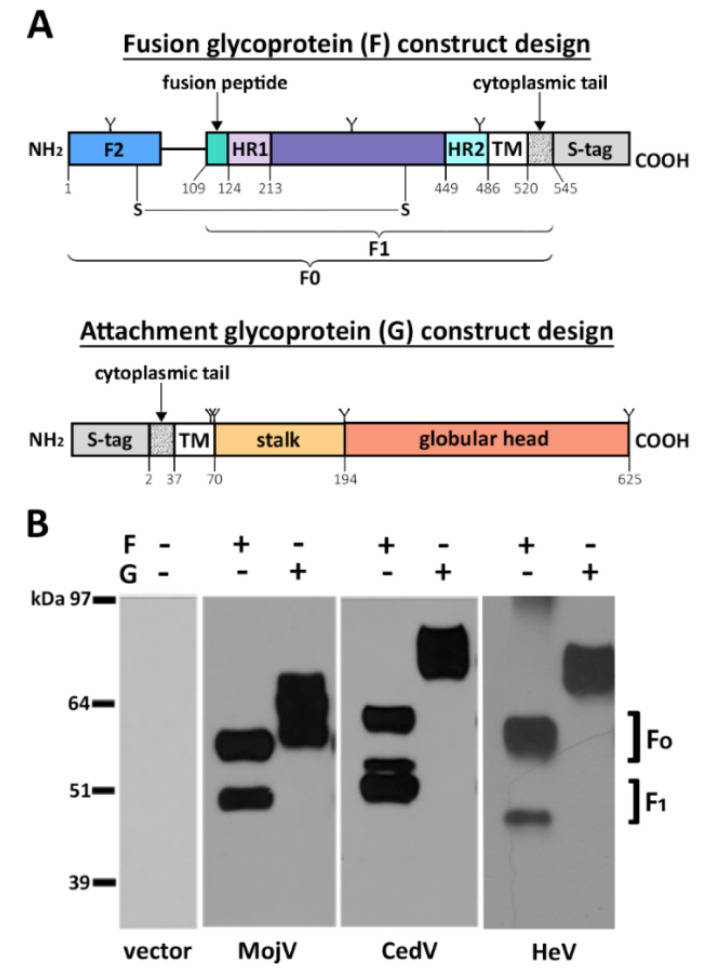
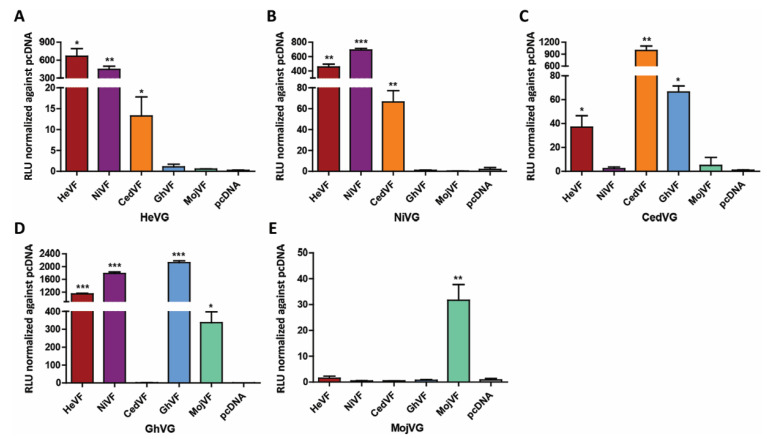
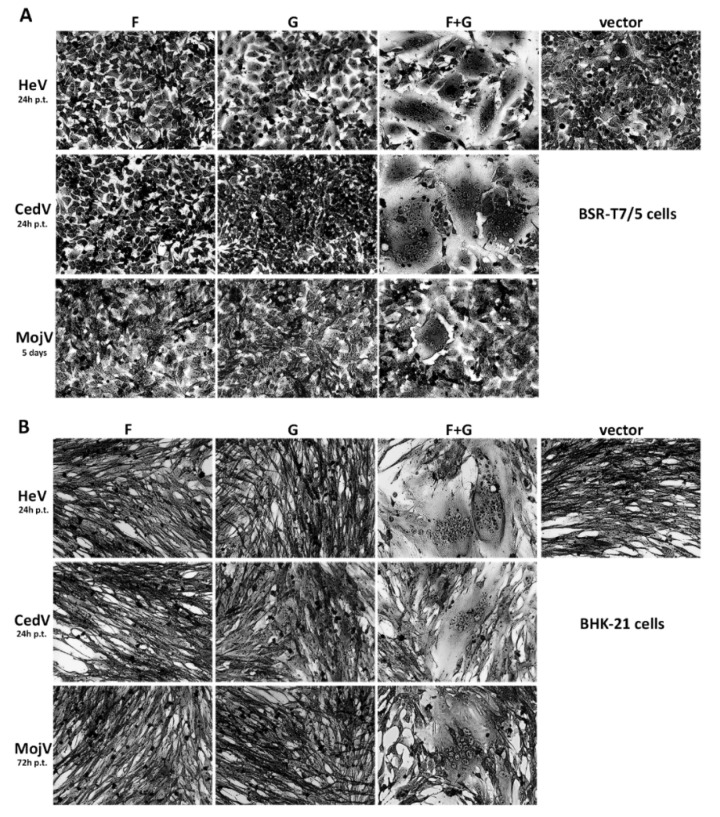
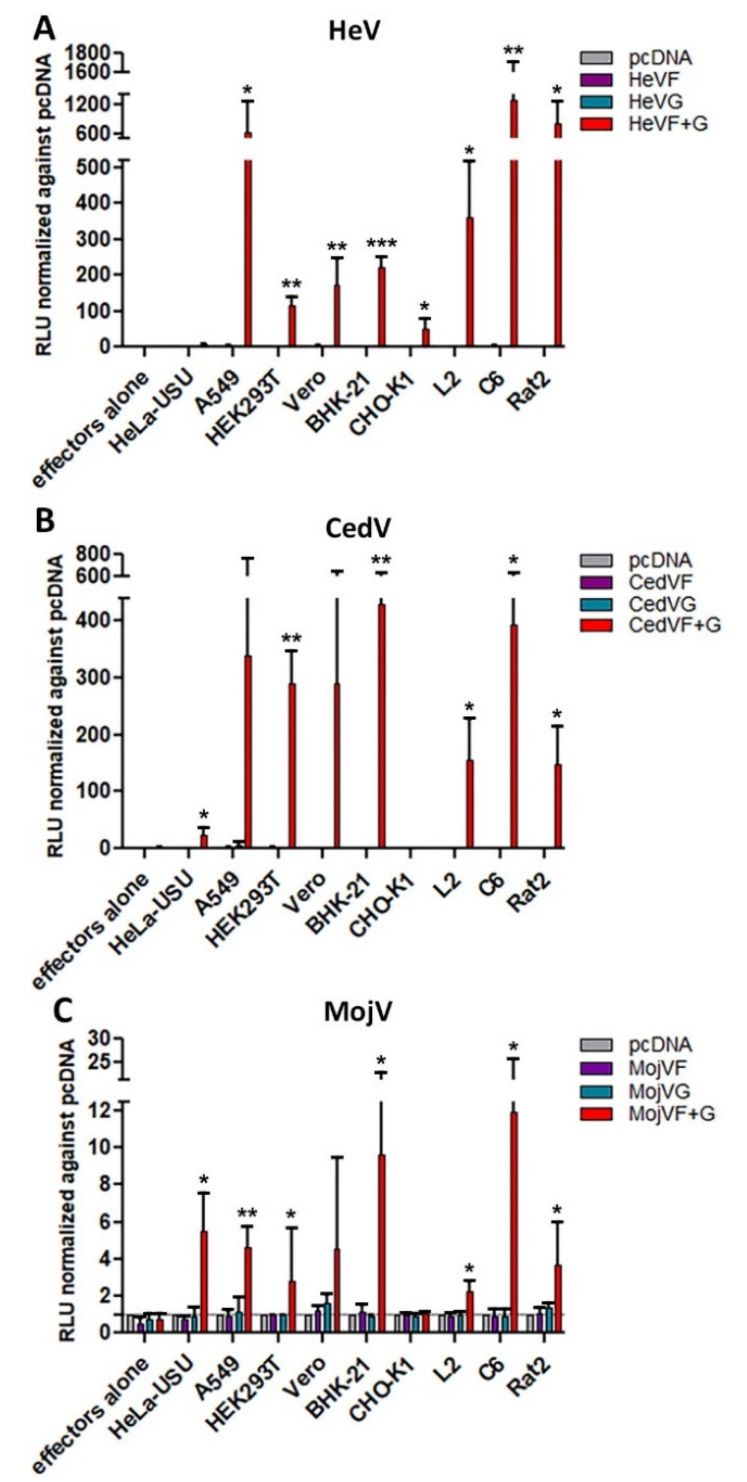
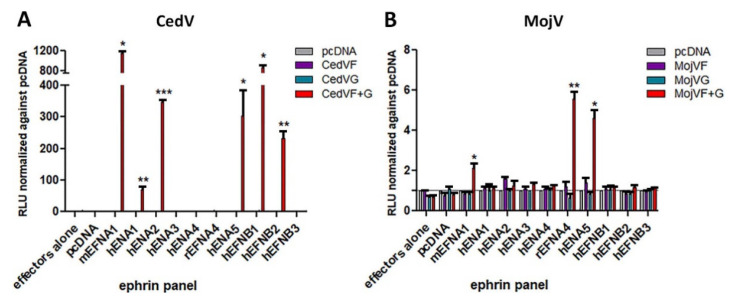
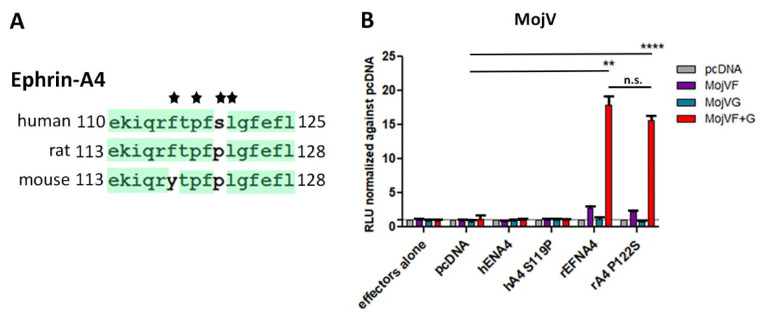
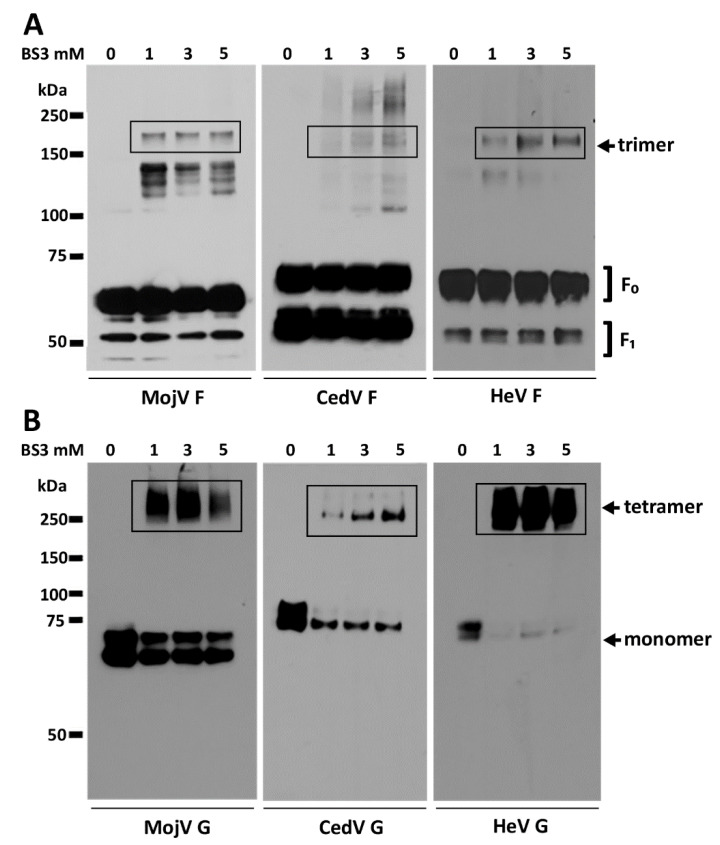
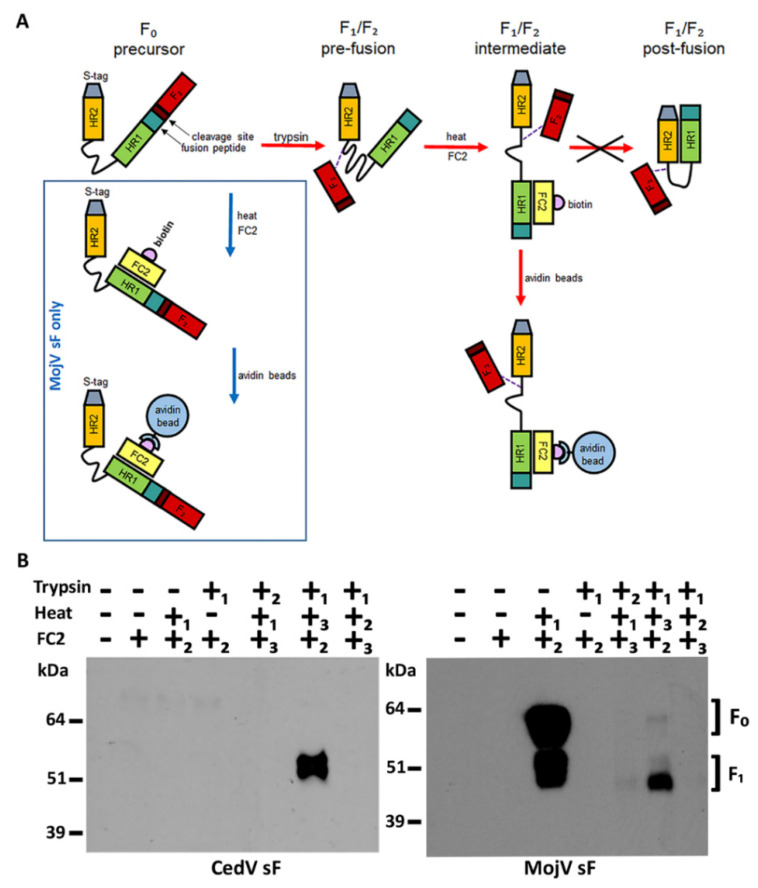
Mojiang virus (MojV) is the first henipavirus identified in a rodent and known only by sequence data, whereas all other henipaviruses have been isolated from bats (Hendra virus, Nipah virus, Cedar virus) or discovered by sequence data from material of bat origin (Ghana virus). Ephrin-B2 and -B3 are entry receptors for Hendra and Nipah viruses, but Cedar virus can utilize human ephrin-B1, -B2, -A2 and -A5 and mouse ephrin-A1. However, the entry receptor for MojV remains unknown, and its species tropism is not well characterized. Here, we utilized recombinant full-length and soluble forms of the MojV fusion (F) and attachment (G) glycoproteins in membrane fusion and receptor tropism studies. MojV F and G were functionally competent and mediated cell-cell fusion in primate and rattine cells, albeit with low levels and slow fusion kinetics. Although a relative instability of the pre-fusion conformation of a soluble form of MojV F was observed, MojV F displayed significantly greater fusion activity when heterotypically paired with Ghana virus G. An exhaustive investigation of A- and B-class ephrins indicated that none serve as a primary receptor for MojV. The MojV cell fusion phenotype is therefore likely the result of receptor restriction rather than functional defects in recombinant MojV F and G glycoproteins.
墨江病毒(MojV)是第一种在啮齿动物中发现的亨尼帕病毒,仅通过序列数据可知,而所有其他亨尼帕病毒均已从蝙蝠(亨德拉病毒、尼帕病毒、雪松病毒)中分离出来,或通过源自蝙蝠的材料的序列数据发现(加纳病毒)。Ephrin-B2 和 -B3 是亨德拉病毒和尼帕病毒的进入受体,但雪松病毒可利用人 Ephrin-B1、-B2、-A2 和 -A5 以及鼠 Ephrin-A1。然而,MojV 的进入受体仍然未知,其物种嗜性也未得到很好的表征。在这里,我们利用重组全长和可溶性形式的 MojV 融合(F)和附着(G)糖蛋白进行膜融合和受体嗜性研究。MojV F 和 G 具有功能活性,并在灵长类和大鼠细胞中介导细胞-细胞融合,尽管水平较低且融合动力学较慢。尽管观察到可溶性形式的 MojV F 的预融合构象相对不稳定,但当与加纳病毒 G 异型配对时,MojV F 显示出显著更高的融合活性。对 A 类和 B 类 Ephrins 的详尽研究表明,没有一种作为 MojV 的主要受体。因此,MojV 的细胞融合表型可能是由于受体限制,而不是重组 MojV F 和 G 糖蛋白的功能缺陷所致。