Department of Marine Biotechnology, Stazione Zoologica Anton Dohrn, Villa Comunale, 80121 Napoli, Italy.
Department of Biology, University of Naples Federico II, Complesso Universitario di Monte Sant'Angelo, Via Cinthia 21, 80126 Napoli, Italy.
Mar Drugs. 2021 Mar 22;19(3):173. doi: 10.3390/md19030173.
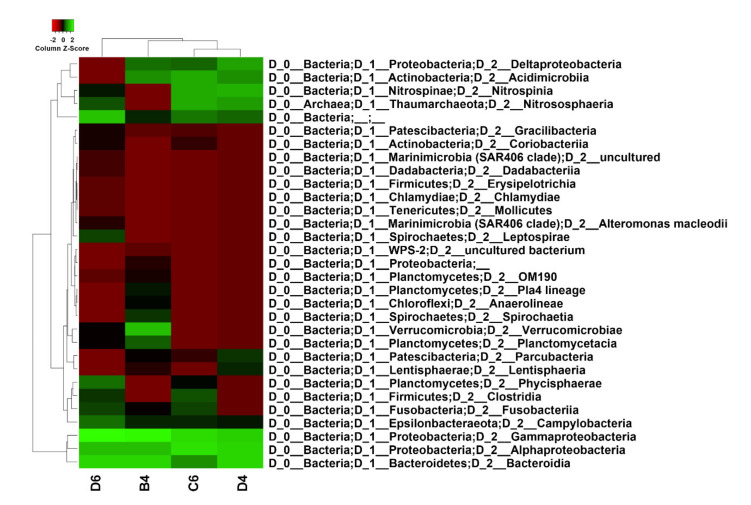
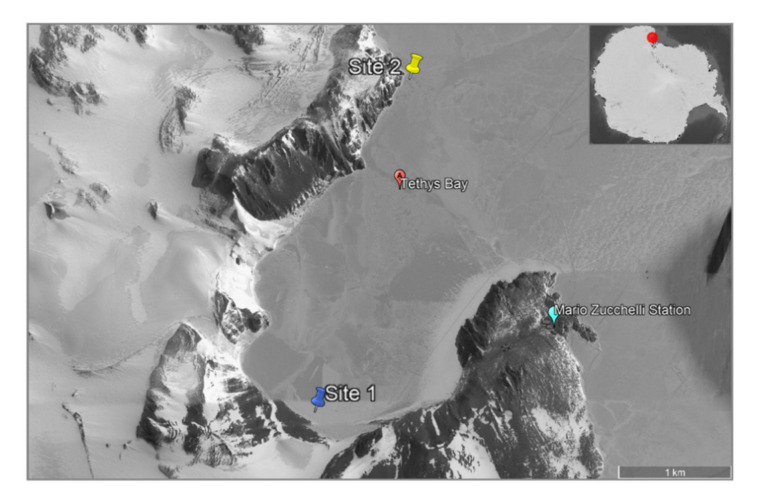
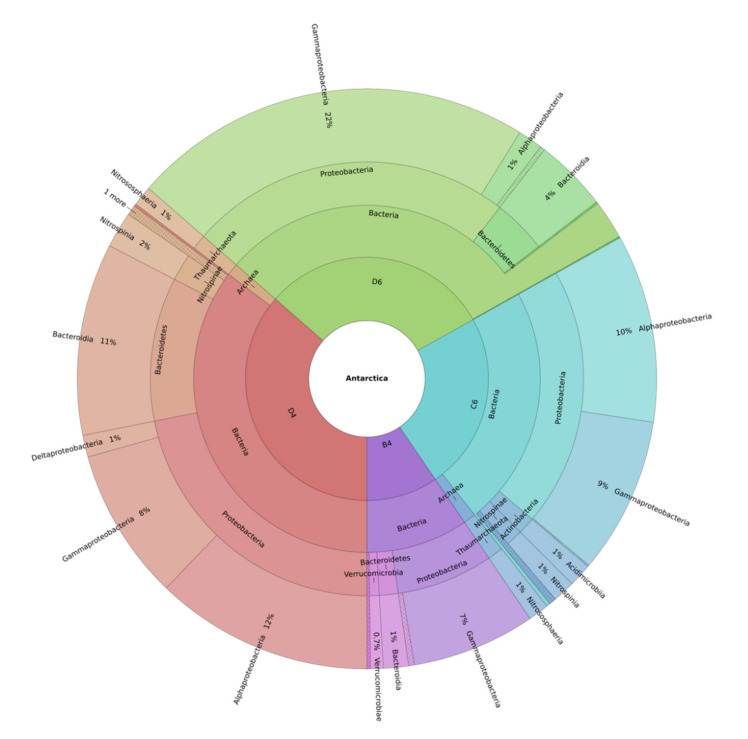
Marine sponges commonly host a repertoire of bacterial-associated organisms, which significantly contribute to their health and survival by producing several anti-predatory molecules. Many of these compounds are produced by sponge-associated bacteria and represent an incredible source of novel bioactive metabolites with biotechnological relevance. Although most investigations are focused on tropical and temperate species, to date, few studies have described the composition of microbiota hosted by Antarctic sponges and the secondary metabolites that they produce. The investigation was conducted on four sponges collected from two different sites in the framework of the XXXIV Italian National Antarctic Research Program (PNRA) in November-December 2018. Collected species were characterized as () , () and by morphological analysis of spicules and amplification of four molecular markers. Metataxonomic analysis of these four Antarctic sponges revealed a considerable abundance of Amplicon Sequence Variants (ASVs) belonging to the phyla Proteobacteria, Bacteroidetes, Actinobacteria and Verrucomicrobia. In particular, . () displayed several genera of great interest, such as , , , and . On the other hand, the sponges and () hosted bacteria belonging to the genera , and , whereas was the sole species showing some strains affiliated to the genus . Considering that most of the bacteria identified in the present study are known to produce valuable secondary metabolites, the four Antarctic sponges could be proposed as potential tools for the discovery of novel pharmacologically active compounds.
海洋海绵通常宿主一系列与细菌相关的生物,这些生物通过产生几种抗捕食分子,对海绵的健康和生存有重要贡献。这些化合物中的许多是由海绵相关细菌产生的,它们代表了具有生物技术相关性的新型生物活性代谢物的令人难以置信的来源。尽管大多数研究都集中在热带和温带物种上,但迄今为止,很少有研究描述过南极海绵所承载的微生物组的组成以及它们所产生的次生代谢物。该研究是在 2018 年 11 月至 12 月第 XXXIV 届意大利国家南极研究计划(PNRA)框架内从两个不同地点采集的四个海绵中进行的。通过对骨针的形态分析和四个分子标记的扩增,对采集到的物种进行了鉴定,它们分别为 () 、 () 和 。对这四种南极海绵的代谢组学分析显示,属于变形菌门、拟杆菌门、放线菌门和疣微菌门的扩增子序列变异(ASVs)的丰度相当高。特别是 () 显示出几个具有重要意义的属,如 、 、 和 。另一方面,海绵 和 () 宿主的细菌属于属 、 和 ,而 是唯一一种显示出一些与属 相关的菌株的物种。考虑到本研究中鉴定的大多数细菌都已知能产生有价值的次生代谢物,这四种南极海绵可以作为发现新型药理活性化合物的潜在工具。