Hachioji Medical Center, Department of Ophthalmology, Tokyo Medical University, 1163, Tatemachi, Hachioji, Tokyo 193-0998, Japan.
Int J Mol Sci. 2021 Mar 26;22(7):3427. doi: 10.3390/ijms22073427.
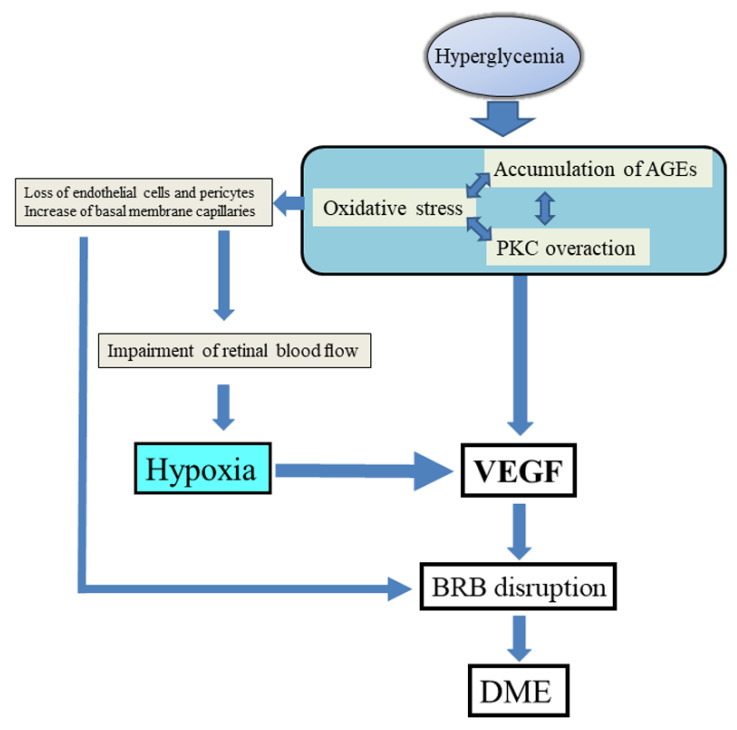
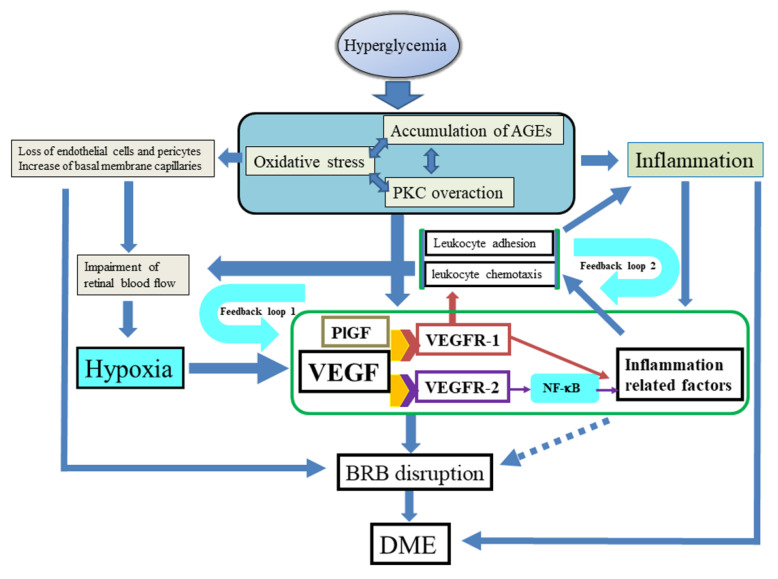
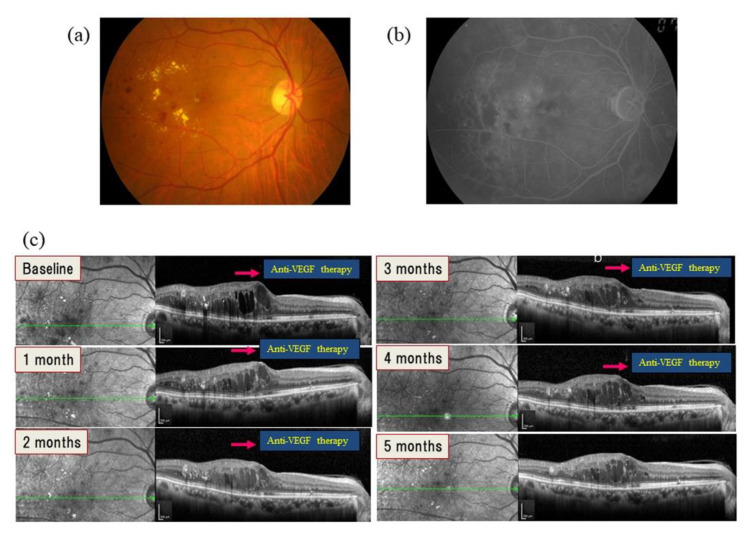
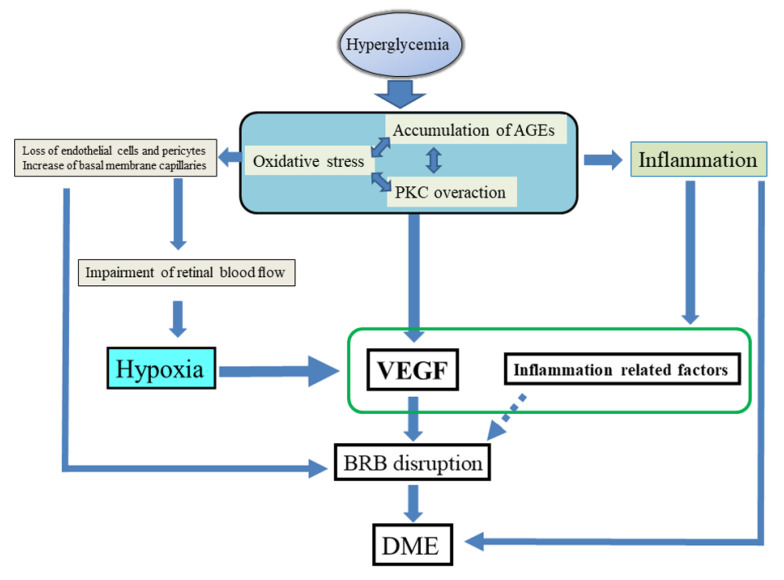
Diabetic macular edema (DME) is a critical complication of diabetic retinopathy, a condition that arises from the breakdown of the blood-retinal barrier and the consequent increase in vascular permeability. Over the years, attempts have been made to treat DME by various approaches, including laser photocoagulation, steroid triamcinolone acetonide, and vitrectomy. However, treatment was unsatisfactory until research identified vascular endothelial growth factor (VEGF) as a factor in the pathogenesis of DME. Intraocular anti-VEGF agents show good efficacy in DME. Nevertheless, in some patients the condition recurs or becomes resistant to treatment, suggesting that other factors may be involved. Because inflammation and retinal hypoxia are seen in DME, research has examined the potential role of cytokines and other inflammatory mediators. In this review, we provide an overview of this research and describe feedback mechanisms that may represent a target for novel treatments.
糖尿病性黄斑水肿(DME)是糖尿病性视网膜病变的一种严重并发症,这种疾病源于血视网膜屏障的破坏以及随之而来的血管通透性增加。多年来,人们尝试了各种方法来治疗 DME,包括激光光凝、曲安奈德(一种皮质类固醇)和玻璃体切除术。然而,在研究发现血管内皮生长因子(VEGF)是 DME 发病机制中的一个因素之前,治疗效果并不令人满意。眼内抗 VEGF 药物在 DME 中显示出良好的疗效。然而,在一些患者中,病情会复发或对治疗产生耐药性,这表明可能涉及其他因素。由于在 DME 中可以看到炎症和视网膜缺氧,因此研究已经检查了细胞因子和其他炎症介质的潜在作用。在这篇综述中,我们提供了对此类研究的概述,并描述了可能成为新治疗方法靶点的反馈机制。