Liang Xiao-Long, An Ran, Chen Qi, Liu Hong-Liang
Chongqing University Cancer Hospital, School of Medicine, Chongqing University, Chongqing, 400030, People's Republic of China.
J Pain Res. 2021 Mar 26;14:815-825. doi: 10.2147/JPR.S299595. eCollection 2021.
To date, there is no definitive evidence for the analgesic effects and side effects of thoracic epidural anesthesia (TEA) versus thoracic paravertebral block (TPVB) after thoracoscopic surgery. In this study, we conducted a meta-analysis of published randomized clinical trials (RCTs) to analyze the analgesic effects of TEA versus TPVB after thoracoscopic surgery.
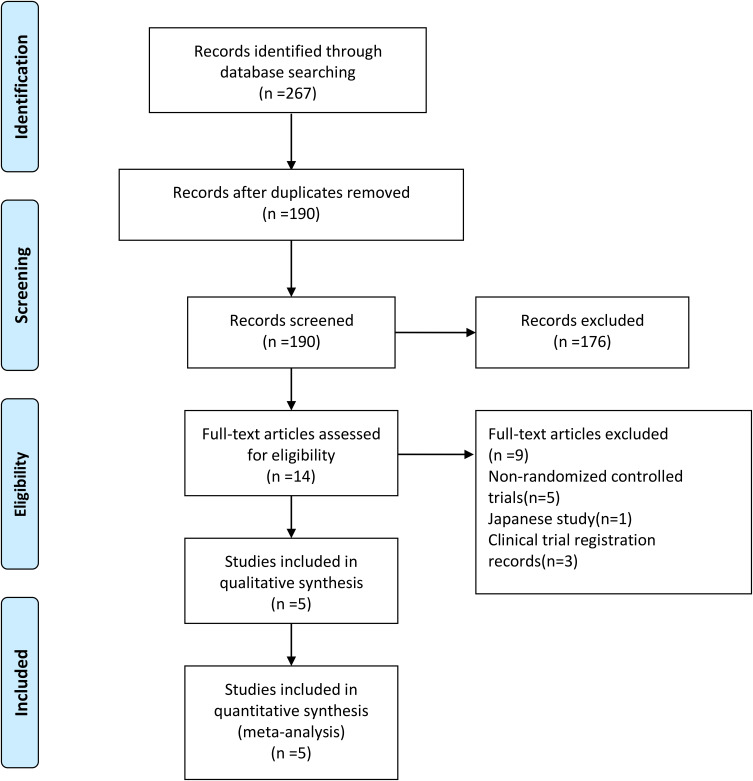
We systematically searched RCTs published by October 26, 2020, in PubMed, EMBASE, and Cochrane library and conducted a meta-analysis to analyze the analgesic effects of TEA versus TPVB after thoracoscopic surgery. The primary measure was postoperative pain score, and the secondary measures were postoperative 24-hour usage of opioids, hypotension, postoperative nausea, and vomiting.
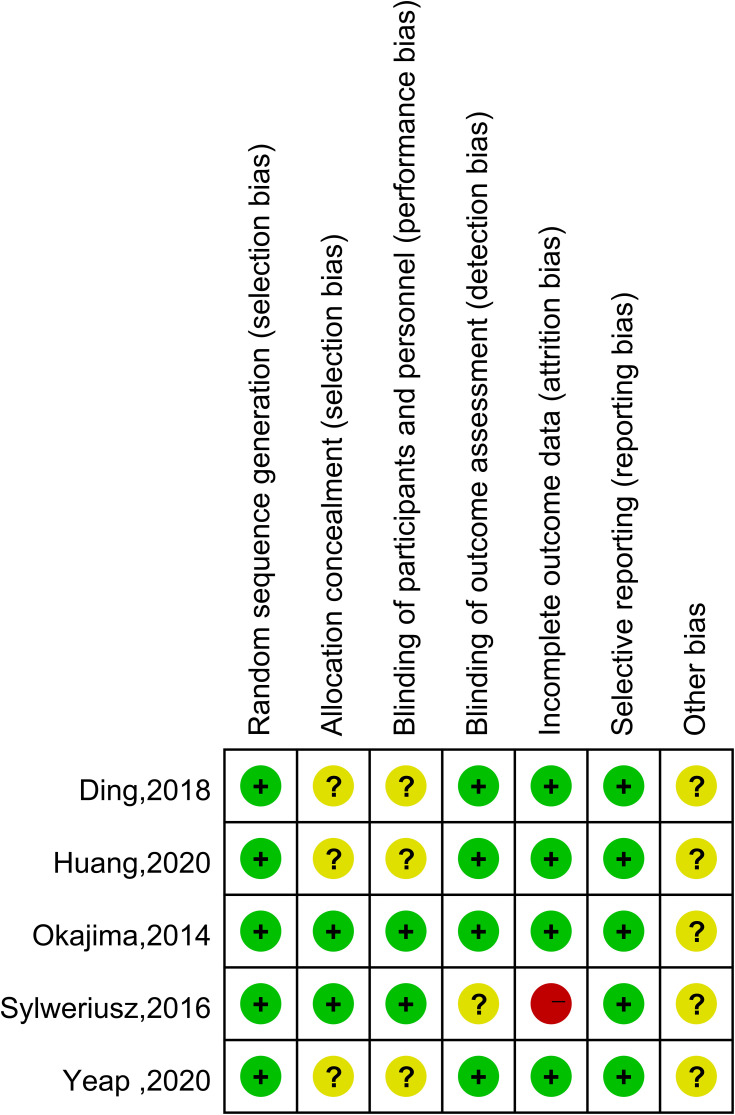
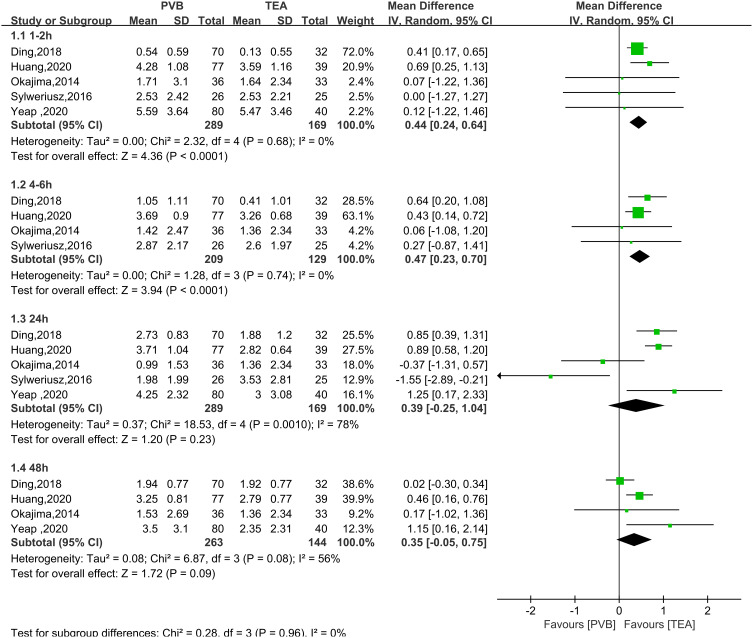
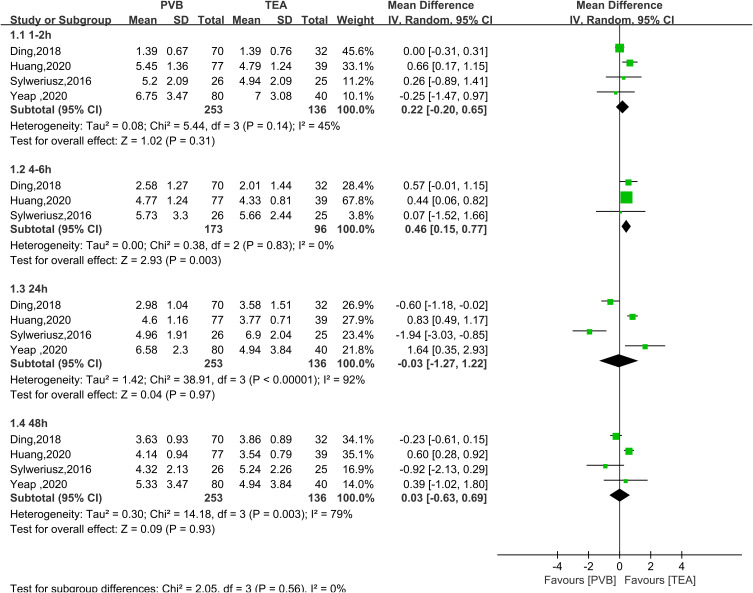
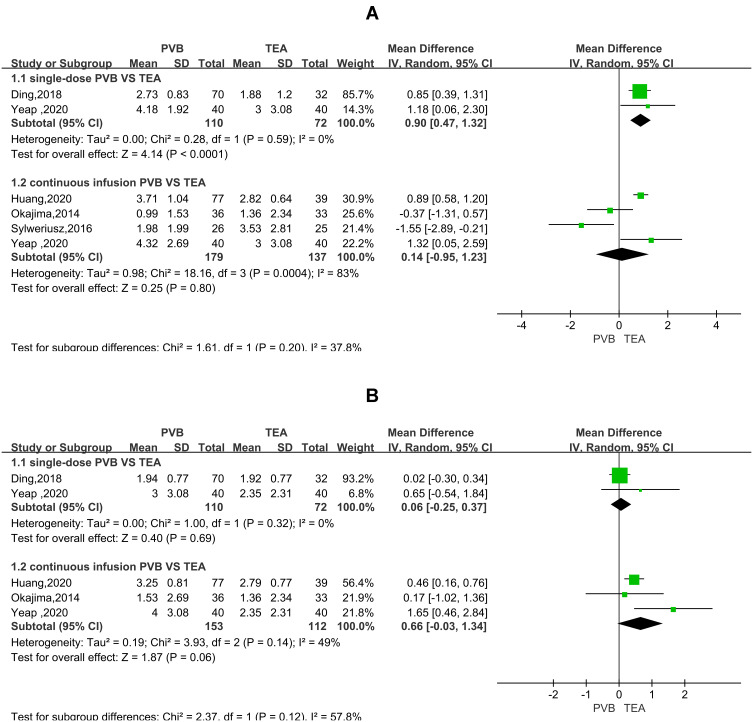
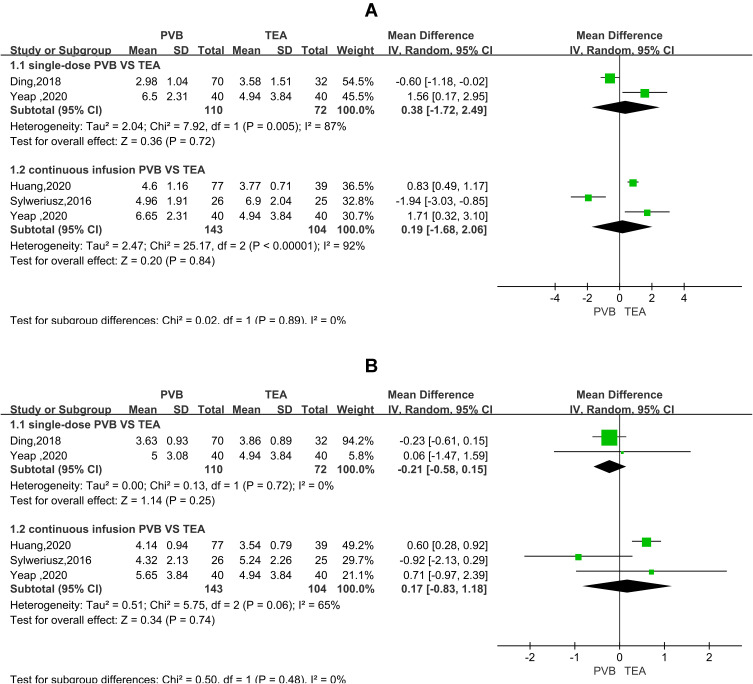
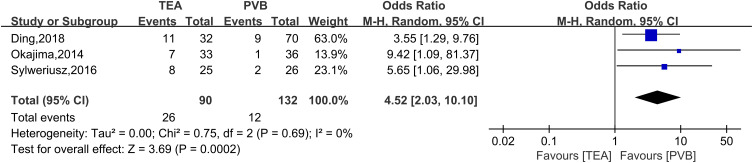
A total of 458 patients from five RCTs were included in this study. After thoracoscopic surgery, the numerical rating scale (NRS) score for resting pain was higher in the TPVB group than in the TEA group at 1-2 hours and 4-6 hours after surgery (MD = 0.44, 95% CI = 0.24 to 0.64, P < 0.0001, I2 = 0%; MD = 0.47, 95% CI = 0.23 to 0.70, P < 0.0001, I2 = 0%). The postoperative 24-hour usage of morphine was higher in the TPVB group than in the TEA group (SMD = 0.67; 95% CI = 0.03 to 1.31; P = 0.04; I2 = 84%). The incidence of hypotension was significantly lower in the TPVB group than in the TEA group (OR = 4.52; 95% CI = 2.03 to 10.10; P = 0.0002; I = 0%). No significant between-group difference was observed in postoperative nausea and vomiting (PONV).
Compared with TPVB, TEA provides statistically significant but clinically unimportant short-term benefits following thoracoscopic surgery.
迄今为止,尚无确凿证据表明胸腔镜手术后胸段硬膜外麻醉(TEA)与胸段椎旁阻滞(TPVB)的镇痛效果及副作用。在本研究中,我们对已发表的随机临床试验(RCT)进行了荟萃分析,以分析胸腔镜手术后TEA与TPVB的镇痛效果。
我们系统检索了截至2020年10月26日在PubMed、EMBASE和Cochrane图书馆发表的RCT,并进行荟萃分析以分析胸腔镜手术后TEA与TPVB的镇痛效果。主要指标为术后疼痛评分,次要指标为术后24小时阿片类药物使用量、低血压、术后恶心和呕吐。
本研究共纳入了来自5项RCT的458例患者。胸腔镜手术后,在术后1 - 2小时和4 - 6小时,TPVB组静息痛的数字评分量表(NRS)评分高于TEA组(MD = 0.44,95%CI = 0.24至0.64,P < 0.0001,I² = 0%;MD = 0.47,95%CI = 0.23至0.70,P < 0.0001,I² = 0%)。TPVB组术后24小时吗啡使用量高于TEA组(SMD = 0.67;95%CI = 0.03至1.31;P = 0.04;I² = 84%)。TPVB组低血压发生率显著低于TEA组(OR = 4.52;95%CI = 2.03至10.10;P = 0.0002;I = 0%)。术后恶心和呕吐(PONV)在组间未观察到显著差异。
与TPVB相比,胸腔镜手术后TEA在统计学上有显著但临床上无重要意义的短期益处。