Jiang Congshan, Li Xiaowei, Ge Changrong, Ding Yuanyuan, Zhang Tao, Cao Shuai, Meng Liesu, Lu Shemin
Institute of Molecular and Translational Medicine (IMTM); Department of Biochemistry and Molecular Biology, School of Basic Medical Sciences, Xi'an Jiaotong University Health Science Center, 76 West Yanta Road, Xi'an, Shaanxi, 710061, PR China.
Key Laboratory of Environment and Genes Related to Diseases (Xi'an Jiaotong University), Ministry of Education, Xi'an, Shaanxi, 710061, PR China.
J Pharm Anal. 2021 Jun;11(3):257-264. doi: 10.1016/j.jpha.2021.03.006. Epub 2021 Mar 26.
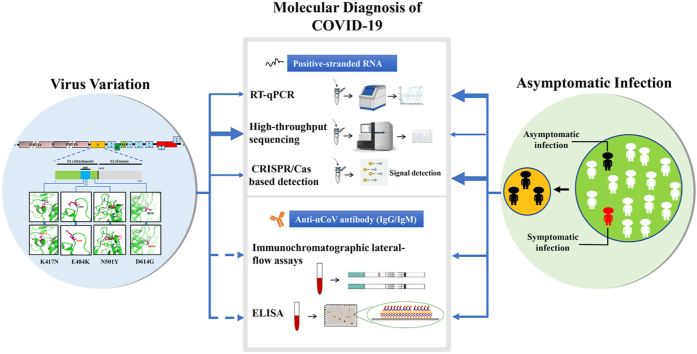
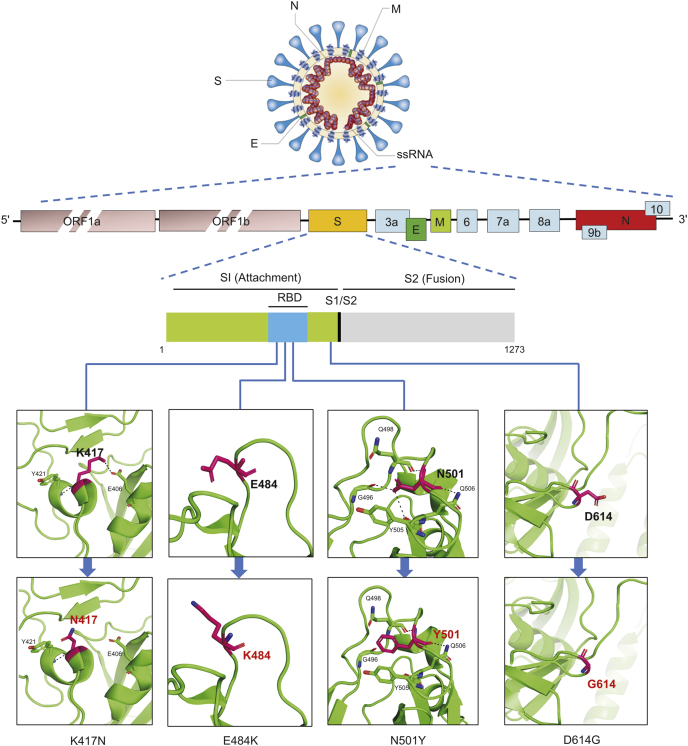
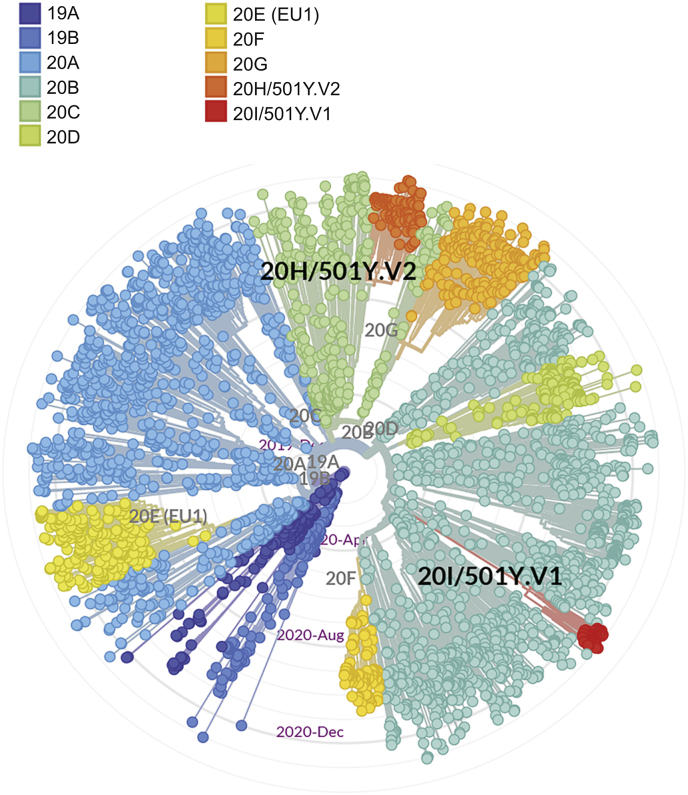
Coronavirus disease 2019 (COVID-19) has been a pandemic for more than a year. With the expanding second wave of the pandemic in winter, the continuous evolution of SARS-CoV-2 has brought new issues, including the significance of virus mutations in infection and the detection of asymptomatic infection. In this review, we first introduced several major SARS-CoV-2 mutations since the COVID-19 outbreak and then mentioned the widely used molecular detection techniques to diagnose COVID-19, primarily focusing on their strengths and limitations. We further discussed the effects of viral genetic variation and asymptomatic infection on the molecular detection of SARS-CoV-2 infection. The review finally summarized useful insights into the molecular diagnosis of COVID-19 under the special situation being challenged by virus mutation and asymptomatic infection.
2019年冠状病毒病(COVID-19)已成为大流行病一年多了。随着冬季第二波疫情的扩大,严重急性呼吸综合征冠状病毒2(SARS-CoV-2)的不断演变带来了新问题,包括病毒突变在感染中的意义以及无症状感染的检测。在本综述中,我们首先介绍了自COVID-19疫情爆发以来的几种主要SARS-CoV-2突变,然后提及了广泛用于诊断COVID-19的分子检测技术,主要关注其优缺点。我们进一步讨论了病毒基因变异和无症状感染对SARS-CoV-2感染分子检测的影响。本综述最后总结了在受到病毒突变和无症状感染挑战的特殊情况下,对COVID-19分子诊断的有益见解。