Guyon Antoine, Rousseau Joël, Bégin Francis-Gabriel, Bertin Tom, Lamothe Gabriel, Tremblay Jacques P
Centre de Recherche du CHU, Québec-Université Laval, Québec, QC G1V 4G2, Canada.
Département de Médecine Moléculaire, l'Université Laval Québec, Québec, QC, Canada.
Mol Ther Nucleic Acids. 2021 Mar 1;24:253-263. doi: 10.1016/j.omtn.2021.02.032. eCollection 2021 Jun 4.
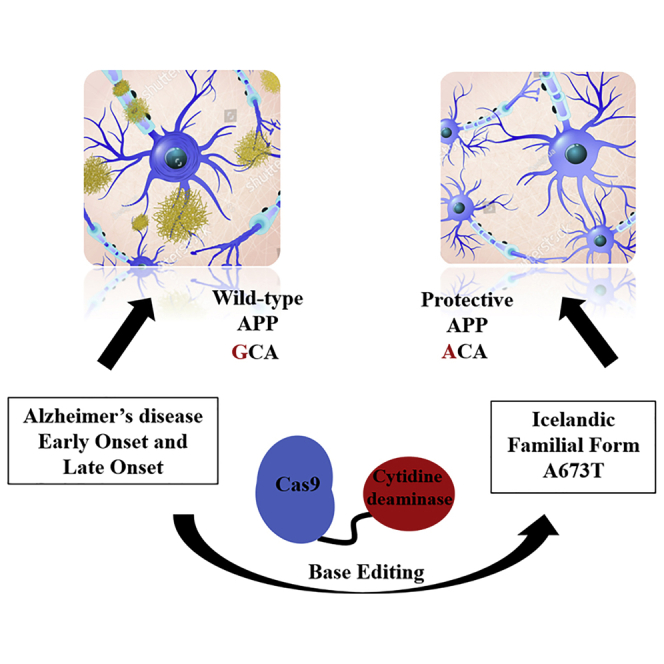
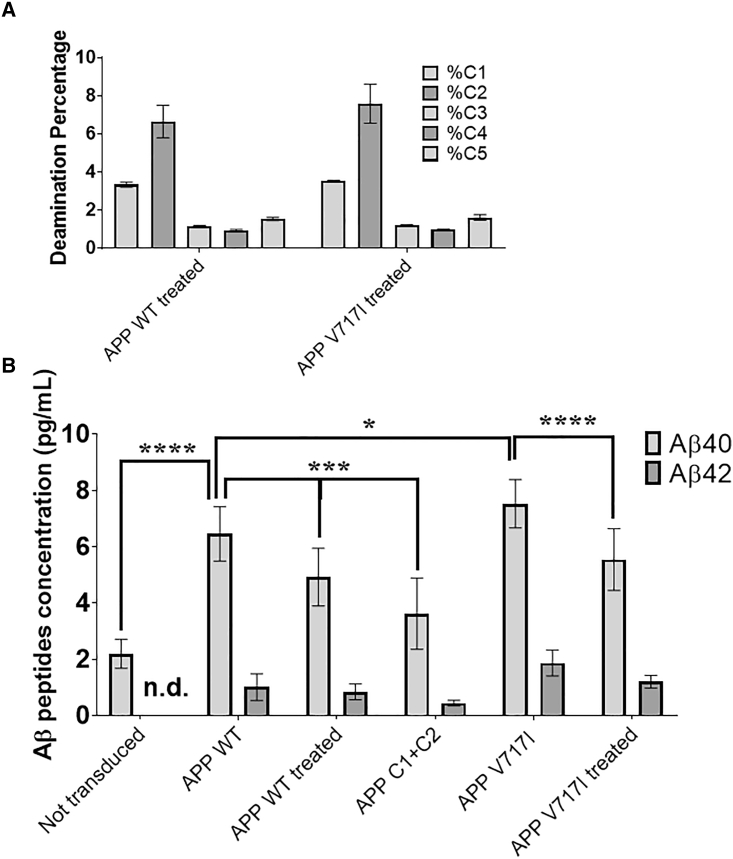
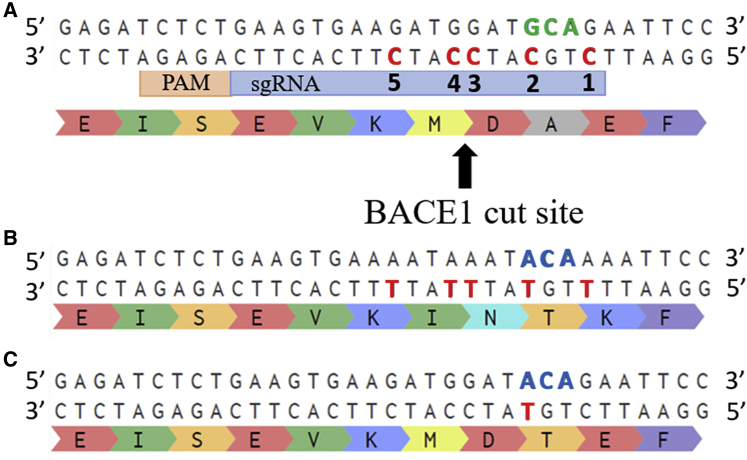
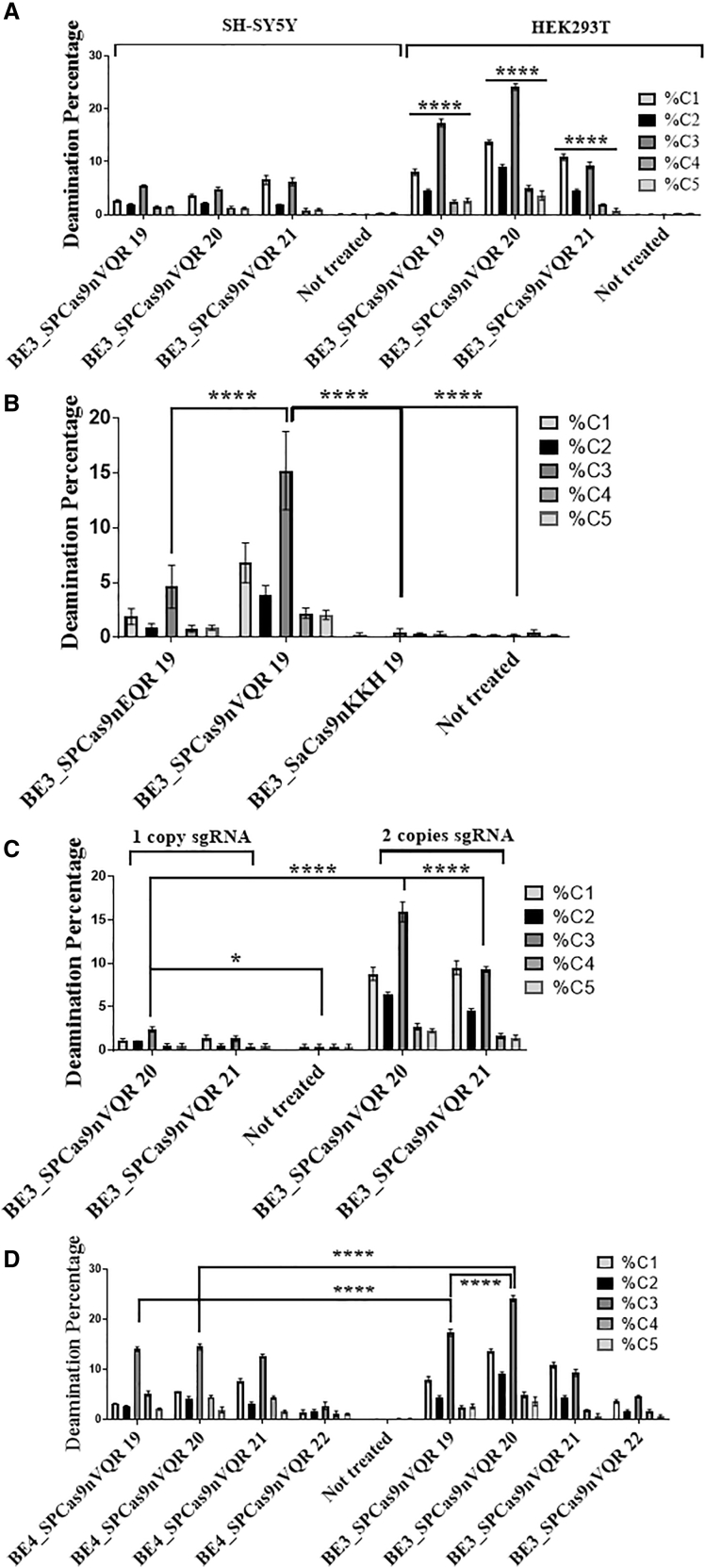
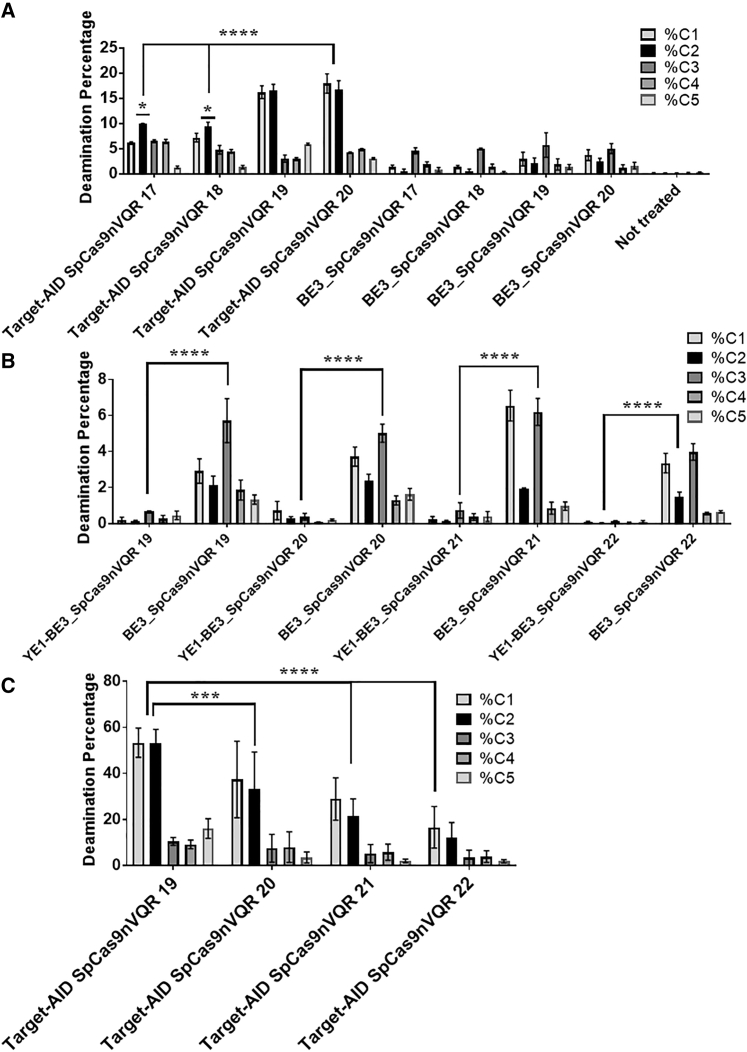
The amyloid precursor protein () is a transmembrane protein mostly found in neurons. Cleavage of this protein by β-secretase can lead to the formation of amyloid-β (Aβ) peptide plaque, which leads to Alzheimer's disease. Genomic analysis of an Icelandic population that did not show symptoms of Alzheimer's at an advanced age led to the discovery of the A673T mutation. This mutation can reduce β-secretase cleavage by 40%. We hypothesized that the insertion of this mutation in patients' neurons could be an effective and sustainable method of slowing down or even stopping the progression of Alzheimer's disease. We modified the gene in HEK293T cells and in SH-SY5Y neuroblastoma using a Cas9 nickase (Cas9n)-deaminase enzyme to convert the alanine codon to a threonine. Several Cas9n-deaminase variants were tested to compare their efficiency of conversion. The results were characterized and quantified by deep sequencing. We successfully introduced the A673T mutation in 53% of HEK293T cells alongside a new mutation (E674K), which seemed to further reduce Aβ peptide accumulation. Our approach aimed to provide a new strategy for the treatment of Alzheimer's and in so doing, demonstrate the capacity of base editing techniques for treating genetic diseases.
淀粉样前体蛋白()是一种主要存在于神经元中的跨膜蛋白。该蛋白被β-分泌酶切割会导致淀粉样β(Aβ)肽斑块的形成,进而引发阿尔茨海默病。对一个高龄时未表现出阿尔茨海默病症状的冰岛人群进行基因组分析,发现了A673T突变。这种突变可使β-分泌酶切割减少40%。我们推测,在患者神经元中插入这种突变可能是减缓甚至阻止阿尔茨海默病进展的一种有效且可持续的方法。我们使用Cas9切口酶(Cas9n)-脱氨酶在HEK293T细胞和SH-SY5Y神经母细胞瘤中对基因进行修饰,将丙氨酸密码子转换为苏氨酸。测试了几种Cas9n-脱氨酶变体以比较它们的转换效率。通过深度测序对结果进行表征和定量。我们成功地在53%的HEK293T细胞中引入了A673T突变,同时还出现了一个新突变(E674K),这似乎进一步减少了Aβ肽的积累。我们的方法旨在为阿尔茨海默病的治疗提供一种新策略,同时展示碱基编辑技术治疗遗传疾病的能力。