• 文献检索
  • 文档翻译
  • 深度研究
  • 学术资讯
  • Suppr Zotero 插件Zotero 插件
  • 邀请有礼
  • 套餐&价格
  • 历史记录
应用&插件
Suppr Zotero 插件Zotero 插件浏览器插件Mac 客户端Windows 客户端微信小程序
定价
高级版会员购买积分包购买API积分包
服务
文献检索文档翻译深度研究API 文档MCP 服务
关于我们
关于 Suppr公司介绍联系我们用户协议隐私条款
关注我们

Suppr 超能文献

核心技术专利:CN118964589B侵权必究
粤ICP备2023148730 号-1Suppr @ 2026

文献检索

告别复杂PubMed语法,用中文像聊天一样搜索,搜遍4000万医学文献。AI智能推荐,让科研检索更轻松。

立即免费搜索

文件翻译

保留排版,准确专业,支持PDF/Word/PPT等文件格式,支持 12+语言互译。

免费翻译文档

深度研究

AI帮你快速写综述,25分钟生成高质量综述,智能提取关键信息,辅助科研写作。

立即免费体验

一个使用来自巴基斯坦的真实数据构建的新型新冠病毒数学模型。

A new mathematical model of COVID-19 using real data from Pakistan.

作者信息

Peter Olumuyiwa James, Qureshi Sania, Yusuf Abdullahi, Al-Shomrani Mohammed, Idowu Abioye Abioye

机构信息

Department of Mathematics, University of Ilorin, Ilorin, Nigeria.

Department of Basic Sciences and Related Studies, Mehran University of Engineering and Technology, Jamshoro, 76062 Sindh, Pakistan.

出版信息

Results Phys. 2021 May;24:104098. doi: 10.1016/j.rinp.2021.104098. Epub 2021 Mar 31.

DOI:10.1016/j.rinp.2021.104098
PMID:33816093
原文链接:https://pmc.ncbi.nlm.nih.gov/articles/PMC8010333/
Abstract

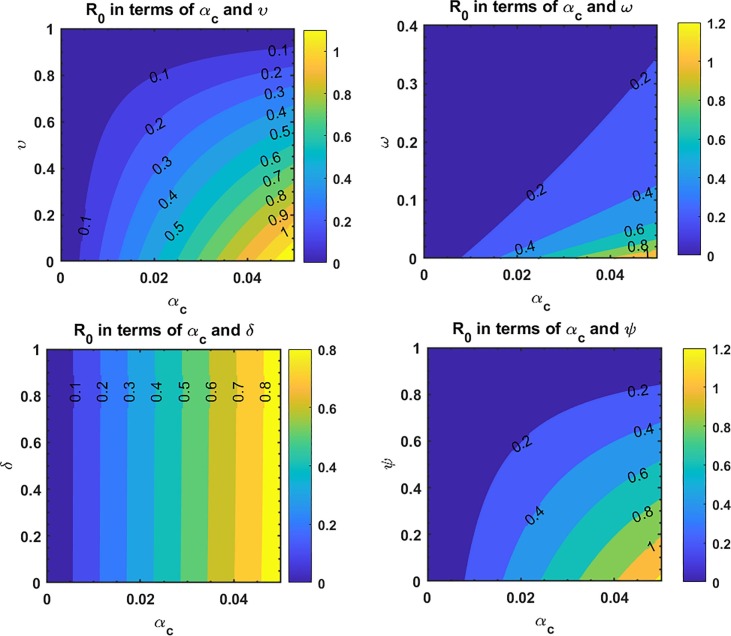
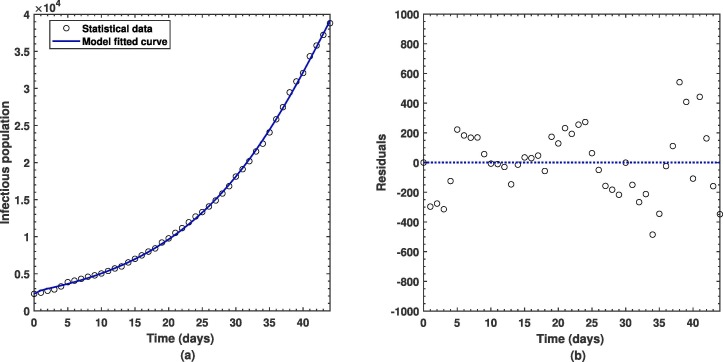
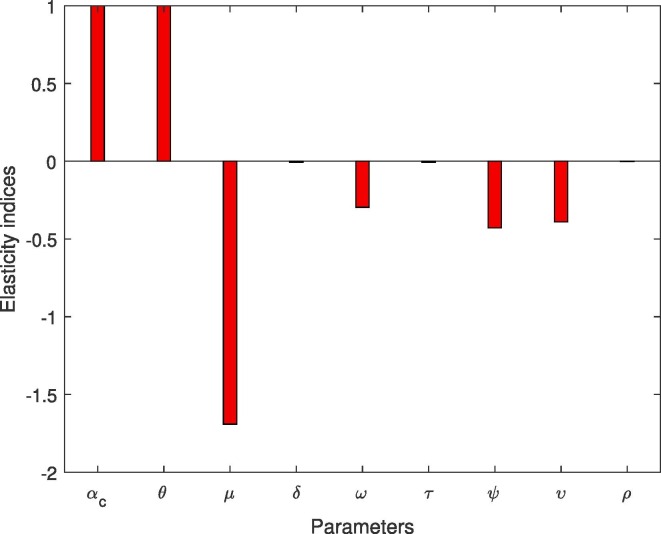
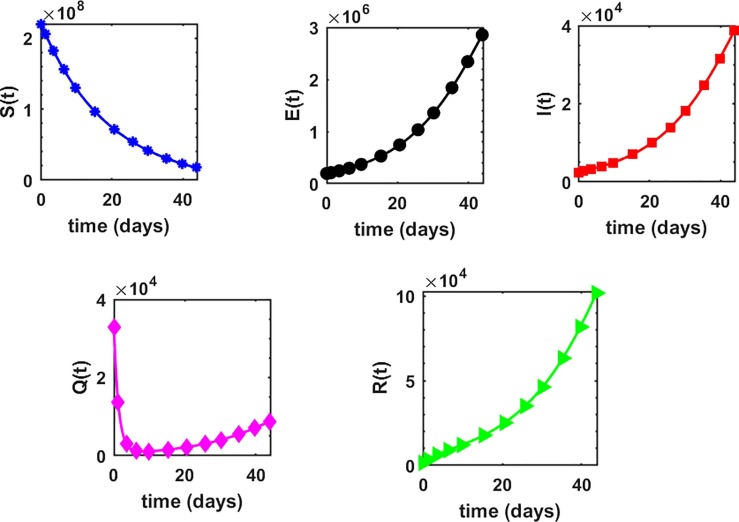
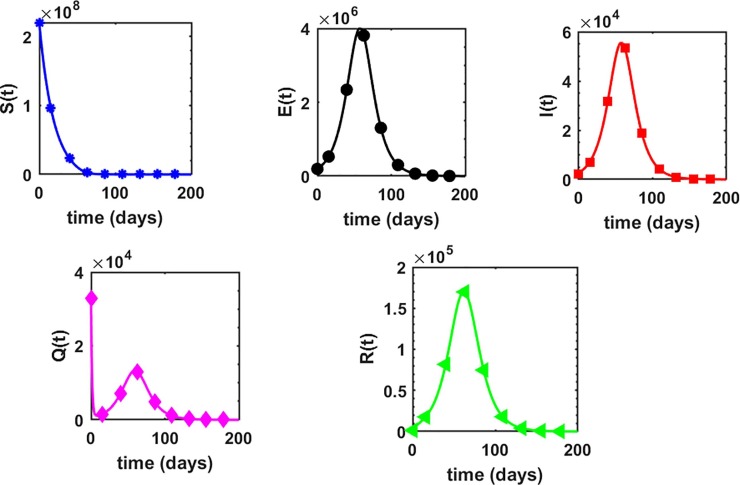
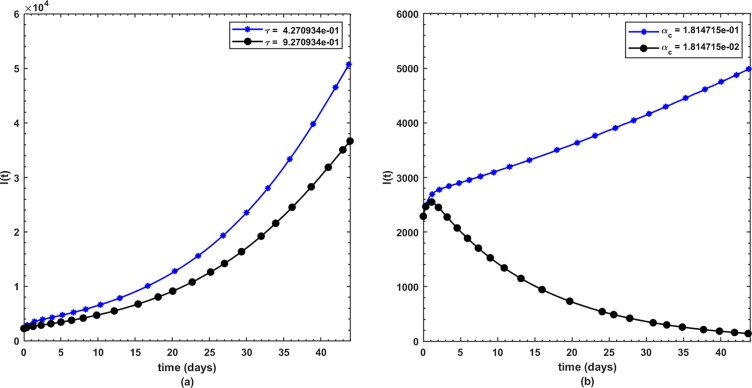
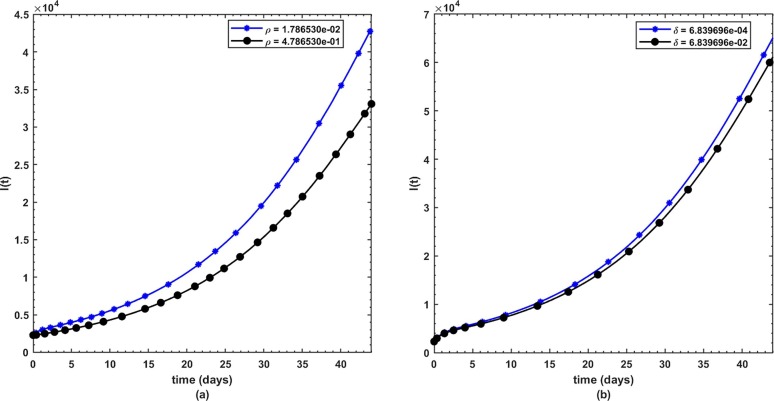
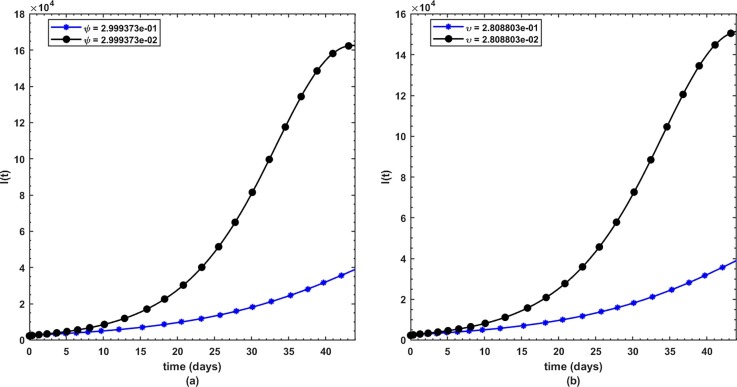
We propose a new mathematical model to investigate the recent outbreak of the coronavirus disease (COVID-19). The model is studied qualitatively using stability theory of differential equations and the basic reproductive number that represents an epidemic indicator is obtained from the largest eigenvalue of the next-generation matrix. The global asymptotic stability conditions for the disease free equilibrium are obtained. The real COVID-19 incidence data entries from 01 July, 2020 to 14 August, 2020 in the country of Pakistan are used for parameter estimation thereby getting fitted values for the biological parameters. Sensitivity analysis is performed in order to determine the most sensitive parameters in the proposed model. To view more features of the state variables in the proposed model, we perform numerical simulations by using different values of some essential parameters. Moreover, profiles of the reproduction number through contour plots have been biologically explained.

摘要

我们提出了一种新的数学模型来研究近期冠状病毒病(COVID-19)的爆发情况。利用微分方程稳定性理论对该模型进行了定性研究,并从下一代矩阵的最大特征值中获得了代表疫情指标的基本再生数。得到了无病平衡点的全局渐近稳定性条件。利用巴基斯坦2020年7月1日至2020年8月14日的实际COVID-19发病率数据进行参数估计,从而得到生物学参数的拟合值。进行敏感性分析以确定所提出模型中最敏感的参数。为了观察所提出模型中状态变量的更多特征,我们使用一些基本参数的不同值进行了数值模拟。此外,还从生物学角度解释了通过等高线图得到的再生数曲线。
https://cdn.ncbi.nlm.nih.gov/pmc/blobs/4e96/8010333/7a83f95c7f7b/gr10_lrg.jpg
https://cdn.ncbi.nlm.nih.gov/pmc/blobs/4e96/8010333/f655c6962b64/gr1_lrg.jpg
https://cdn.ncbi.nlm.nih.gov/pmc/blobs/4e96/8010333/8443a7c7c963/gr2_lrg.jpg
https://cdn.ncbi.nlm.nih.gov/pmc/blobs/4e96/8010333/059411212a67/gr3_lrg.jpg
https://cdn.ncbi.nlm.nih.gov/pmc/blobs/4e96/8010333/67fc8aefe17c/gr4_lrg.jpg
https://cdn.ncbi.nlm.nih.gov/pmc/blobs/4e96/8010333/10199edfe258/gr5_lrg.jpg
https://cdn.ncbi.nlm.nih.gov/pmc/blobs/4e96/8010333/766a95e8fb8d/gr6_lrg.jpg
https://cdn.ncbi.nlm.nih.gov/pmc/blobs/4e96/8010333/540b079d6f53/gr7_lrg.jpg
https://cdn.ncbi.nlm.nih.gov/pmc/blobs/4e96/8010333/0926b2a77247/gr8_lrg.jpg
https://cdn.ncbi.nlm.nih.gov/pmc/blobs/4e96/8010333/c937d030d2b0/gr9_lrg.jpg
https://cdn.ncbi.nlm.nih.gov/pmc/blobs/4e96/8010333/7a83f95c7f7b/gr10_lrg.jpg
https://cdn.ncbi.nlm.nih.gov/pmc/blobs/4e96/8010333/f655c6962b64/gr1_lrg.jpg
https://cdn.ncbi.nlm.nih.gov/pmc/blobs/4e96/8010333/8443a7c7c963/gr2_lrg.jpg
https://cdn.ncbi.nlm.nih.gov/pmc/blobs/4e96/8010333/059411212a67/gr3_lrg.jpg
https://cdn.ncbi.nlm.nih.gov/pmc/blobs/4e96/8010333/67fc8aefe17c/gr4_lrg.jpg
https://cdn.ncbi.nlm.nih.gov/pmc/blobs/4e96/8010333/10199edfe258/gr5_lrg.jpg
https://cdn.ncbi.nlm.nih.gov/pmc/blobs/4e96/8010333/766a95e8fb8d/gr6_lrg.jpg
https://cdn.ncbi.nlm.nih.gov/pmc/blobs/4e96/8010333/540b079d6f53/gr7_lrg.jpg
https://cdn.ncbi.nlm.nih.gov/pmc/blobs/4e96/8010333/0926b2a77247/gr8_lrg.jpg
https://cdn.ncbi.nlm.nih.gov/pmc/blobs/4e96/8010333/c937d030d2b0/gr9_lrg.jpg
https://cdn.ncbi.nlm.nih.gov/pmc/blobs/4e96/8010333/7a83f95c7f7b/gr10_lrg.jpg

相似文献

1
A new mathematical model of COVID-19 using real data from Pakistan.一个使用来自巴基斯坦的真实数据构建的新型新冠病毒数学模型。
Results Phys. 2021 May;24:104098. doi: 10.1016/j.rinp.2021.104098. Epub 2021 Mar 31.
2
Modeling the impact of non-pharmaceutical interventions on the dynamics of novel coronavirus with optimal control analysis with a case study.通过案例研究,运用最优控制分析对非药物干预措施对新型冠状病毒动态的影响进行建模。
Chaos Solitons Fractals. 2020 Oct;139:110075. doi: 10.1016/j.chaos.2020.110075. Epub 2020 Jul 3.
3
Modeling the effect of contaminated objects for the transmission dynamics of COVID-19 pandemic with self protection behavior changes.通过自我保护行为变化对受污染物体在新冠疫情传播动力学中的影响进行建模。
Results Appl Math. 2021 Feb;9:100134. doi: 10.1016/j.rinam.2020.100134. Epub 2020 Nov 30.
4
Sensitivity and elasticity analysis of novel corona virus transmission model: A mathematical approach.新型冠状病毒传播模型的敏感性与弹性分析:一种数学方法
Sens Int. 2021;2:100088. doi: 10.1016/j.sintl.2021.100088. Epub 2021 Mar 10.
5
A fractional order SITR mathematical model for forecasting of transmission of COVID-19 of India with lockdown effect.一种用于预测印度新冠疫情传播且考虑封锁效应的分数阶SITR数学模型。
Results Phys. 2021 May;24:104067. doi: 10.1016/j.rinp.2021.104067. Epub 2021 Mar 23.
6
A mathematical model for COVID-19 transmission dynamics with a case study of India.一个关于COVID-19传播动力学的数学模型及印度的案例研究。
Chaos Solitons Fractals. 2020 Nov;140:110173. doi: 10.1016/j.chaos.2020.110173. Epub 2020 Aug 5.
7
A fractional order mathematical model for COVID-19 dynamics with quarantine, isolation, and environmental viral load.一个用于描述COVID-19动态变化的分数阶数学模型,该模型考虑了隔离、检疫和环境病毒载量。
Adv Differ Equ. 2021;2021(1):106. doi: 10.1186/s13662-021-03265-4. Epub 2021 Feb 11.
8
A mathematical model of COVID-19 using fractional derivative: outbreak in India with dynamics of transmission and control.使用分数阶导数的COVID-19数学模型:印度的疫情爆发与传播及控制动态
Adv Differ Equ. 2020;2020(1):373. doi: 10.1186/s13662-020-02834-3. Epub 2020 Jul 22.
9
Assessing the role of quarantine and isolation as control strategies for COVID-19 outbreak: A case study.评估检疫和隔离作为新冠疫情防控策略的作用:一项案例研究。
Chaos Solitons Fractals. 2021 Mar;144:110655. doi: 10.1016/j.chaos.2021.110655. Epub 2021 Jan 9.
10
A mathematical model of Coronavirus Disease (COVID-19) containing asymptomatic and symptomatic classes.一种包含无症状和有症状类别的冠状病毒病(COVID-19)数学模型。
Results Phys. 2021 Feb;21:103776. doi: 10.1016/j.rinp.2020.103776. Epub 2021 Jan 6.

引用本文的文献

1
A mathematical model of COVID-19 with multiple variants of the virus under optimal control in Ghana.加纳带有多种病毒变种的 COVID-19 的最优控制的数学模型。
PLoS One. 2024 Jul 2;19(7):e0303791. doi: 10.1371/journal.pone.0303791. eCollection 2024.
2
Exploring local and global stability of COVID-19 through numerical schemes.通过数值方案探索 COVID-19 的局部和全局稳定性。
Sci Rep. 2024 Apr 4;14(1):7960. doi: 10.1038/s41598-024-56938-x.
3
Behavioral game of quarantine during the monkeypox epidemic: Analysis of deterministic and fractional order approach.
猴痘疫情期间检疫的行为博弈:确定性和分数阶方法分析
Heliyon. 2024 Mar 3;10(5):e26998. doi: 10.1016/j.heliyon.2024.e26998. eCollection 2024 Mar 15.
4
The impact of triple doses vaccination and other interventions for controlling the outbreak of COVID-19 cases and mortality in Australia: A modelling study.三剂疫苗接种及其他干预措施对澳大利亚控制新冠疫情病例及死亡率的影响:一项建模研究
Heliyon. 2024 Feb 10;10(4):e25945. doi: 10.1016/j.heliyon.2024.e25945. eCollection 2024 Feb 29.
5
A fractional-order mathematical model for malaria and COVID-19 co-infection dynamics.疟疾与新冠肺炎合并感染动态的分数阶数学模型。
Healthc Anal (N Y). 2023 Dec;4:100210. doi: 10.1016/j.health.2023.100210. Epub 2023 Jun 21.
6
Predictive dynamical modeling and stability of the equilibria in a discrete fractional difference COVID-19 epidemic model.离散分数阶差分COVID-19流行模型中的预测动力学建模与平衡点稳定性
Results Phys. 2023 Jun;49:106467. doi: 10.1016/j.rinp.2023.106467. Epub 2023 Apr 28.
7
On the Implementation of the Artificial Neural Network Approach for Forecasting Different Healthcare Events.关于人工神经网络方法在预测不同医疗事件中的应用
Diagnostics (Basel). 2023 Mar 31;13(7):1310. doi: 10.3390/diagnostics13071310.
8
Data driven contagion risk management in low-income countries using machine learning applications with COVID-19 in South Asia.利用机器学习应用程序对南亚的 COVID-19 进行数据驱动的传染病风险管理,以服务低收入国家。
Sci Rep. 2023 Mar 6;13(1):3732. doi: 10.1038/s41598-023-30348-x.
9
Mathematical Model of COVID-19 Pandemic with Double Dose Vaccination.COVID-19 大流行的双剂量疫苗接种数学模型。
Acta Biotheor. 2023 Mar 6;71(2):9. doi: 10.1007/s10441-023-09460-y.
10
Conceptual analysis of the combined effects of vaccination, therapeutic actions, and human subjection to physical constraint in reducing the prevalence of COVID-19 using the homotopy perturbation method.使用同伦摄动法对疫苗接种、治疗措施以及人体物理约束在降低新冠病毒病患病率方面的联合效应进行概念分析。
Beni Suef Univ J Basic Appl Sci. 2023;12(1):10. doi: 10.1186/s43088-023-00343-2. Epub 2023 Jan 19.