Ali Abdulrazzaq Qasem, Md Sultan Abu Bakar, Abd Ghani Abdul Azim, Zulzalil Hazura
Department of Software Engineering and Information System, Faculty of Computer Science and Information Technology, Universiti Putra Malaysia, Serdang, Selangor, Malaysia.
PeerJ Comput Sci. 2020 Sep 21;6:e294. doi: 10.7717/peerj-cs.294. eCollection 2020.
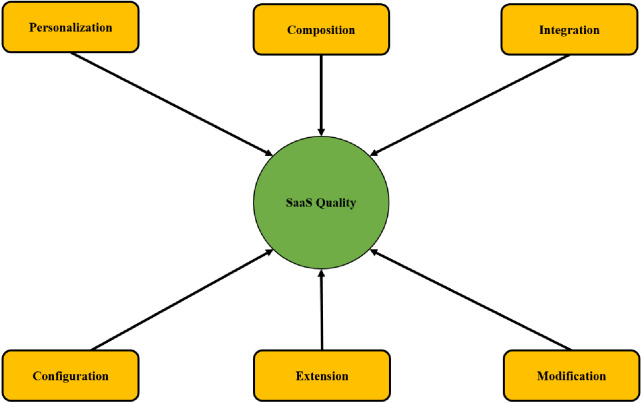
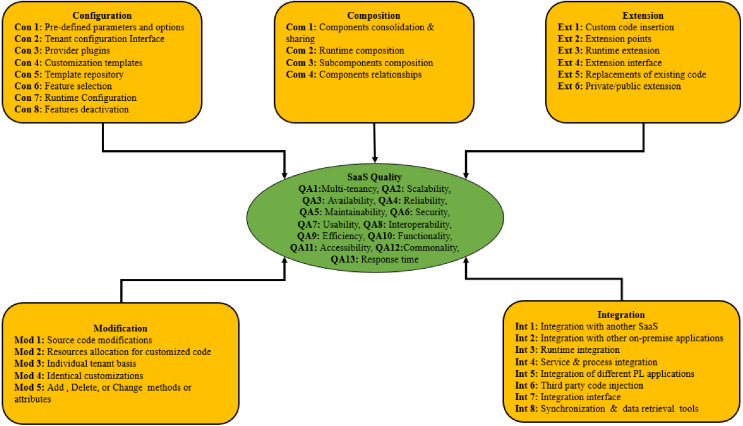
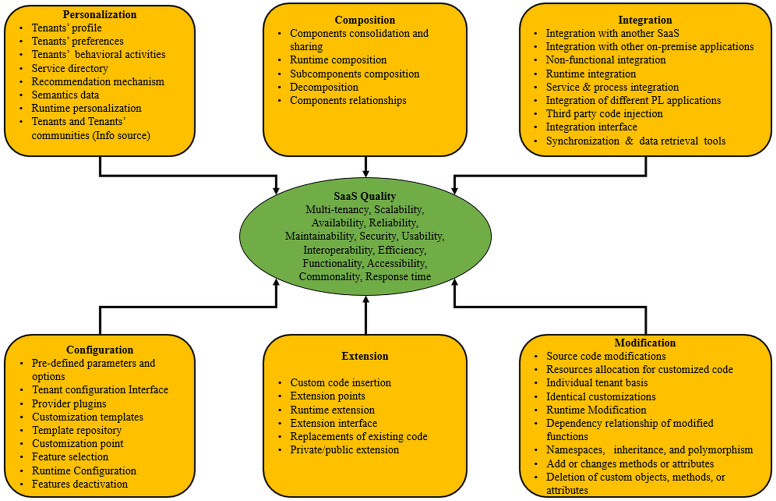
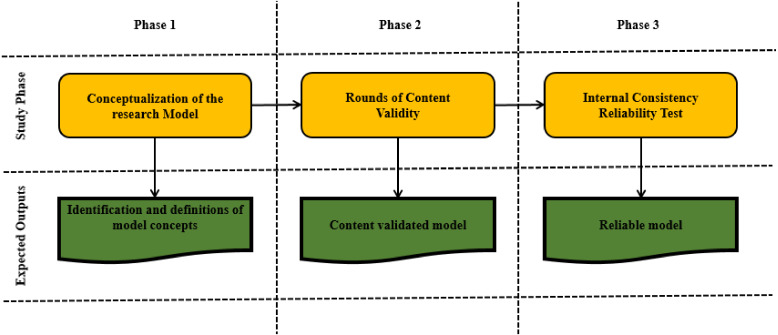
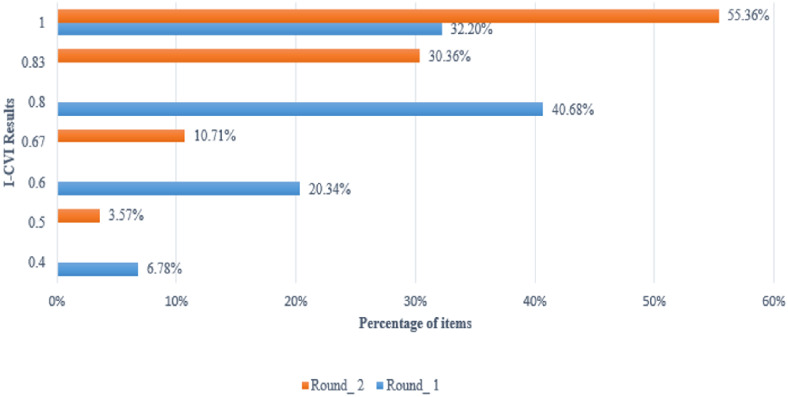
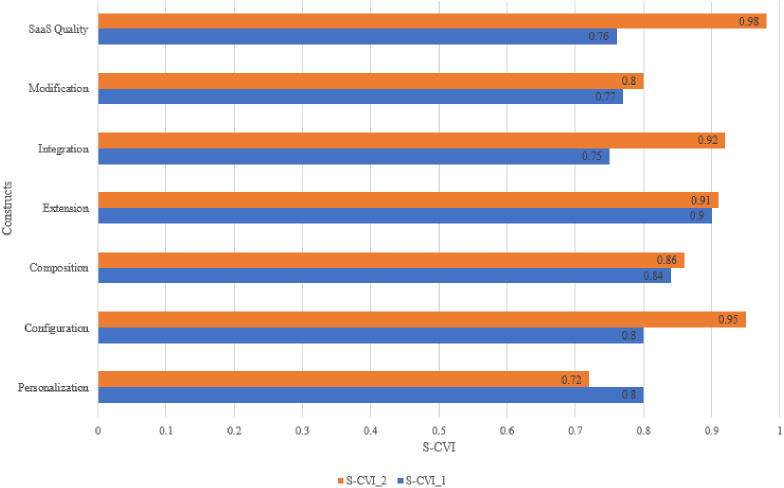
Despite the benefits of standardization, the customization of Software as a Service (SaaS) application is also essential because of the many unique requirements of customers. This study, therefore, focuses on the development of a valid and reliable software customization model for SaaS quality that consists of (1) generic software customization types and a list of common practices for each customization type in the SaaS multi-tenant context, and (2) key quality attributes of SaaS applications associated with customization. The study was divided into three phases: the conceptualization of the model, analysis of its validity using SaaS academic-derived expertise, and evaluation of its reliability by submitting it to an internal consistency reliability test conducted by software-engineer researchers. The model was initially devised based on six customization approaches, 46 customization practices, and 13 quality attributes in the SaaS multi-tenant context. Subsequently, its content was validated over two rounds of testing after which one approach and 14 practices were removed and 20 practices were reformulated. The internal consistency reliability study was thereafter conducted by 34 software engineer researchers. All constructs of the content-validated model were found to be reliable in this study. The final version of the model consists of 6 constructs and 44 items. These six constructs and their associated items are as follows: (1) Configuration (eight items), (2) Composition (four items), (3) Extension (six items), 4) Integration (eight items), (5) Modification (five items), and (6) SaaS quality (13 items). The results of the study may contribute to enhancing the capability of empirically analyzing the impact of software customization on SaaS quality by benefiting from all resultant constructs and items.
尽管标准化有诸多益处,但由于客户有许多独特需求,软件即服务(SaaS)应用的定制也至关重要。因此,本研究聚焦于开发一个针对SaaS质量的有效且可靠的软件定制模型,该模型包括:(1)通用软件定制类型以及SaaS多租户环境中每种定制类型的常见实践列表;(2)与定制相关的SaaS应用的关键质量属性。该研究分为三个阶段:模型的概念化、利用源自SaaS学术领域的专业知识分析其有效性,以及通过将其提交给软件工程师研究人员进行的内部一致性可靠性测试来评估其可靠性。该模型最初基于SaaS多租户环境中的六种定制方法、46种定制实践和13个质量属性设计而成。随后,经过两轮测试对其内容进行了验证,之后删除了一种方法和14种实践,并重新制定了20种实践。此后,34名软件工程师研究人员进行了内部一致性可靠性研究。在本研究中,经内容验证的模型的所有构建均被发现是可靠的。该模型的最终版本由6个构建和44个项目组成。这六个构建及其相关项目如下:(1)配置(8个项目)、(2)组合(4个项目)、(3)扩展(6个项目)、(4)集成(8个项目)、(5)修改(5个项目)以及(6)SaaS质量(13个项目)。该研究结果可能有助于通过利用所有最终构建和项目来提高实证分析软件定制对SaaS质量影响的能力。