Kowalczewski Przemysław Łukasz, Olejnik Anna, Białas Wojciech, Kubiak Piotr, Siger Aleksander, Nowicki Marcin, Lewandowicz Grażyna
Institute of Food Technology of Plant Origin, Poznań University of Life Sciences, 31 Wojska Polskiego Str., 60-624 Poznań, Poland.
Department of Biotechnology and Food Microbiology, Poznań University of Life Sciences, 48 Wojska Polskiego Str., 60-627 Poznań, Poland.
Open Life Sci. 2019 May 21;14:150-157. doi: 10.1515/biol-2019-0017. eCollection 2019 Jan.
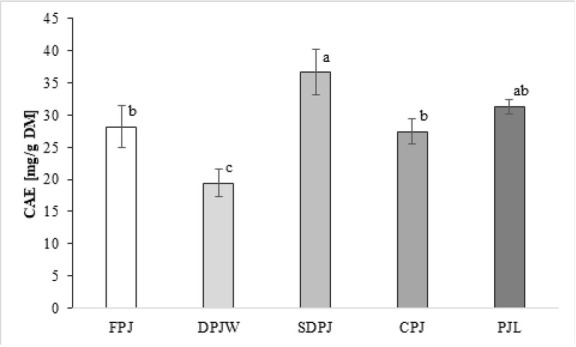
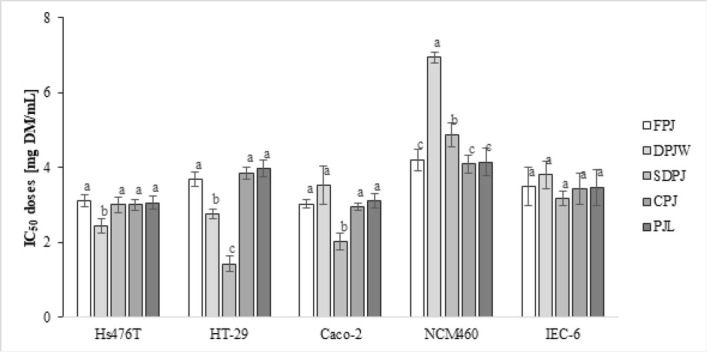
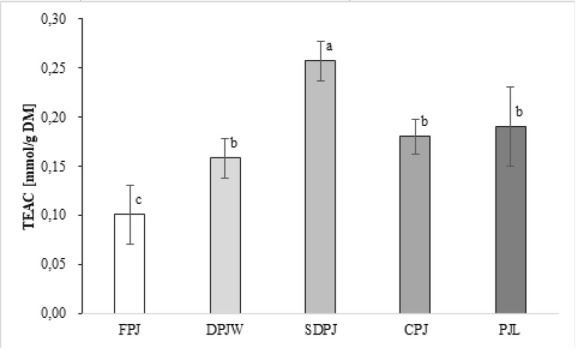
Potato juice (PJ), commonly considered a burdensome waste, is rich in various compounds with bioactive properties. It has long been considered a remedy for gastric problems in traditional folk medicine. If valorization of PJ through implementation in the production of functional foods is to be considered, stabilization methods must be developed to allow long-term storage of this seasonal product. It is important that such methods are chosen with regard to their effect on the bioactive value of the obtained product. In this study, the impact of four stabilization methods on the antioxidant and cytotoxic activities of PJ was investigated. Elevated temperatures were used in thermal deproteinization used to obtain DPJW (deproteinated potato juice water) and spray-drying of FPJ (fresh potato juice) that resulted in SDPJ. Freeze drying and cryoconcentration were the low temperature processing methods that yielded PJL (potato juice lyophilisate) and CPJ (cryocorncentrated potato juice), respectively. All processed materials were characterized chemically and compared with raw materials in terms of phenolic compounds content, antioxidant activity as well as cytotoxicity to human tumor cells isolated from the gastric mucosa (Hs476T cell line), colon (Caco-2 and HT-29 cell lines), and normal cells isolated from the small intestine and colon epithelium (IEC-6 and NCM460 cell lines). It was stated that high-temperature processes - thermal deproteinization and spray-drying - yielded products with increased antioxidant potential (TEAC) that also showed increased cytotoxic activity towards intestinal cancer cells. At the same time the cytotoxicity towards normal cells remained on par with that of fresh PJ (IEC-6 cells) or decreased (NCM460 cells). Thermal deproteinization significantly decreased the content of glycoalcaloids in the juice, while spray drying did not have such an effect. The two low-temperature processes investigated - cryoconcentration and freeze drying - did not affect the PJ cytotoxic activity towards any of the cell lines used in the tests, whereas they did affect the antioxidant properties and glycoalcaloids content of PJ.
马铃薯汁(PJ)通常被视为一种累赘的废弃物,却富含多种具有生物活性的化合物。在传统民间医学中,它长期以来一直被视作治疗胃部问题的药物。如果要考虑通过将PJ应用于功能性食品生产来实现其价值提升,就必须开发稳定化方法,以便长期储存这种季节性产品。重要的是,选择这些方法时要考虑其对所得产品生物活性价值的影响。在本研究中,考察了四种稳定化方法对PJ抗氧化和细胞毒性活性的影响。热脱蛋白过程中采用高温来获得脱蛋白马铃薯汁水(DPJW),并对新鲜马铃薯汁(FPJ)进行喷雾干燥得到喷雾干燥马铃薯汁(SDPJ)。冷冻干燥和低温浓缩是低温处理方法,分别得到马铃薯汁冻干物(PJL)和低温浓缩马铃薯汁(CPJ)。对所有加工材料进行化学表征,并在酚类化合物含量、抗氧化活性以及对从胃黏膜分离的人肿瘤细胞(Hs476T细胞系)、结肠(Caco - 2和HT - 29细胞系)以及从小肠和结肠上皮分离的正常细胞(IEC - 6和NCM460细胞系)的细胞毒性方面与原材料进行比较。结果表明,高温过程——热脱蛋白和喷雾干燥——得到的产品具有更高的抗氧化潜力(TEAC),并且对肠道癌细胞也表现出更高的细胞毒性活性。同时,对正常细胞的细胞毒性与新鲜PJ对IEC - 6细胞的细胞毒性相当,或者对NCM460细胞的细胞毒性降低。热脱蛋白显著降低了汁液中糖苷生物碱的含量,而喷雾干燥没有这种效果。所考察的两种低温过程——低温浓缩和冷冻干燥——对PJ对测试中使用的任何细胞系的细胞毒性活性没有影响,然而它们确实影响了PJ的抗氧化特性和糖苷生物碱含量。