Department of Biomedical Engineering, University of Wisconsin-Madison, Madison, Wisconsin, USA.
Department of Orthopedics and Rehabilitation, University of Wisconsin-Madison, Madison, Wisconsin, USA.
Stem Cells Transl Med. 2021 Aug;10(8):1184-1201. doi: 10.1002/sctm.19-0414. Epub 2021 Apr 5.
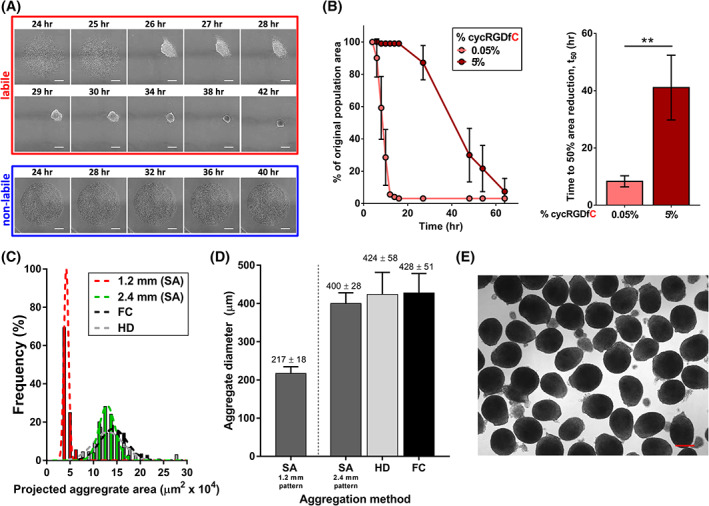
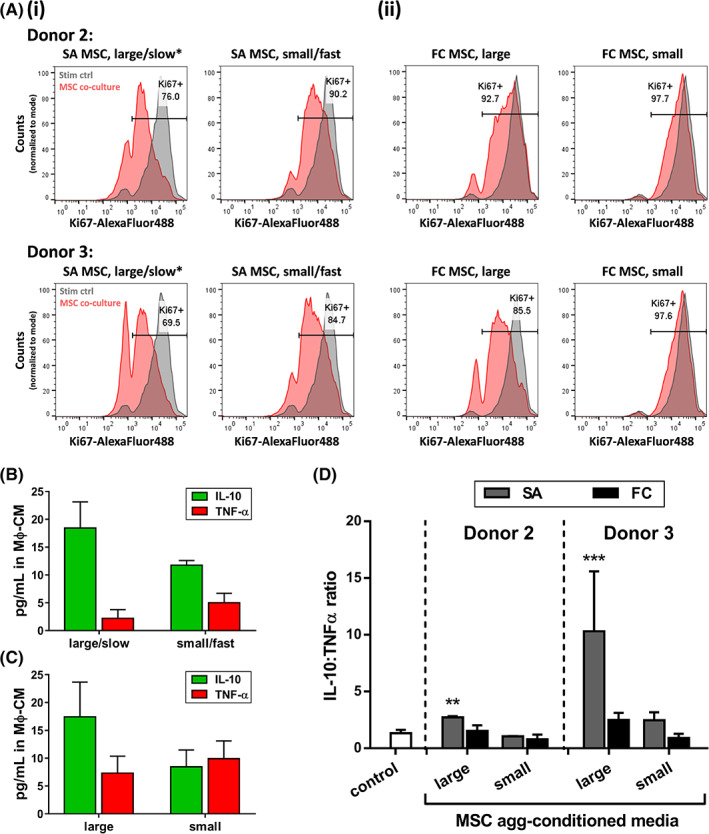
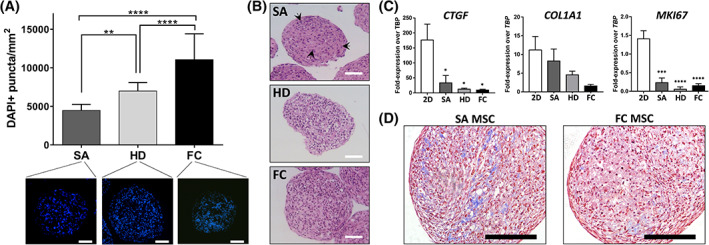
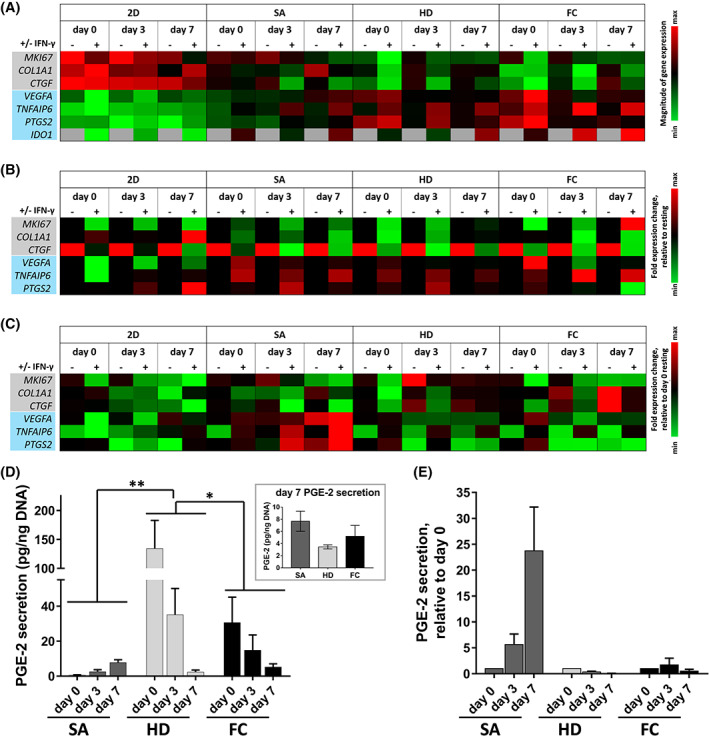
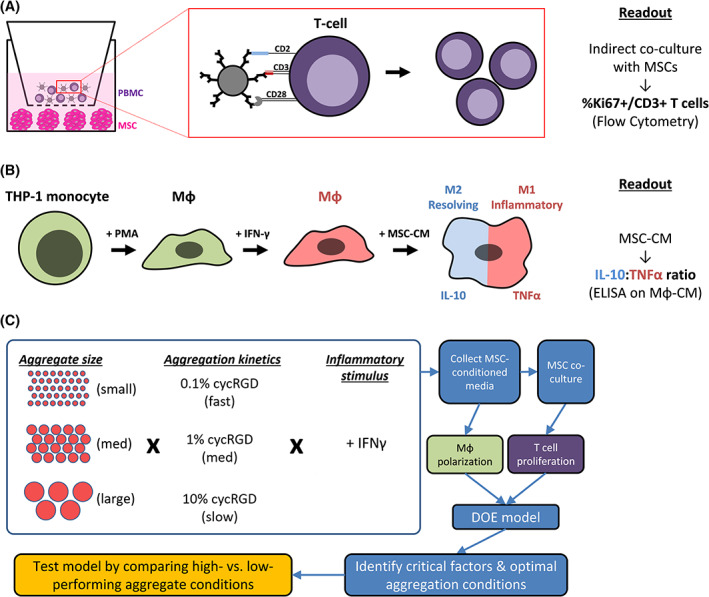
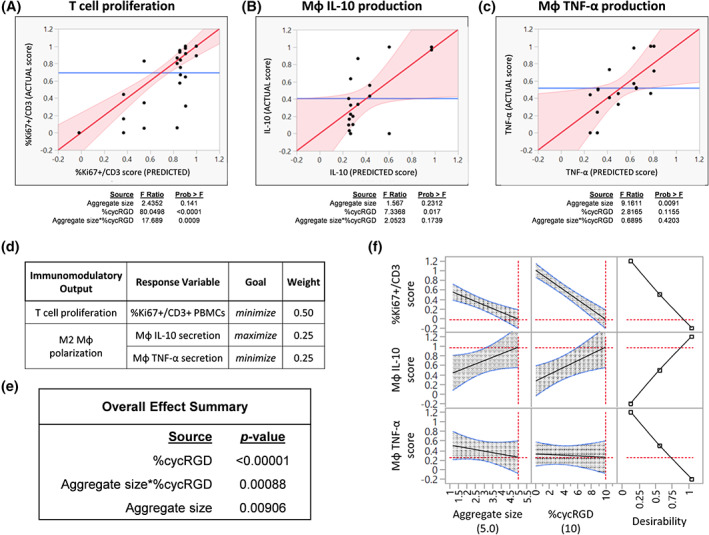
Human mesenchymal stromal cells (MSCs) are promising candidates for cell therapy due to their ease of isolation and expansion and their ability to secrete antiapoptotic, pro-angiogenic, and immunomodulatory factors. Three-dimensional (3D) aggregation "self-activates" MSCs to augment their pro-angiogenic and immunomodulatory potential, but the microenvironmental features and culture parameters that promote optimal MSC immunomodulatory function in 3D aggregates are poorly understood. Here, we generated MSC aggregates via three distinct methods and compared them with regard to their (a) aggregate structure and (b) immunomodulatory phenotype under resting conditions and in response to inflammatory stimulus. Methods associated with fast aggregation kinetics formed aggregates with higher cell packing density and reduced extracellular matrix (ECM) synthesis compared to those with slow aggregation kinetics. While all three methods of 3D aggregation enhanced MSC expression of immunomodulatory factors compared to two-dimensional culture, different aggregation methods modulated cells' temporal expression of these factors. A Design of Experiments approach, in which aggregate size and aggregation kinetics were systematically covaried, identified a significant effect of both parameters on MSCs' ability to regulate immune cells. Compared to small aggregates formed with fast kinetics, large aggregates with slow assembly kinetics were more effective at T-cell suppression and macrophage polarization toward anti-inflammatory phenotypes. Thus, culture parameters including aggregation method, kinetics, and aggregate size influence both the structural properties of aggregates and their paracrine immunomodulatory function. These findings underscore the utility of engineering strategies to control properties of 3D MSC aggregates, which may identify new avenues for optimizing the immunomodulatory function of MSC-based cell therapies.
人基质细胞(MSCs)因其易于分离和扩增以及分泌抗细胞凋亡、促血管生成和免疫调节因子的能力而成为细胞治疗的有前途的候选者。三维(3D)聚集“自我激活”MSCs 以增强其促血管生成和免疫调节潜能,但促进 3D 聚集中 MSC 免疫调节功能的最佳微环境特征和培养参数仍知之甚少。在这里,我们通过三种不同的方法生成 MSC 聚集物,并就其(a)在静息状态和对炎症刺激的反应下的聚集结构和(b)免疫调节表型进行了比较。与聚合动力学较慢的方法相比,与聚合动力学较快的方法相关的方法形成的聚集物具有更高的细胞堆积密度和减少的细胞外基质(ECM)合成。虽然三种 3D 聚集方法都比二维培养增强了 MSC 免疫调节因子的表达,但不同的聚集方法调节了细胞对这些因子的时空表达。设计实验方法,其中系统地协变了聚集体的大小和聚合动力学,确定了这两个参数对 MSCs 调节免疫细胞能力的显著影响。与快速动力学形成的小聚集体相比,组装动力学较慢的大聚集体在抑制 T 细胞和巨噬细胞向抗炎表型极化方面更有效。因此,包括聚集方法、动力学和聚集大小在内的培养参数会影响聚集体的结构特性及其旁分泌免疫调节功能。这些发现强调了工程策略控制 3D MSC 聚集物特性的实用性,这可能为优化基于 MSC 的细胞治疗的免疫调节功能开辟新途径。