Intestinal Stem Cell Biology Lab, Wellcome Centre Human Genetics, University of Oxford, Oxford, United Kingdom.
Li Ka Shing Centre, Cancer Research UK Cambridge Institute, University of Cambridge, Cambridge, United Kingdom.
Gastroenterology. 2021 Jul;161(1):239-254.e9. doi: 10.1053/j.gastro.2021.03.052. Epub 2021 Apr 2.
BACKGROUND & AIMS: In homeostasis, intestinal cell fate is controlled by balanced gradients of morphogen signaling. The bone morphogenetic protein (BMP) pathway has a physiological, prodifferentiation role, predominantly inferred through previous experimental pathway inactivation. Intestinal regeneration is underpinned by dedifferentiation and cell plasticity, but the signaling pathways that regulate this adaptive reprogramming are not well understood. We assessed the BMP signaling landscape and investigated the impact and therapeutic potential of pathway manipulation in homeostasis and regeneration.
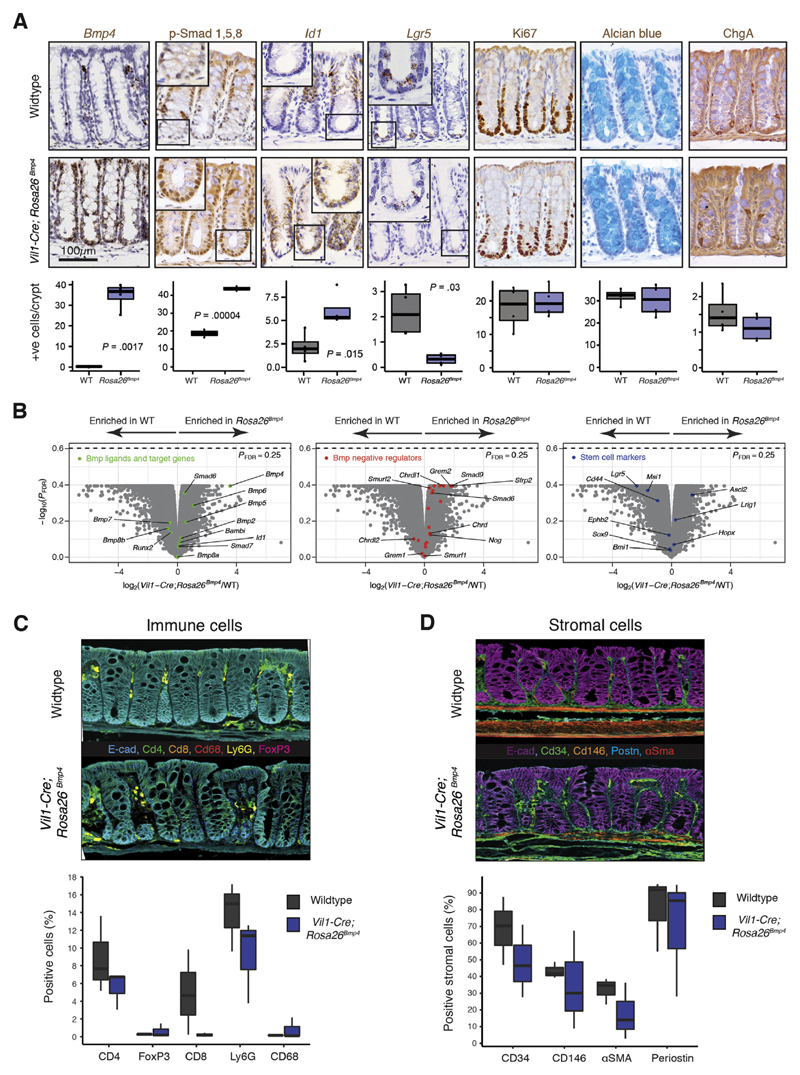
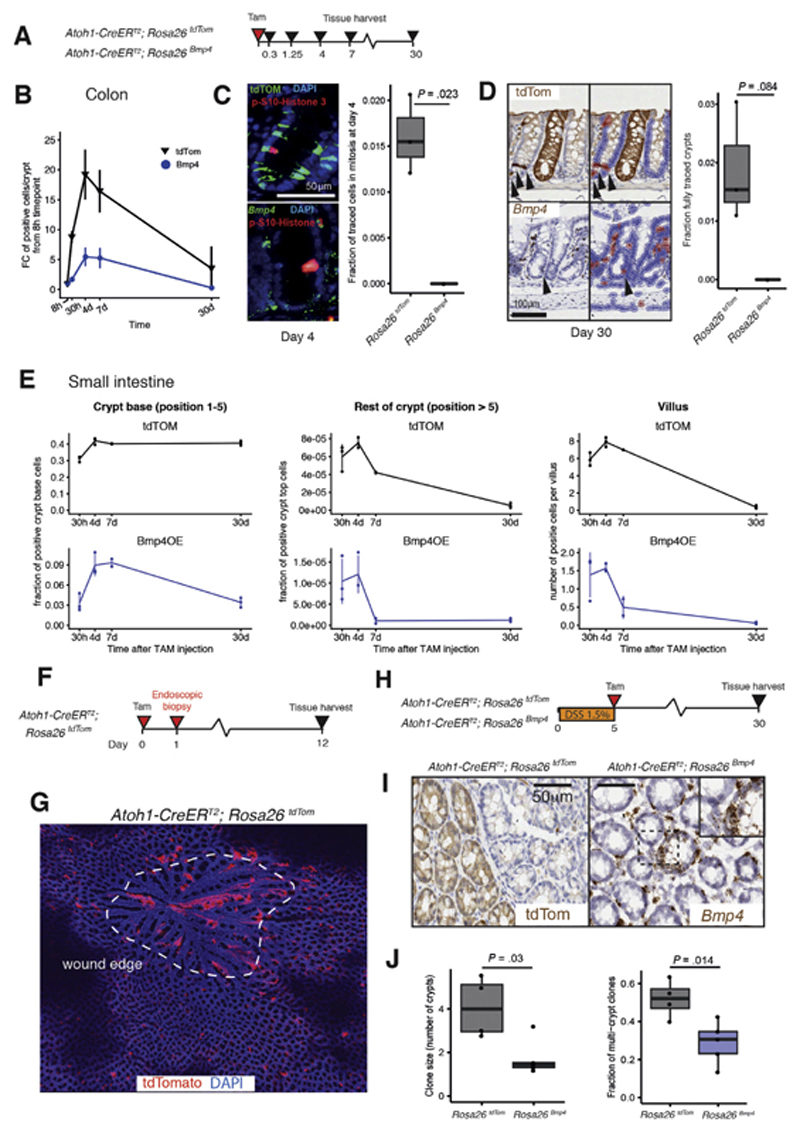
A novel mouse model was generated to assess the effect of the autocrine Bmp4 ligand on individual secretory cell fate. We spatiotemporally mapped BMP signaling in mouse and human regenerating intestine. Transgenic models were used to explore the functional impact of pathway manipulation on stem cell fate and intestinal regeneration.
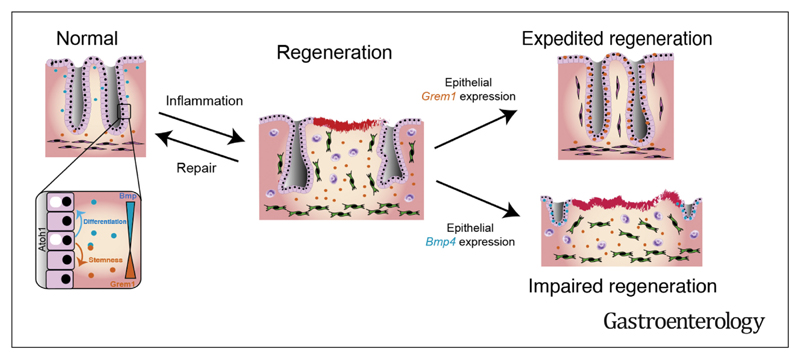
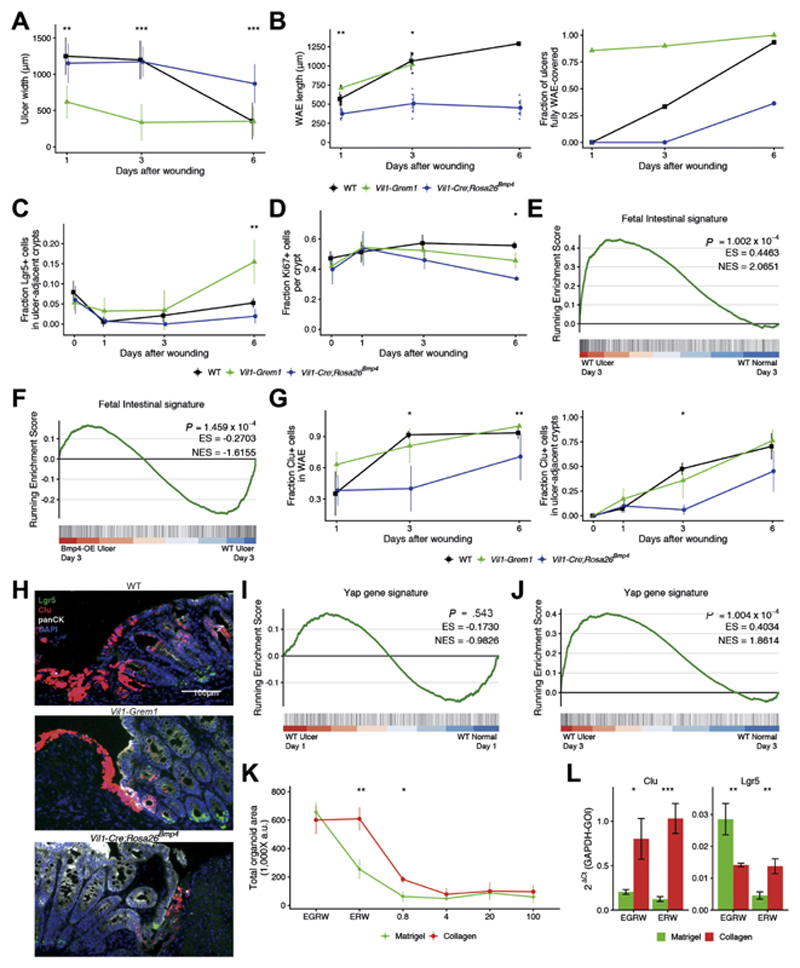
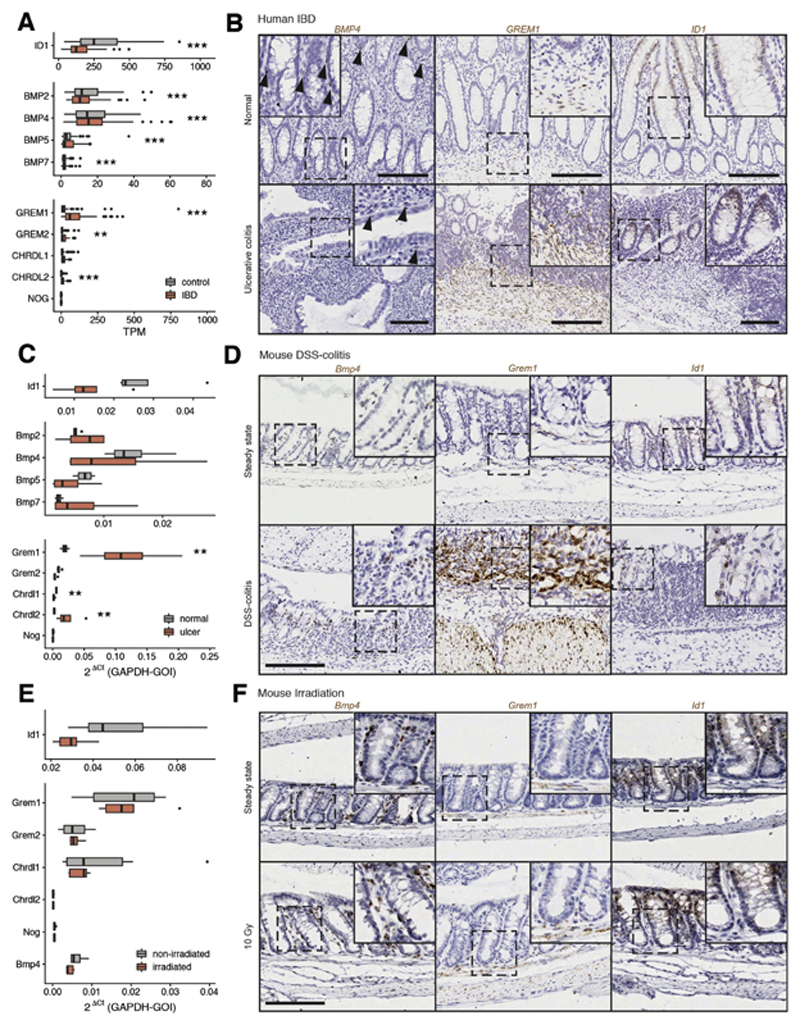
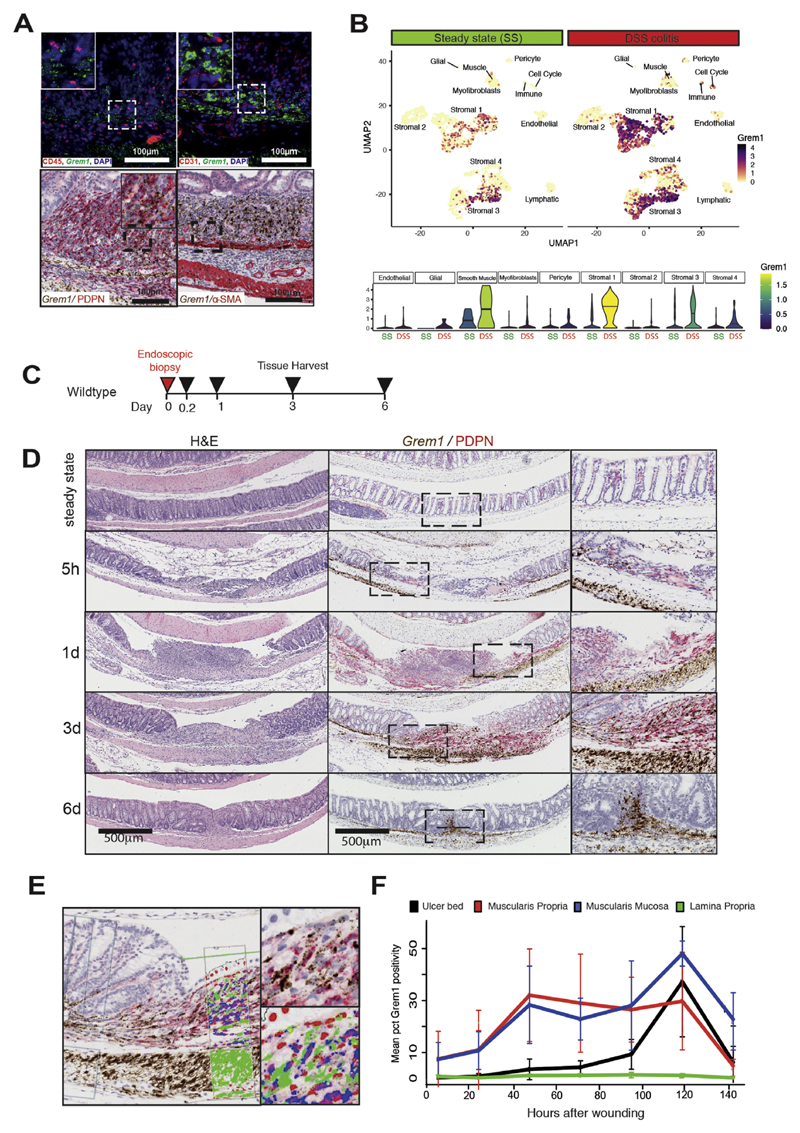
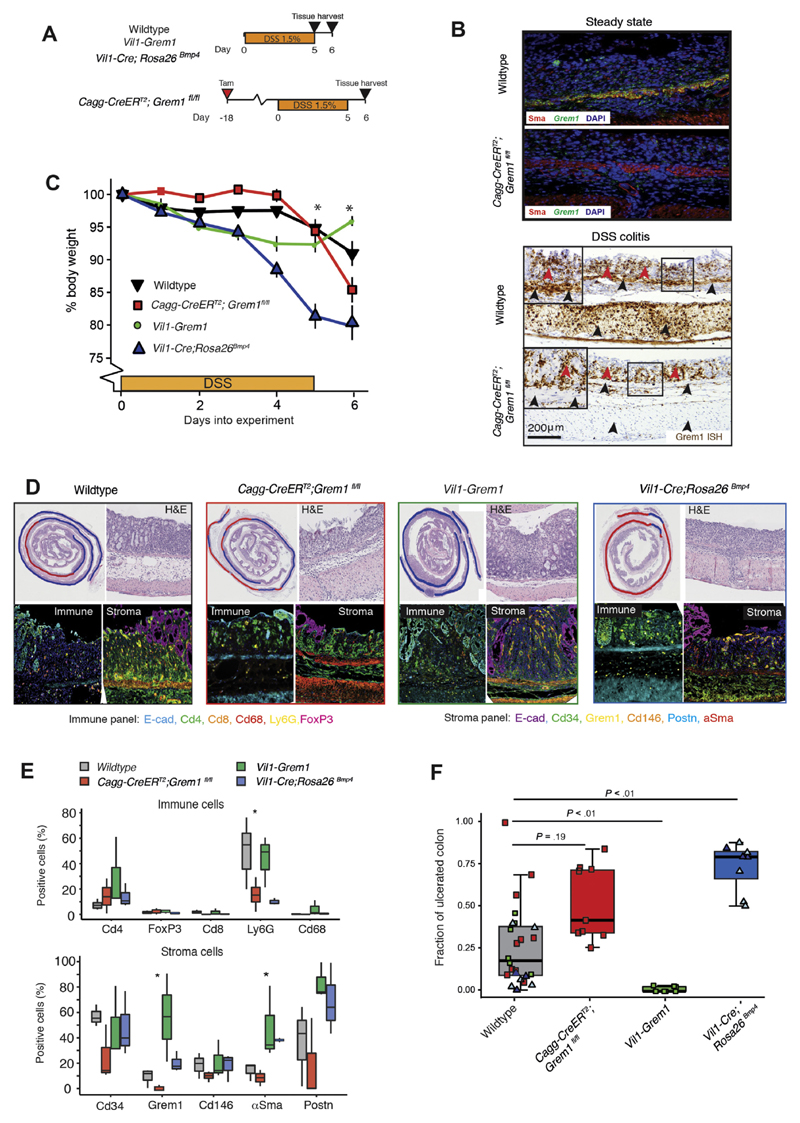
In homeostasis, ligand exposure reduced proliferation, expedited terminal differentiation, abrogated secretory cell survival, and prevented dedifferentiation. After ulceration, physiological attenuation of BMP signaling arose through upregulation of the secreted antagonist Grem1 from topographically distinct populations of fibroblasts. Concomitant expression supported functional compensation after Grem1 deletion from tissue-resident cells. BMP pathway manipulation showed that antagonist-mediated BMP attenuation was obligatory but functionally submaximal, because regeneration was impaired or enhanced by epithelial overexpression of Bmp4 or Grem1, respectively. Mechanistically, Bmp4 abrogated regenerative stem cell reprogramming despite a convergent impact of YAP/TAZ on cell fate in remodeled wounds.
BMP signaling prevents epithelial dedifferentiation, and pathway attenuation through stromal Grem1 upregulation was required for adaptive reprogramming in intestinal regeneration. This intercompartmental antagonism was functionally submaximal, raising the possibility of therapeutic pathway manipulation in inflammatory bowel disease.
在体内平衡中,肠道细胞命运受形态发生素信号的平衡梯度控制。骨形态发生蛋白(BMP)途径具有生理上的促分化作用,主要通过先前的实验途径失活推断得出。肠道再生由去分化和细胞可塑性支撑,但调节这种适应性重编程的信号通路尚未得到很好的理解。我们评估了 BMP 信号通路,并研究了在体内平衡和再生中对途径进行操作的影响和治疗潜力。
我们生成了一种新型小鼠模型,以评估自分泌 Bmp4 配体对单个分泌细胞命运的影响。我们在小鼠和人类再生肠道中时空映射了 BMP 信号。使用转基因模型来探索途径操作对干细胞命运和肠道再生的功能影响。
在体内平衡中,配体暴露会减少增殖,加速终末分化,消除分泌细胞的存活,并防止去分化。在溃疡后,通过来自不同位置的成纤维细胞中分泌的拮抗剂 Grem1 的上调,生理上减弱了 BMP 信号。伴随的表达在组织驻留细胞中 Grem1 缺失后支持功能补偿。BMP 途径操作表明,拮抗剂介导的 BMP 衰减是必需的,但功能上不是最佳的,因为分别通过上皮细胞过表达 Bmp4 或 Grem1 进行的再生受到损害或增强。从机制上讲,尽管 YAP/TAZ 对重塑伤口中的细胞命运产生了趋同影响,但 Bmp4 会破坏再生性干细胞重编程。
BMP 信号可防止上皮细胞去分化,并且在肠道再生中适应性重编程所需的途径衰减是通过基质 Grem1 的上调来实现的。这种隔室间的拮抗作用不是最佳的,这为炎症性肠病的治疗性途径操作提供了可能性。