Huang Yaqing, Wang Nuoya, Xing Hao, Tian Jingru, Zhang Dingyao, Gao Daqian, Hsia Henry C, Lu Jun, Raredon Micha Sam Brickman, Kyriakides Themis R
Department of Pathology, Yale University, New Haven, CT 06520, USA.
Vascular Biology and Therapeutics Program, Yale University, New Haven, CT 06520, USA.
bioRxiv. 2024 Dec 12:2024.12.06.627278. doi: 10.1101/2024.12.06.627278.
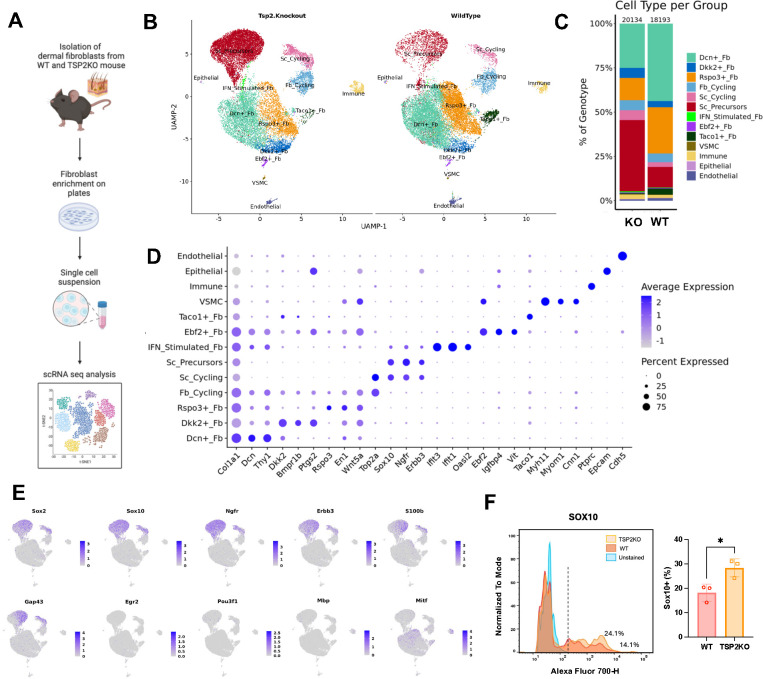
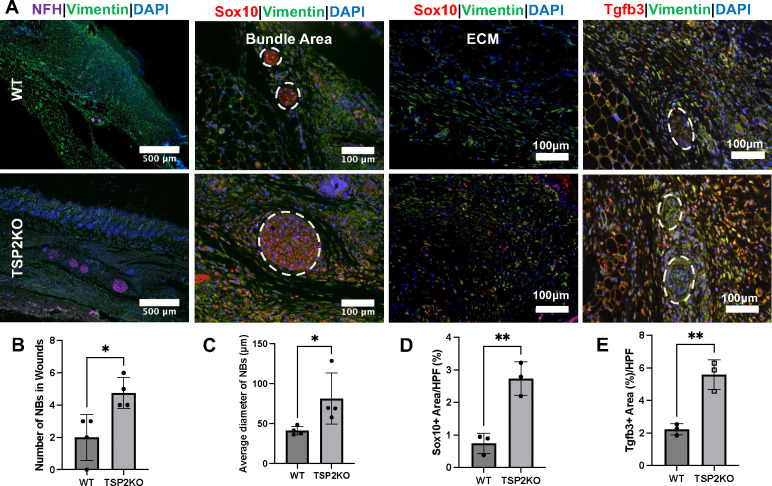
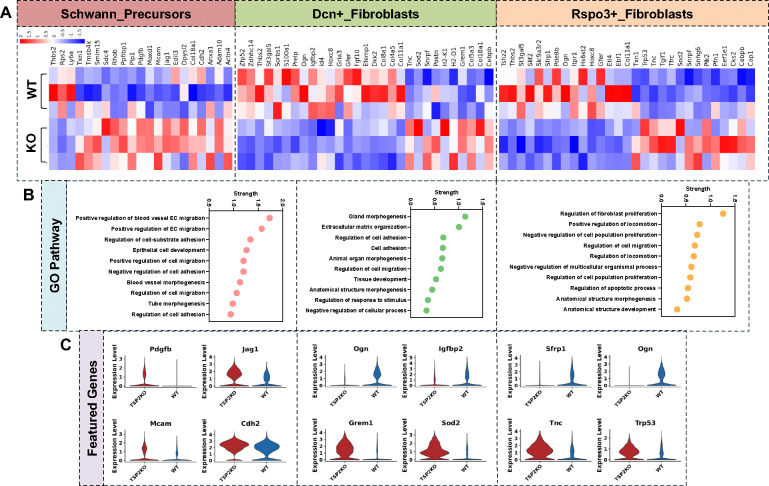
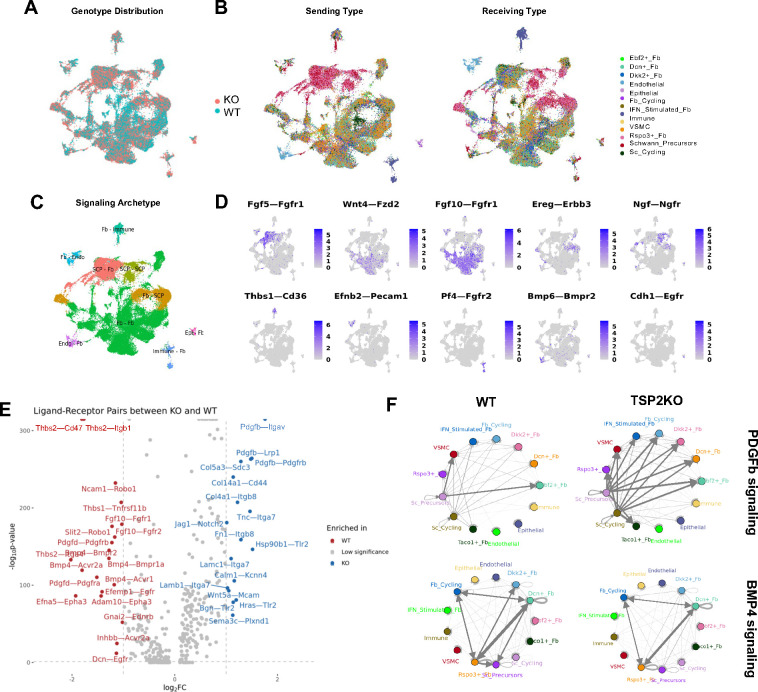
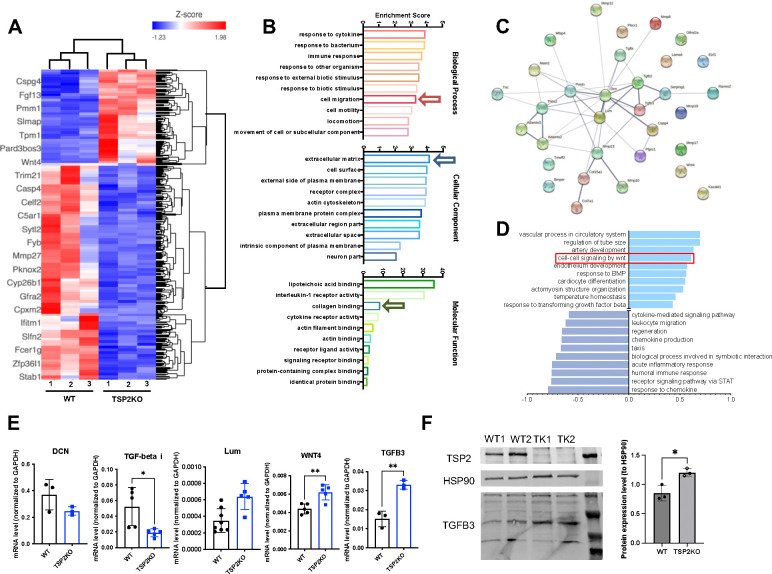
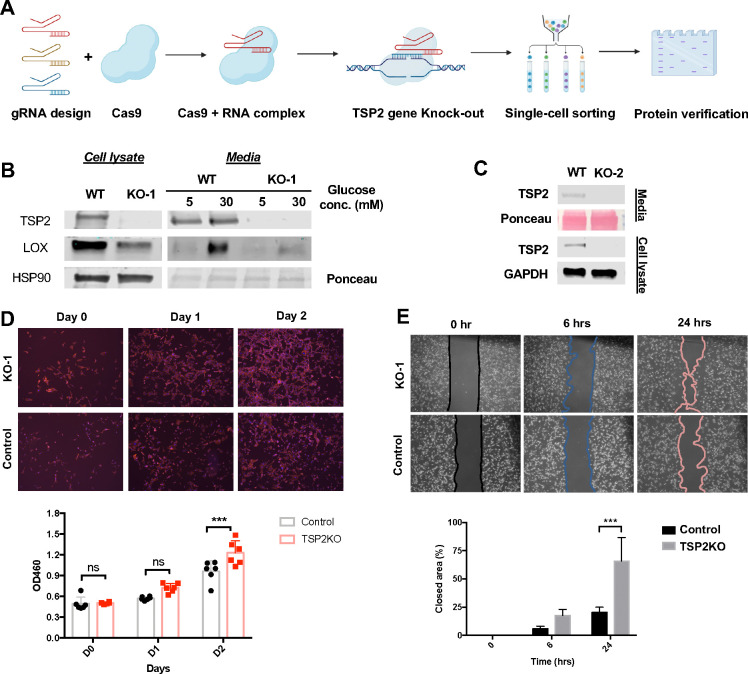
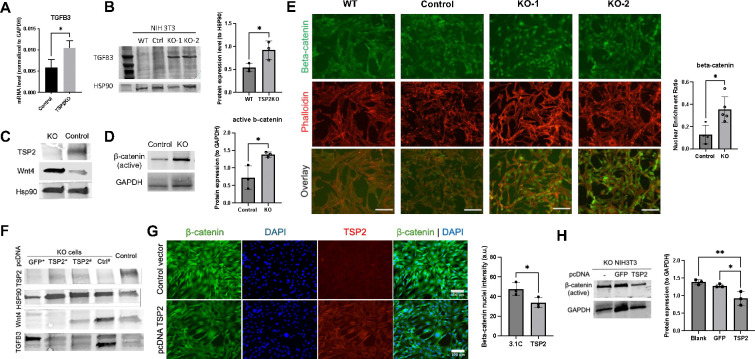
Fibroblasts display complex functions associated with distinct gene expression profiles that influence matrix production and cell communications and the autonomy of tissue development and repair. Thrombospondin-2 (TSP-2), produced by fibroblasts, is a potent angiogenesis inhibitor and negatively associated with tissue repair. Single-cell (sc) sequencing analysis on WT and TSP2KO skin fibroblasts demonstrate distinct cell heterogeneity. Specifically, we found an enrichment of Sox10+ multipotent progenitor cells, identified as Schwann precursor cells, in TSP2KO fibroblasts, while fibrosis-related subpopulations decreased. Immunostaining of tissue and cells validated the increase of this Sox10+ population in KO fibroblasts. Furthermore, in silico analysis suggested enhanced pro-survival signaling, including WNT, TGF-β, and PDGF-β, alongside a reduced BMP4 response. Additionally, the creation of two TSP2KO NIH3T3 cell lines using the CRISPR/Cas9 technique allowed functional and signaling validation in a less complex system. Moreover, KO 3T3 cells exhibited enhanced migration and proliferation, with elevated levels of pro-regenerative molecules including TGF-β3 and Wnt4, and enrichment of nuclear β-catenin. These functional and molecular alterations likely contribute to improved healing and increased neurogenesis in TSP2-deficient wounds. Overall, our findings describe the heterogeneity of dermal fibroblasts and identify pro-regenerative features of TSP2KO fibroblasts.
成纤维细胞表现出与不同基因表达谱相关的复杂功能,这些功能会影响基质产生、细胞通讯以及组织发育和修复的自主性。成纤维细胞产生的血小板反应蛋白-2(TSP-2)是一种有效的血管生成抑制剂,与组织修复呈负相关。对野生型(WT)和TSP2基因敲除(TSP2KO)皮肤成纤维细胞进行的单细胞(sc)测序分析显示出明显的细胞异质性。具体而言,我们发现TSP2KO成纤维细胞中富含Sox10+多能祖细胞,被鉴定为雪旺氏前体细胞,而与纤维化相关的亚群减少。组织和细胞的免疫染色证实了KO成纤维细胞中这种Sox10+细胞群的增加。此外,计算机分析表明,包括WNT、TGF-β和PDGF-β在内的促生存信号增强,同时BMP4反应减弱。此外,使用CRISPR/Cas9技术创建的两种TSP2KO NIH3T3细胞系,使得在一个不太复杂的系统中进行功能和信号验证成为可能。此外,KO 3T3细胞表现出增强的迁移和增殖能力,促再生分子(包括TGF-β3和Wnt4)水平升高,且核内β-连环蛋白富集。这些功能和分子改变可能有助于改善TSP2缺陷伤口的愈合和增加神经发生。总体而言,我们的研究结果描述了真皮成纤维细胞的异质性,并确定了TSP2KO成纤维细胞的促再生特征。