Chongqing Key Laboratory of Medicinal Resources in the Three Gorges Reservoir Region, School of Biological and Chemical Engineering, Chongqing University of Education, Chongqing 400067, PR China.
Research Center of Brain Intellectual Promotion and Development for Children Aged 0-6 Years, Chongqing University of Education, Chongqing 400067, PR China.
Aging (Albany NY). 2021 Apr 4;13(7):10326-10353. doi: 10.18632/aging.202794.
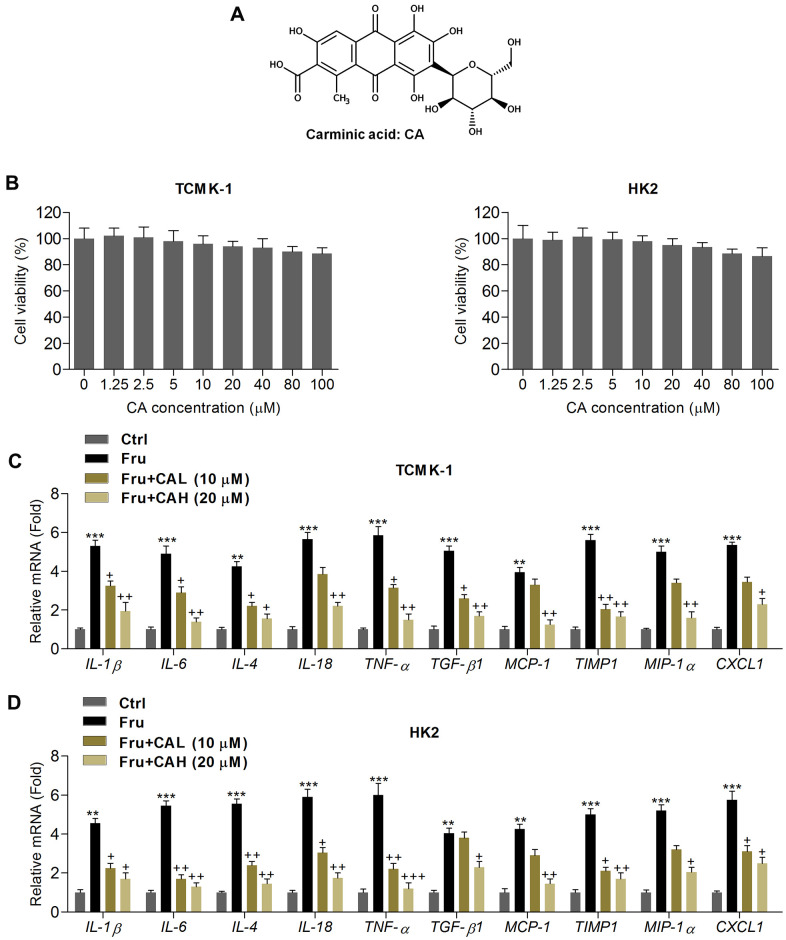
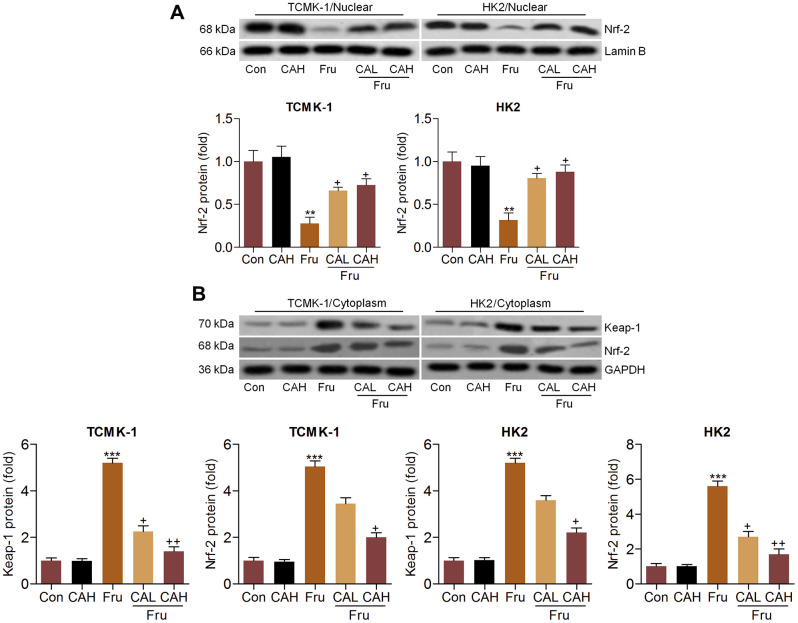
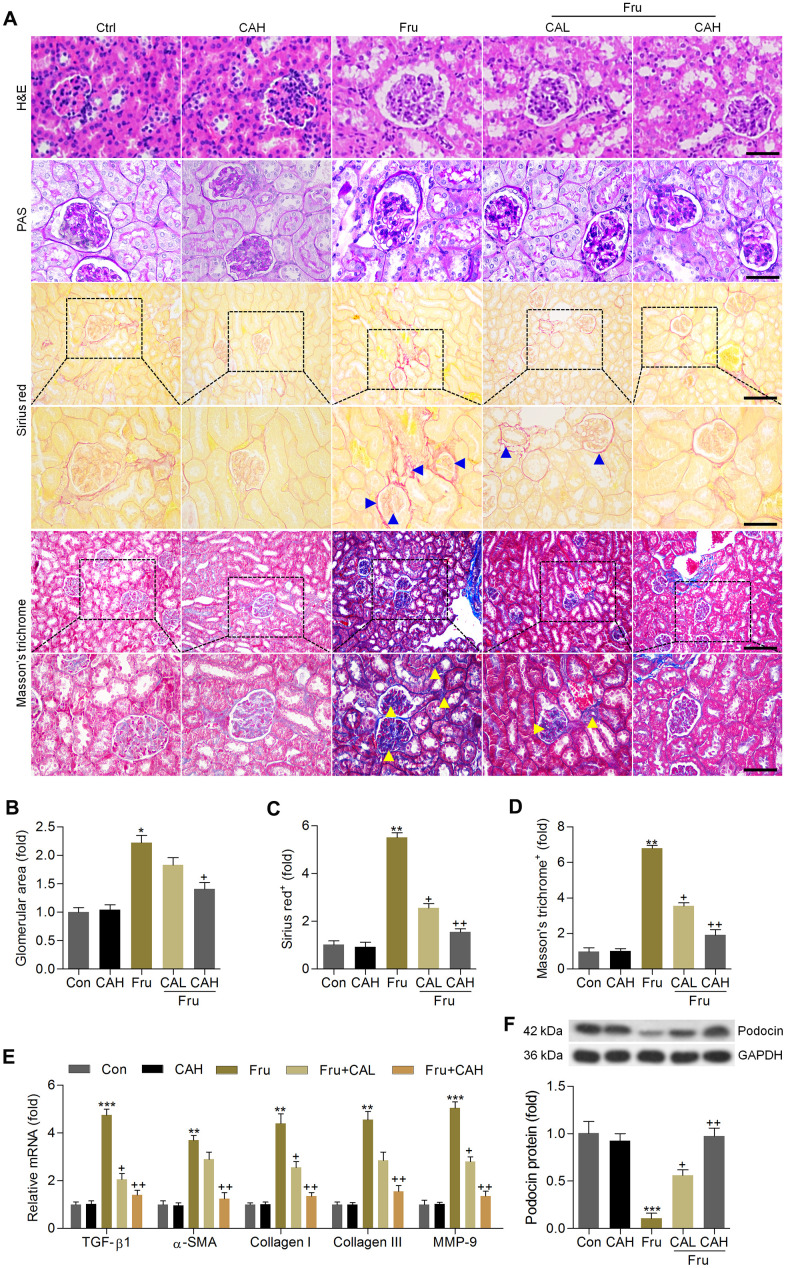
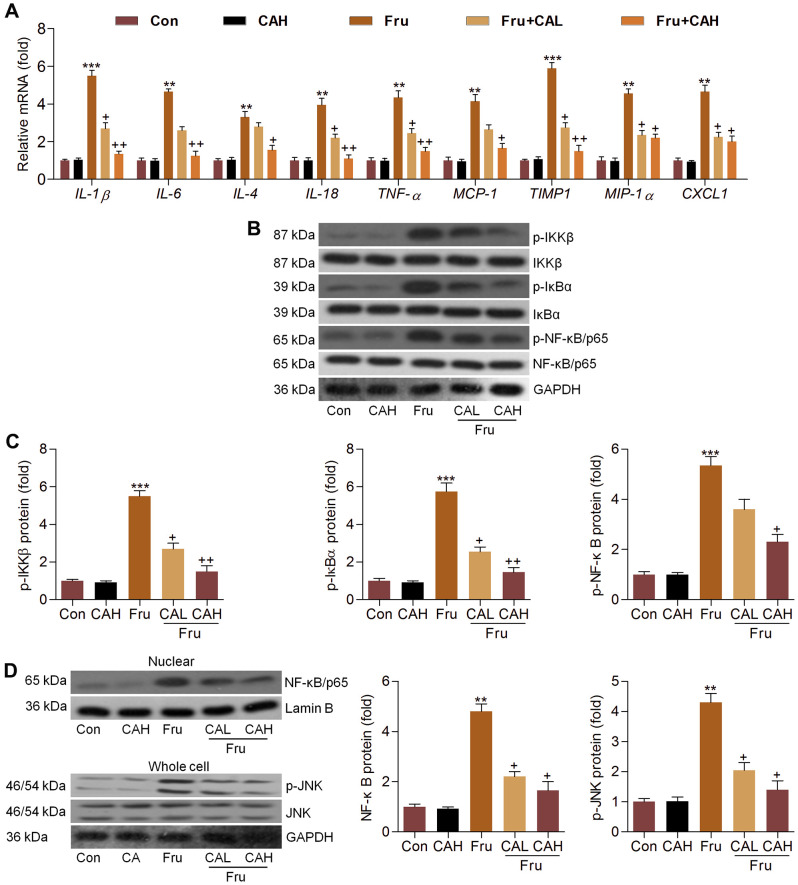
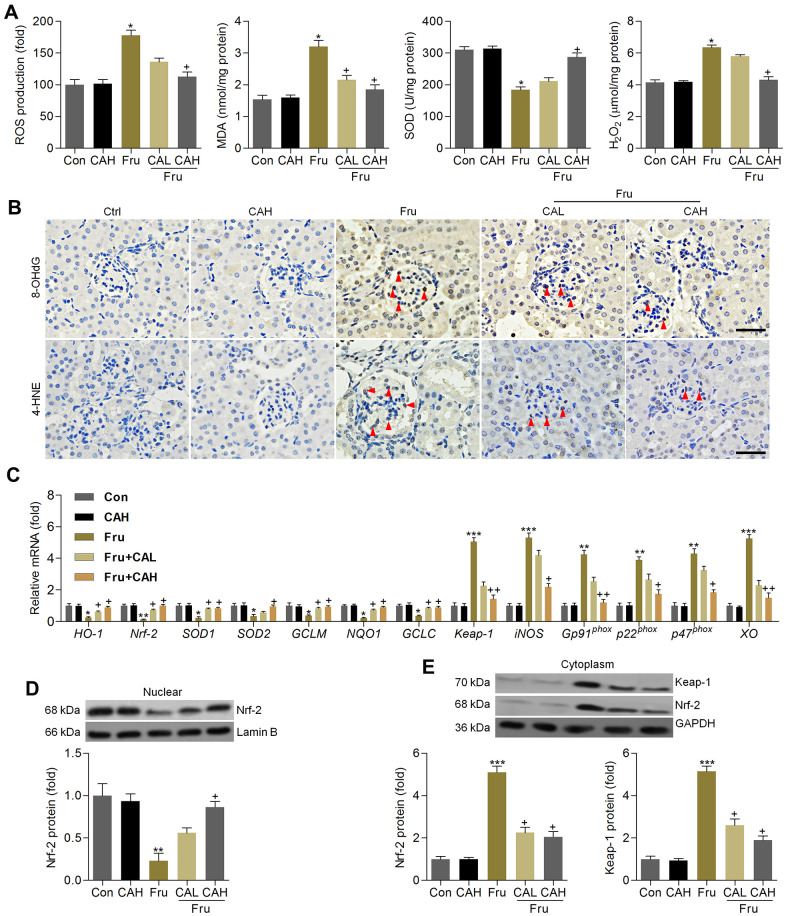
Excessive fructose (Fru) intake has become an increased risk for chronic kidney disease progression. Despite extensive researches that have been performed to develop effective treatments against Fru-induced renal injury, the outcome has achieved limited success. In this study, we attempted to explore whether carminic acid (CA) could influence the progression of Fru-induced kidney injury, and the underlying molecular mechanism. At first, our results showed that CA significantly reduced inflammation in mouse tubular epithelial cells and human tubule epithelial cells stimulated by Fru. The anti-inflammatory effects of CA were associated with the blockage of nuclear factor-κB (NF-κB) signaling. In addition, Fru-exposed cells showed higher oxidative stress, which was effectively restrained by CA treatment through improving nuclear factor (erythroid-derived 2)-like 2 (Nrf-2) nuclear translocation. Importantly, we found that Fru-induced inflammation and oxidative stress were accelerated in cells with Nrf-2 knockdown. What's more, in Fru-stimulated cells, CA-alleviated inflammatory response and reactive oxygen species (ROS) production were evidently abolished by Nrf-2 knockdown. The analysis demonstrated that Fru led to metabolic disorder, excessive albuminuria and histologic changes in renal tissues, which were effectively reversed by CA supplementation. We confirmed that CA significantly reduced inflammation and oxidative stress in the kidneys of mice through regulating NF-κB and Nrf-2 signaling pathways, eventually alleviating the progression of chronic kidney injury. Taken together, these results identified CA as a potential therapeutic strategy for metabolic stress-induced renal injury through restraining inflammation and oxidative stress via the improvement of Nrf-2 signaling.
过量的果糖(Fru)摄入已成为慢性肾脏病进展的风险因素。尽管已经进行了广泛的研究来开发针对 Fru 诱导的肾损伤的有效治疗方法,但结果仅取得了有限的成功。在这项研究中,我们试图探讨 carminic acid(CA)是否可以影响 Fru 诱导的肾脏损伤的进展,以及潜在的分子机制。首先,我们的结果表明,CA 可显著减轻 Fru 刺激的小鼠肾小管上皮细胞和人肾小管上皮细胞的炎症。CA 的抗炎作用与核因子-κB(NF-κB)信号通路的阻断有关。此外,Fru 暴露的细胞表现出更高的氧化应激,而 CA 处理通过改善核因子(红系衍生 2)样 2(Nrf-2)核易位有效地抑制了氧化应激。重要的是,我们发现 Nrf-2 敲低会加速 Fru 诱导的细胞炎症和氧化应激。此外,在 Fru 刺激的细胞中,CA 减轻的炎症反应和活性氧(ROS)产生通过 Nrf-2 敲低明显被废除。分析表明,CA 通过调节 NF-κB 和 Nrf-2 信号通路,有效地逆转 Fru 诱导的代谢紊乱、白蛋白尿过多和肾组织的组织学改变。我们证实,CA 通过改善 Nrf-2 信号通路,显著减轻了小鼠肾脏的炎症和氧化应激,从而减轻慢性肾脏病的进展。总之,这些结果表明,CA 通过抑制炎症和氧化应激,可能成为代谢应激诱导的肾脏损伤的一种潜在治疗策略。